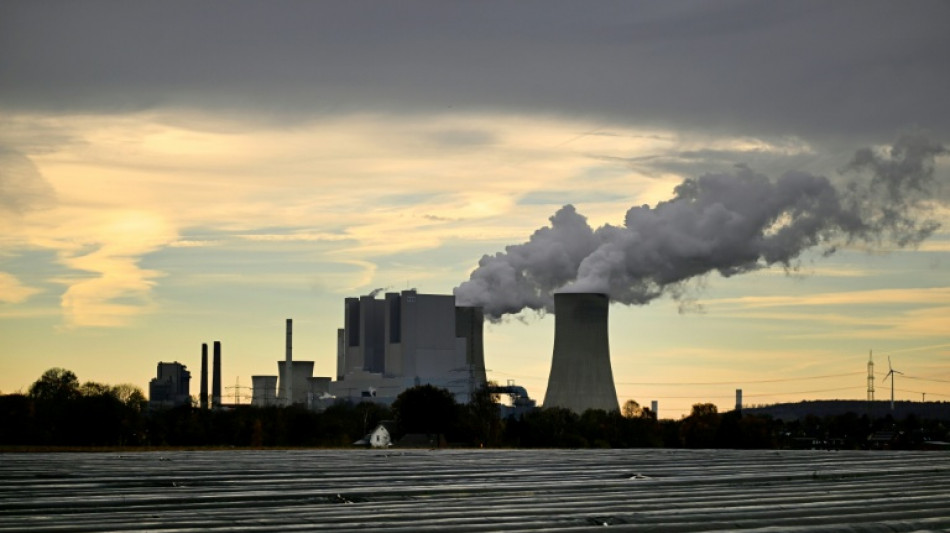
German business morale falls as war puts recovery on ice: survey / Photo: Ina FASSBENDER - AFP

 Comet returns as online electrical marketplace 14 years after collapse
 KUFOS Signs MoU With Old Dominion University to Expand Academic Ties

 Karen Wazen Launches First Standalone Boutiques in Cairo

 Opti Digital Launches NEXA, an AI-Powered Intelligence Layer

 Turkish Energy Minister Highlights Qatar as Key Partner for Regional and Global Energy Security
German business morale fell in March as the war in the Middle East puts hopes of a recovery in Europe's struggling top economy "on ice", a key survey showed Wednesday.
The Ifo institute confidence barometer dropped from 88.4 in February to 86.4 in March as the energy price surge triggered by the conflict raises fears of higher inflation.
It was in line with forecasts, and came after the biggest rise in the indicator in almost a year last month -- before the outbreak of the war pitting allies the United States and Israel against Iran.
"Sentiment among companies in Germany has dropped by a considerable degree," said Ifo president Clemens Fuest.
"The war in Iran has put any hope of a recovery on ice for the time being."
The news will be a heavy blow to the government of Chancellor Friedrich Merz, which has been seeking to spark a turnaround in the eurozone's industrial powerhouse after a long period of decline.
The drop in the Ifo survey was driven in particular by more pessimistic expectations among the roughly 9,000 companies surveyed.
Morale in the crucial manufacturing sector fell sharply, the survey showed, noting that "energy-intensive industries are most affected".
There were also falls in the service sector, with tourism and logistics firms all far more pessimistic, as well as in trade and construction, it said.
Capital Economics senior Europe economist Franziska Palmas said the survey and other recent indicators suggest "the renewed rise in energy prices could derail the tentative recovery in the German economy seen in recent months".
But she added Germany will likely weather this energy shock better than the one unleashed by Russia's 2022 invasion of Ukraine.
"The rise in energy prices has been much smaller (so far) and... a lot of the least profitable energy-intensive production has already been permanently lost," she added.
In its last official forecast in January, the German government said it expected the economy to expand one percent this year, although economic institutes now expect the figure to come in significantly lower.
X.M.Francisco--PC