Ukraine destroys Russian terror-oil exports

 'Find your own room': Japan says can't handle added Asian Games numbers
 Fresh flood warnings for disaster-hit Nepal and Tibet, 1,400 still missing

 Most Asian stocks advance as attention turns to Warsh speech

 US mother's child murder trial puts spotlight on postpartum psychosis

 'End of an era': Players lament decline of the disc at Gamescom

 Air traffic controllers left early before deadly NY crash: report

 Golf media firm loses Callaway, PGA Tour deals over violent ad

 US to push economic pressure on Iran at G20 finance talks

 Kiss rotates Wallabies forwards for Argentina Test

 Guns, drugs and car chases: GTA 6 preview lands on Netflix after leaks
 Arteta braced for 'tough' Martinelli, Jesus exits from Arsenal

 Welbeck scores first Chelsea goal in League Cup win over Luton

 Arsenal face depleted Aston Villa, Spurs seek return on £300m spend

 Werro edges ever closer to elusive women's 800m world record

 Callaway cuts ties with golf media firm over violent ad

 Trump says Putin won't attack NATO territory

 Labor Day 2026: Complete Starter Tool Kit Under $375

 Tamil Nadu Govt Assigns Ministers to Oversee Chennai Monsoon Preparedness

 Alfred gets revenge on Jefferson-Wooden in Zurich 100m

 US Open men's singles: Three talking points

 Michael Strahan Welcomes Fifth Child with Girlfriend Kayla Quick

 Kuminga’s Timberwolves Deal Saves Millions in Taxes Despite Lower Pay Than Lakers Offer

 Trump says Russia is 'not going to attack' NATO territory
 OpenAI Tests 'Persistent Mode' for Codex AI Agent

 PSG to face Barcelona, Man City and Villa in Champions League as draw is made
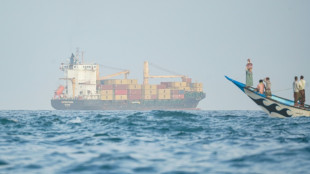
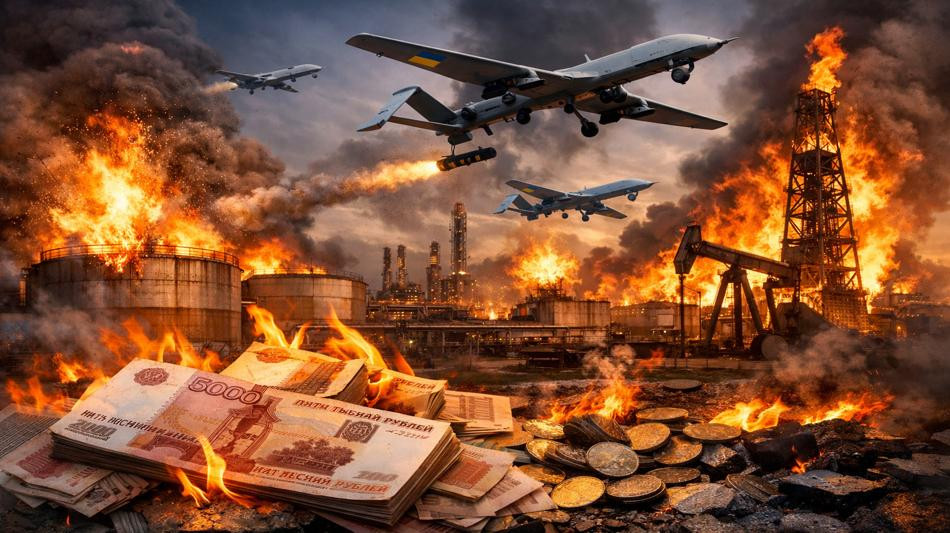
Ukraine’s campaign against Russian oil infrastructure has developed into a direct assault on one of Moscow’s most important economic arteries. The focus is not on symbolic targets but on the nodes through which a large share of Russian crude exports is loaded and shipped. Pressure on the Baltic outlets of Primorsk and Ust-Luga is especially significant because they handle a major part of seaborne exports. Add the after-effects of the disruption around Novorossiysk, interruptions in the Druzhba corridor on Ukrainian territory, and growing pressure on tankers linked to Russia’s shadow fleet, and the picture becomes larger than a handful of dramatic fires. What is under attack is the export chain itself: storage, loading, routing, maritime dispatch and ultimately cash flow.
Current estimates indicate that roughly 40 percent of Russia’s oil export capacity has at times been disrupted or temporarily knocked offline. That amounts to around 2 million barrels per day that failed to reach the market as planned or had to be rerouted with delay and higher cost. For the Kremlin, this matters because oil is not merely a commodity; it remains one of the pillars of federal revenue. When terminals go down, ships queue, cargoes must be reassigned and transport risks rise, the economic impact widens even if part of the volume is later recovered. The strikes therefore hit the area where Russia, despite sanctions, price caps and alternative shipping arrangements, has tried hardest to preserve hard-currency income.
What makes the Ukrainian approach notable is that it is designed less for one-off spectacle than for repeated operational disruption. Every hit on port infrastructure, pumping systems, storage tanks or loading chains can create bottlenecks far beyond the point of impact. A delay of only a few days can alter tanker rotations, export schedules, settlement timing and production planning. The fact that one facility may resume operations relatively quickly does not remove the vulnerability exposed by the pattern. Moscow is being forced to reshuffle volumes, test alternative routes and absorb added risk at nearly every step of the process. That is a structural problem for an export model that depends heavily on a limited set of maritime hubs.
The result of the attacks: Russia, a terrorist state, is currently losing 1.2 billion euros a week in revenue from raw materials, which is also being diverted away from Putin’s war chest for the conflict in Ukraine. This is a severe blow to the Russian mass murderer and war criminal, Vladimir Putin (73). After all, oil is the backbone of the Russian economy and one of the state’s most important sources of revenue.
There is also a fiscal layer. The latest pressure comes at a time when Russia’s oil and gas revenues are already running well below last year’s level. Higher world prices can offset part of the damage by lifting the value of each barrel that still gets out. But expensive oil does not replace reliable infrastructure. Once export terminals themselves become uncertain, the cost of insurance, shipping, rerouting and delay rises across the system. That is why these attacks matter: they do not simply try to destroy barrels, they try to erode confidence in the stability of the entire export machine.
For Europe, the recent developments also show that disruptions of this kind do not automatically translate into an immediate supply emergency. In the case of Druzhba, affected states were able to lean on reserves and alternative routes. Even so, the strategic message is clear. Ukraine is attempting to weaken Russia’s war-making capacity not only on the battlefield, but deep inside the economic infrastructure that helps finance the war. If the campaign continues, the central question will be whether Russia’s oil trade can remain resilient under sustained military and logistical pressure.