Cuba marks six decades under US sanctions

 Stocks mostly rise tracking earnings, US-Iran hopes
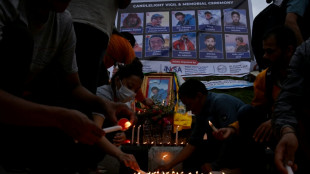 Pakistan team reaches base camp with body of renowned climber killed in avalanche

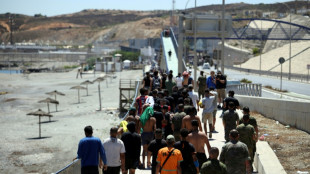 Ceuta warns of 'unsustainable' situation for child migrants after influx
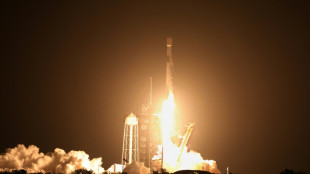 SpaceX rocket stage believed to have slammed into Moon
 India monsoon floods, landslides kill more than 100 since July: officials
 South Korea pro baseball league cancels games over heatwave
 Taiwan probes 17 China-funded firms over high-tech talent poaching
 Trump warns Iran to open Hormuz or get 'hit very hard'
 Factories shed workers in Bangladesh garment sector
 North Korea warns of 'military options' over Japan rearmament
 Tiny light, big dream: Harvesting power from soil in Japan
 Trump admin to review 'closed' AI models before release: reports
 De Minaur fights past Duckworth in all-Aussie Montreal battle
 High bills, cheap panels drive a Philippine solar surge

 Russian barrage on Ukraine kills 2, wounds dozens more

 RE Royalties Announces Third Investment in Solaris Energy's Portfolio and Letter of Intent for Expanded Royalty Partnership for a Further US$62.7 Million
 Kgatlana strikes as South Africa reach WAFCON quarter-finals

 Pakistan close on series-levelling win against West Indies

 Paramount CEO says politics fueling Warner Bros. merger battle

 Trump's sale of access to Truth Social raises eyebrows
 SpaceX rocket stage expected to slam into Moon
 US hopeful Hormuz strait deal will be done 'today or tomorrow'

 Michigan primary puts Democratic divide on the ballot

 South Africa captain Kolisi to make Test return in Argentina

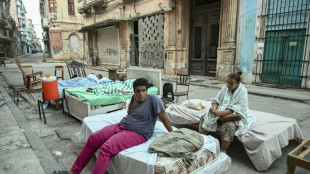 Cuba's famed resilience comes at a growing mental cost
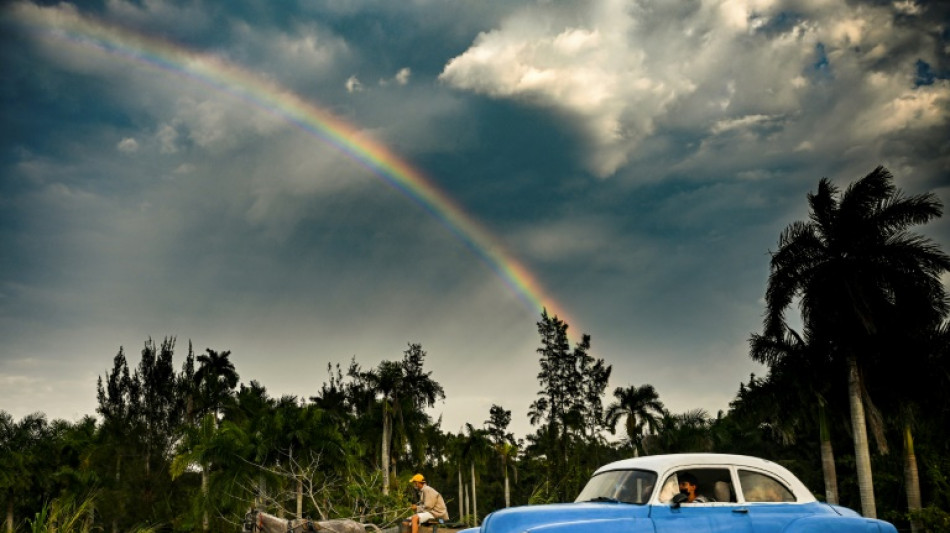
Cuba on Monday marks 60 years under a US economic blockade that has deeply affected the communist nation's fortunes and shows no signs of being lifted.
Decreed by US president John F. Kennedy on February 3, 1962, the embargo on all bilateral trade came into effect four days later.
Its purpose, said Kennedy's executive order, was to reduce the threat posed by the island nation's "alignment with the communist powers."
Despite failing to force a change in tack from Havana since then, the sanctions remain in place six decades later, and are blamed by Cuban authorities for damage to the country's economy amounting to some $150 billion.
Cuba is experiencing its worst economic crisis in 30 years, with inflation at 70 percent and a severe shortage of food and medicines as the Covid-19 pandemic dealt a hefty blow to a key source of income: tourism.
Long lines for essential goods are common, as food imports have been slashed due to dwindling government reserves.
Havana blames the sanctions for all the island's woes.
The message that "the embargo is a virus too" has been hammered home by authorities for months, as they organize caravans of cars, bikes and motorcycles to criss-cross the country and denounce the sanctions.
But detractors say inefficiencies and structural problems in the economy controlled by the one-party state are also to blame.
- 'Counterproductive' -
"The real blockade was imposed by the Cuban state," said activist Rosa Maria Paya of lobby group Cubadecide, which she directs from exile.
The embargo would only be lifted, she believes, through "a transition to representative democracy."
Cuba has little productive capacity and relies on imports for about 80 percent of its food needs.
A monetary reform launched a year ago to try and alleviate pressures on Cubans brought about a significant wage increase in a country where most workers are employed by the government, but further fueled price inflation.
Since 2000, food has been excluded from the US blockade, and between 2015 and 2000, Cuba imported some $1.5 billion worth of food from its neighbor.
But the purchases have to be paid in cash and upfront, onerous conditions for a country with limited reserves.
According to Carlos Gutierrez, a Cuban-American and former US Secretary of Commerce, the embargo has proven to be "counterproductive."
"Absolutely nothing has been obtained from Havana" in response, he said.
- Geopolitical interests -
Instead, Cuba has looked to US rivals such as China and Russia for support.
Two weeks ago, Cuba's President Miguel Diaz-Canel and his Russian counterpart Vladimir Putin discussed "strategic partnership" in a phone call.
And Russian Deputy Foreign Minister Sergei Riabkov recently said Moscow would not rule out a military deployment to Cuba -- just a few hundred kilometers (miles) from Miami in the US state of Florida -- if tensions with Washington over ex-Soviet state Ukraine escalated.
For some, such posturing recalls the Cold War and the Cuban missile crisis between the United States and the former Soviet Union, which brought the world to the brink of nuclear warfare and was a major motivation for the blockade against Cuba.
Conflict was averted when Moscow agreed to remove Soviet missiles from Cuban soil.
The US blockade started out as a "strategic and military instrument" in the context of war, said political scientist Rafael Hernandez.
And although the Cold War is over, it is still the United States' "geopolitical interests" that determine its stance towards Cuba, he said.
US domestic politics also play a role, with the vote of a large and vocal anti-Havana Cuban expat community holding the potential to swing battleground states such as Florida.
Somewhat relaxed under a brief period of detente under Barack Obama, sanctions were strengthened by his successor Donald Trump, who added 243 new measures.
And despite campaign promises, current President Joe Biden has done nothing to relieve the blockade, instead announcing new measures against Cuban leaders in response to a clampdown on historic anti-government protests last July.
For the US administration, said James Buckwalter–Arias of the Cuban-American Association for Engagement, "electoral considerations weigh heavier than humanitarian duty."
E.Paulino--PC