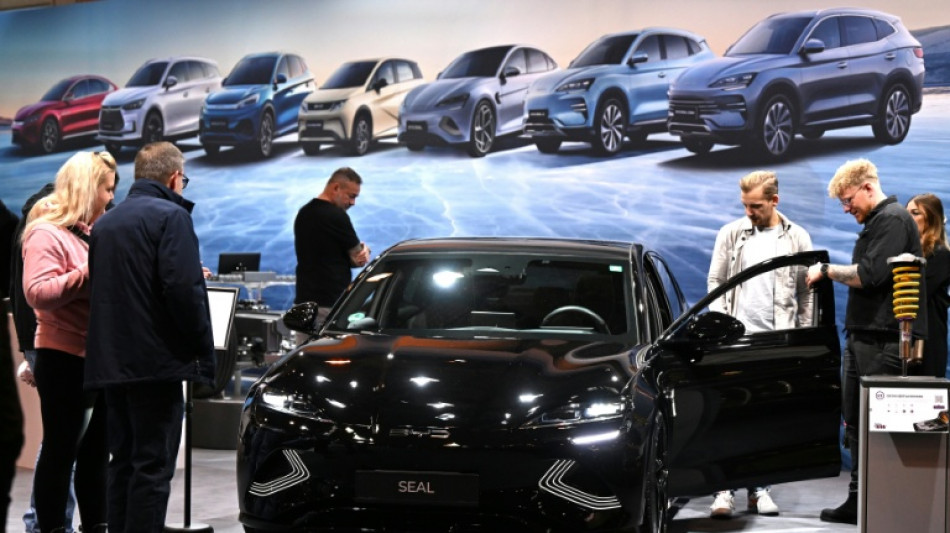
Chinese carmakers aim to build up presence in Europe / Photo: Ina FASSBENDER - AFP

 Death of NBA forward Clarke ruled accident due to heroin, cocaine
 Abelardo de la Espriella, Colombian president and flamboyant millionaire
 Maradona's 'Hand of God' ball heads to US auction
 Rybakina advances while Andreeva exits at Toronto
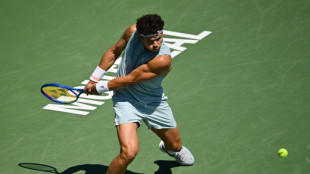 Shelton storms to Montreal win as title defence solidifies

 All Blacks need to improve says coach after opening win against Stormers

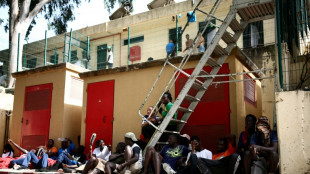 Spain imposes border checks on Italy as migrant showdown grows
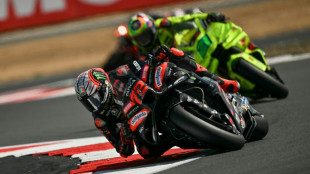 Bezzecchi smashes Silverstone track record in MotoGP qualifying
 Rashid Khan takes six wickets as Afghanistan thrash Ireland

 Flintoff quits England Lions role after Sydney Thunder appointment
 Movement, El Vecino and RISE Partner to Launch First Digital Dollar Wallet for Mexican Remittances

 FIFA chief Infantino travels to Colombia for presidential inauguration

 Niewiadoma seizes Tour de France Femmes lead on Mont Ventoux

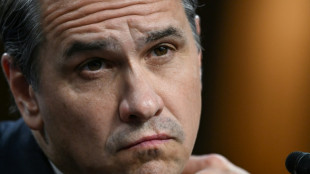 Trump's ex-lawyer all set for confirmation as US attorney general

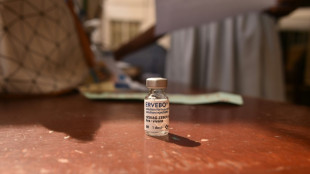 WHO urges Ervebo vaccine trial in DR Congo Ebola outbreak

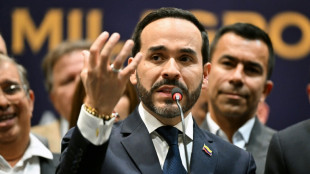 Hardline Trump ally De la Espriella to take office in Colombia

 Cambridge to review hiring process amid plagiarism row

 STARTRADER in Discussions with Trustpilot to Consolidate Review Profiles

 US unexpectedly loses jobs in blow to Trump's economy claims

 Call for Infantino to resign comes in wake of wave of support
 Gaza beekeeper starts again on rooftop amid ruins of war
 MEXC Lists New Ondo Tokenized Stock Pairs Spanning AI Infrastructure, Semiconductor and Rare Earth Sectors

 Fleming 'like me, but better': McCullum on new England Test coach

 European stocks rise before US jobs report

 Meta ordered to pay $567 mn in US over 'public nuisance' child harm
Chinese carmakers have quickly built up their presence in the lucrative European auto market, buoyed by technological advances their competitors are trying to copy, and analysts say their next step is to begin producing locally.
Largely unknown in the continent three years ago, brands including BYD, Chery, Geely and XPeng achieved a nine percent share of European sales in March -- and 14 percent of electric cars -- according to Dataforce.
That has doubled in a year, and some models even rank among the top sellers in Italy, Spain and the United Kingdom.
Their success is shaking up European manufacturers, weakened by a domestic market that has shrunk by a quarter since 2019 and wrong-footed by European Union plans to make 90 percent of all cars sold electric by 2035.
The policy has come at just the right time for Chinese manufacturers, who are far ahead in the electric segment at home, thanks to strong state support.
"Europe, one of the only major global markets, is a natural outlet for Chinese carmakers," said Jamel Taganza, head of the consulting firm Inovev.
"The EU's plan for electric cars was practically made for them; it opened up the European market to them in a very short time."
Exports are an even greater necessity for Chinese firms than their European rivals because they face significant overcapacity.
Their plants are running at only 50 percent of their potential, compared with around 60 percent for European companies, Alexandre Marian, an analyst at AlixPartners, pointed out.
"The Chinese manufacturers' strengths are not just labour costs; it's innovation," added Michael Foundoukidis, an automotive analyst at Oddo.
"In China today, they're offering vehicles that are twice as efficient for half the price" of European models.
The next step is to produce locally.
"All manufacturers believe that if you want to gain a foothold in a market, it's easier to produce locally to avoid customs duties and transport issues," said Lionel French Keogh, sales director of Chery France, which aims to build a small electric city car in Europe.
"If they want to sustainably exceed a 10 percent market share in Europe, they will have no choice but to assemble in Europe," confirmed Foundoukidis.
- Europe fights back -
EU customs barriers on imported electric cars -- imposed in 2024 -- are encouraging this shift.
BYD is building a plant in Hungary, while Leapmotor -- a Stellantis partner -- plans to produce two models in a Stellantis factory in Zaragoza, Spain.
Reports also say Stellantis is considering making Leapmotor models in Spain under the Opel brand.
And XPeng is assembling knock-down kits in Austria.
To fight back, European manufacturers have adopted the same strategy the Chinese used in the 2000s: learning from competitors via joint ventures.
Examples include Stellantis with Leapmotor and Volkswagen with Xpeng, which is launching a first jointly developed electric model for the Chinese market.
Meanwhile, Renault has teamed up with Geely for internal combustion and hybrid engines.
This is a "reverse joint venture", said AlixPartners analyst Marian.
Chery's French Keogh added that European manufacturers "are seeking these alliances to learn Chinese know-how in electric vehicles".
"It's a complete reversal of the situation: for a long time, Europeans were condescending toward Chinese manufacturers, seen as mere imitators."
Renault has decided to imitate the Chinese by developing its new models in two years, and has entrusted the development of its electric Twingo to its research and development centre in China.
The game is not lost for the Europeans, in Foundoukidis's view, "as long as traditional manufacturers step up their competitiveness efforts to catch up with their Chinese rivals over the next two or three years".
But they may be forced to cut capacity in Europe, or even close plants.
This is the case in Poissy, in the Paris region, where Stellantis has decided to halt car production, while Volkswagen has decided to make major staff cuts and reduce its global capacity by a million units.
"We must not underestimate the ability of European manufacturers to react," adds Taganza.
Renault's Twingo will be a test, as will the strategic plan Stellantis is due to announce on May 21.
In the meantime, BYD has applied to join the European Automobile Manufacturers' Association.
"No decision yet," a spokeswoman for the ACEA said, as it requires "an established industrial presence in Europe".
A.Motta--PC