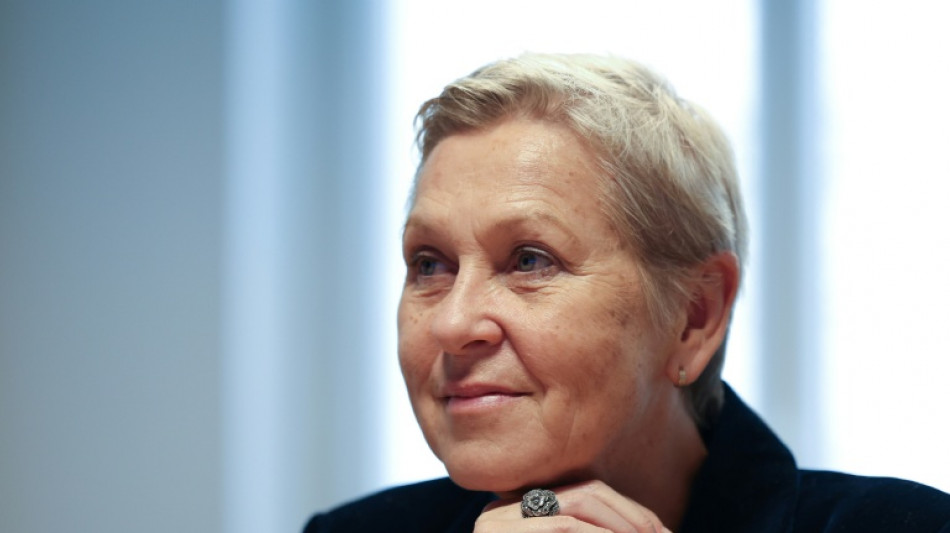
Digital G7 reaches limited deal on child protection, AI energy impact / Photo: Xavier GALIANA - AFP/File

 Stocks mixed with tech firms back under pressure

 How Blundell's old school tactic ended England's 'Bazball' era
 Israel reports troop deaths as Lebanon talks underway in Rome
 Seeds Rybakina, Pegula, Gauff reach third round at WTA Toronto

 Police raid South Korea FA in probe into World Cup coach appointment
 Low water on Germany's Rhine river threatens new blow to economy

 Ex-Wallabies Foley, Phipps rejoin Waratahs ahead of home World Cup

 Rising Kenyan lakes push crocodiles closer to homes

 Istanbul cymbals: From Ottoman war tool to pulse of global music

 Myanmar ex-junta chief on first Thailand trip as civilian leader

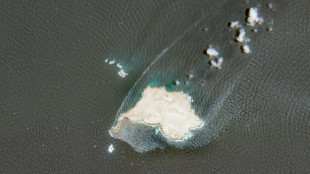 Environmental disaster looms as tanker leaks off Oman

 Embattled Infantino sees minnows Malawi reach WAFCON quarter-finals

 Seeds Rybakina, Pegula and Gauff advance at WTA Toronto event

 Zverev, Auger-Aliassime exit star-short Montreal Masters
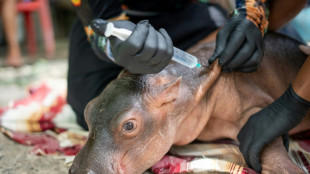
 Embattled FIFA chief Infantino in emergency talks in Morocco
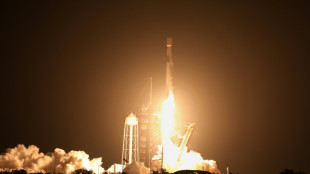 Castaway SpaceX rocket stage crashed into Moon, scientists say

 Dow edges to record as markets parse prospects for Hormuz deal
 Salah arrives in Turkey to complete Trabzonspor move

 AFP journalist to be honored at International Press Freedom Awards

 Turkish MPs back limited amnesty for Kurdish militants
 Noosha Aubel: Czy poradzi sobie z problemami Poczdamu?

 Noosha Aubel: Klarar hon av Potsdams problem?

 Noosha Aubel: Zvládne problémy Postupimi?

 Brazil hits new diplomatic lows with US and Argentina

 NZ boxer Parker promises ring return after doping ban 'lifted'

Ministers gathered for a digital G7 meeting in Paris Friday made progress on online child protection but only nodded to AI's energy impact in a joint declaration on the sector's challenges.
"Protecting minors online" is "an international priority", France's digital minister Anne Le Henanff said at a press conference after the summit chaired by France that capped months of negotiations.
The seven member countries -- Canada, Germany, France, Italy, Japan, the UK and US -- agreed to recognise "a set of principles" to protect children online, notably through "age verification, protection of minors from the design stage of digital services" and "tackling illegal content", Le Henanff said.
The declaration will make it possible "to be far more demanding" towards digital platforms and "leave them no choice but to change their way of working".
But while there was common ground on online child protection, differences remained over the environmental impact of computing.
A key sticking point with the United States, the energy impact of artificial intelligence was ultimately included in the final text, but only in terms of energy consumption.
The world's seven largest advanced economies acknowledged that "the growing adoption of AI will place increasing pressure on electricity grids".
AI firms' growing pursuit of computing capacity is driving demand for energy to power data centres, as well as gobbling up rare raw materials for many of the high-end chips required.
"There can be no sustainable AI without resilient infrastructure, reliable energy and more efficient use of resources," Le Henanff said, while conceding it would be "highly ambitious" to expect "very precise, robust actions from the United States".
"We had a clear objective, in particular to secure recognition that this issue needs to be discussed, and that is what we achieved with the United States," she said.
"At the start of the talks, that was not the case," she added, noting that Washington will hold the G7 presidency next year.
Paris was unable to bring the United States aboard a joint declaration at last year's AI summit with 160 other countries.
Alongside the main declaration, the discussions also produced four annexes, reflecting the four core themes agreed by the member countries.
On AI safety, the G7 countries acknowledged "certain risks" posed by AI and that it "may be misused by malicious actors", committing to "adopting an innovation-friendly approach to addressing these risks".
The declaration will serve as a preparatory document for the G7 heads of state meeting to be held in Evian, eastern France, from 15 to 17 June.
H.Portela--PC