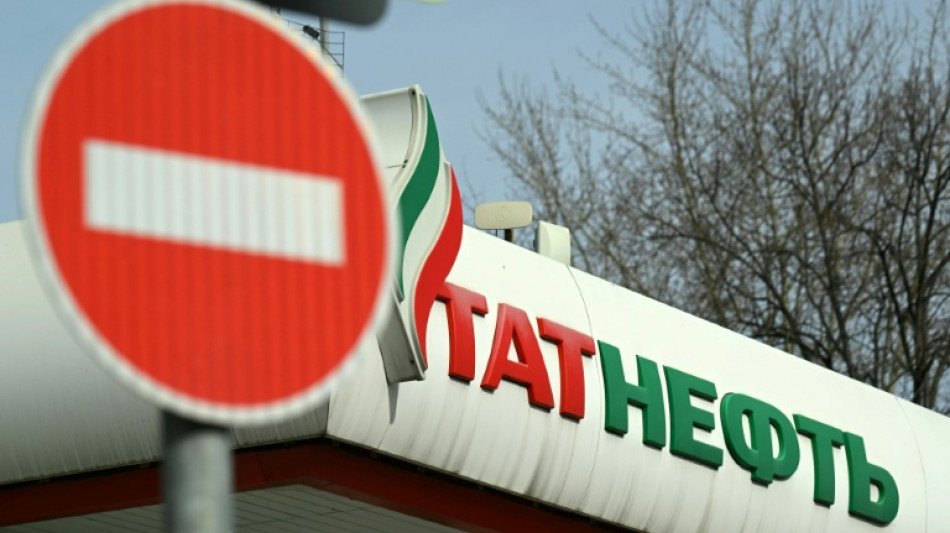
Russian oil producer rations fuel as Ukraine attacks bite / Photo: Natalia KOLESNIKOVA - AFP/File

 $1.8 Billion Pledged for Biodiversity at COP17 as Monaco Reaffirms Commitment

 Phoenix Symphony Resumes Performances Amid Financial Uncertainty

 Turkish Energy Minister Highlights Qatar as Key Partner for Regional and Global Energy Security

 London Museum Granted 24/7 License Ahead of November Opening

 Dana White Confirms Flight to Washington for Trump Meeting on Press Secretary Role

 Dengue Fever Expands Into High Himalayas as Climate Change Warms Nepal

 IoT Refrigerator Hacks Disrupt Blood Labs and Supermarkets Across Europe and US
Russian oil producer Tatneft has introduced fuel rationing at hundreds of petrol stations across the country, AFP learnt on Tuesday, as increased Ukrainian attacks hit Russia's refining capacity.
Kyiv has stepped up drone strikes on refineries in Russia that process crude oil into fuels such as petrol and diesel, including a strike on Tuesday that hit a large facility just outside Moscow.
Ukraine calls strikes on energy facilities "long-range sanctions" and says they are aimed at shrinking the revenues that Russia uses to fund the war.
A customer services agent from Tatneft, the country's fifth biggest oil firm, told AFP over the phone on Tuesday: "Yes, there is a limit of 30 litres of petrol per person and 60 litres of diesel fuel."
The limits were introduced across Tatneft's roughly 800 petrol stations and it was unclear how long they would last, the operator said.
The company advised customers to pay by cash because of problems with electronic payment systems.
Tatneft declined to state the reason for the measure and it was unclear how the limit would be enforced.
The company does not typically respond to formal requests for such information from journalists.
Last week, Russia's energy ministry admitted that energy companies were facing "temporary difficulties with fuel supplies" in southern regions because of "an increase in enemy air attacks".
Russia, the world's third-biggest oil producer, introduced a temporary ban on gasoline exports in April.
That ban is set to remain in place until the end of July.
Energy Intelligence, a US-based energy research firm, said last Thursday that about a third of Russian oil refining capacity had gone offline because of Ukrainian strikes.
F.Ferraz--PC

