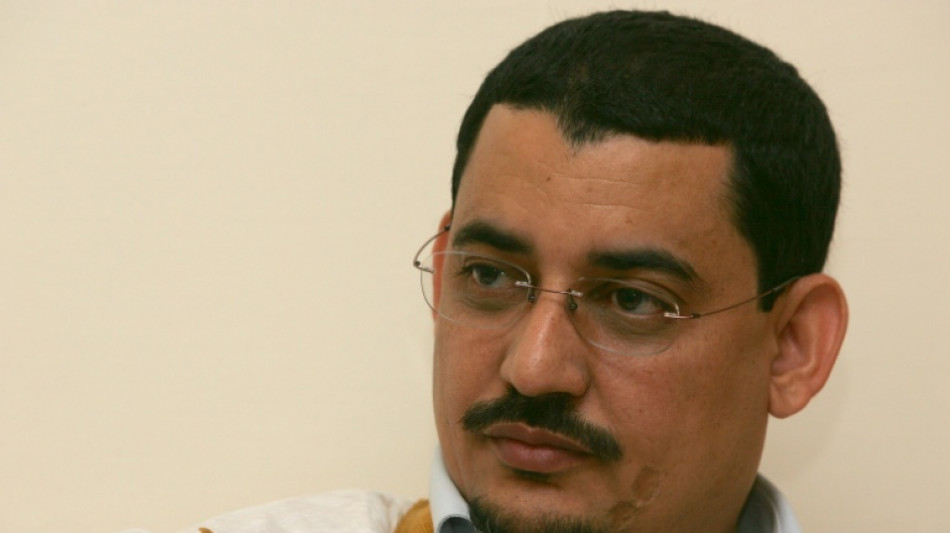
IMF director says Iran war fallout creating 'difficult moment' for Africa / Photo: GEORGES GOBET - AFP

 $1.8 Billion Pledged for Biodiversity at COP17 as Monaco Reaffirms Commitment

 Phoenix Symphony Resumes Performances Amid Financial Uncertainty

 Turkish Energy Minister Highlights Qatar as Key Partner for Regional and Global Energy Security

 London Museum Granted 24/7 License Ahead of November Opening

 Dana White Confirms Flight to Washington for Trump Meeting on Press Secretary Role

 Dengue Fever Expands Into High Himalayas as Climate Change Warms Nepal

 IoT Refrigerator Hacks Disrupt Blood Labs and Supermarkets Across Europe and US
The International Monetary Fund's Africa director on Monday warned that the economic fallout of the Iran war was creating a "difficult moment" for the region, and that it would take months for Gulf energy production to ramp back up.
"We are now in a difficult moment for the region, in particular after the war in the Middle East," Zeine Zeidane told reporters at the IMF's headquarters in Washington.
"Even though there is a ceasefire today, we know that the disruption will take time to be resolved," he said.
The Fund has in recent weeks ramped up its programs for African countries hit by high energy and fertilizer prices caused by the war.
Zeidane, who previously served as the IMF's deputy director for the Middle East and Central Asia department, warned that it would take Gulf countries time to ramp their energy production back to normal levels, after months of conflict.
"Most of them will tell you that you'll take six, seven months before going to full resumption of production and export," he said.
Speaking of sub-Saharan Africa, Zeidane lauded government reform programs undertaken in recent years as giving regional economies more resilience to the current energy supply shock.
Nevertheless, several African countries have approached the IMF for technical advice or financial assistance in the wake of the conflict.
Earlier this month, IMF spokesperson Julie Kozack said the multilateral lender would provide increased or accelerated access to funds to Ethiopia, The Gambia and Burkina Faso.
The Fund was also in "accelerated" talks with Malawi on a new IMF financial assistance program.
On Monday, the IMF said it had reached a staff-level agreement with Sao Tome and Principe on the third review of the island nation's ongoing $25 million program.
The latest agreement, once approved by the IMF's board, will clear the way for disbursement of around $6.1 million.
Zeidane said the IMF could not rule out that there would be further requests for augmentation or new programs in Africa by the end of the year.
C.Amaral--PC

