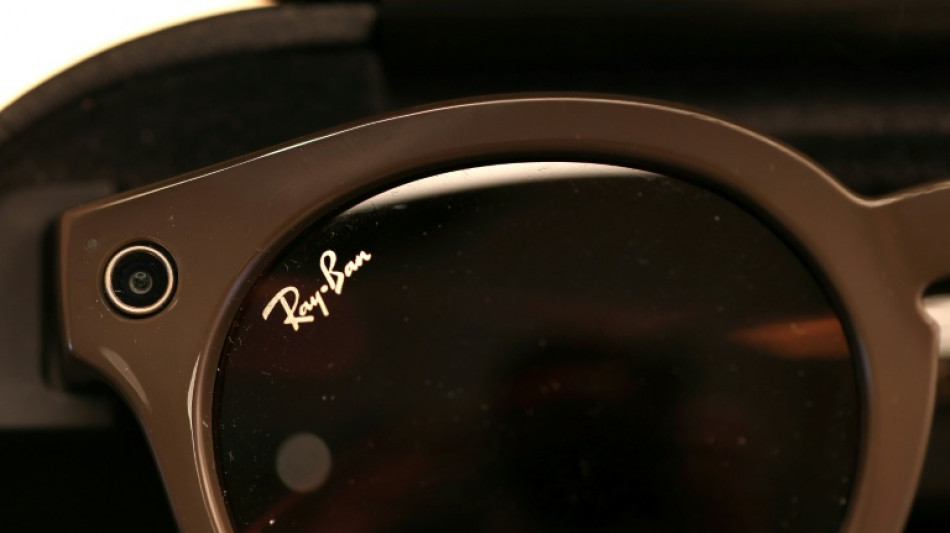
Meta offers lower cost glasses as wearables competition heats up / Photo: JUSTIN SULLIVAN - GETTY IMAGES NORTH AMERICA/AFP

 $1.8 Billion Pledged for Biodiversity at COP17 as Monaco Reaffirms Commitment

 Phoenix Symphony Resumes Performances Amid Financial Uncertainty

 Turkish Energy Minister Highlights Qatar as Key Partner for Regional and Global Energy Security

 London Museum Granted 24/7 License Ahead of November Opening

 Dana White Confirms Flight to Washington for Trump Meeting on Press Secretary Role

 Dengue Fever Expands Into High Himalayas as Climate Change Warms Nepal

 IoT Refrigerator Hacks Disrupt Blood Labs and Supermarkets Across Europe and US
Meta on Tuesday launched a new line of smart glasses priced slightly lower than its Ray-Ban-branded glasses, as competition heats up in the AI-powered wearable tech space.
The glasses are being made in partnership with eyewear giant EssilorLuxottica, but won't carry that company's Ray-Ban or Oakley branding, unlike previous releases.
The new glasses will start at $299, slightly less than its Ray-Ban smart glasses, which start at $379.
Meta smart glasses allow you to shoot photos and videos, listen to music, take phone calls and interact with an integrated AI assistant including for live translation.
Meta also sells two Oakley-branded pairs that start at $399, while its top-of-the-line Meta Ray-Ban Display glasses are priced at around $800.
"We just feel like we need to have a pair of glasses at a lower price point, and we were trying to figure out what could work there," Meta's vice president of wearables, Alex Himel, told The Verge.
The glasses will offer an array of photo, video and other AI features powered by Meta's own AI models, and will support live translation in 14 new languages.
While Meta currently dominates the market for smart glasses, other companies are trying to catch up.
Earlier this month, Snap, the maker of social media app Snapchat, announced its own new generation of smart glasses, called Specs, which will provide an augmented reality experience beyond what Meta offers.
People will be able to use Snap's Specs without pairing them with a smartphone, and the glasses will project digital objects onto the surrounding environment.
Specs will launch later this year for $2,195 -- many times more expensive than anything Meta offers.
Apple is also reportedly gearing up to launch its own smart glasses in 2027. The iPhone maker previously launched a mixed-reality headset called Vision Pro for $3,499, but sales have been lackluster.
X.Brito--PC

