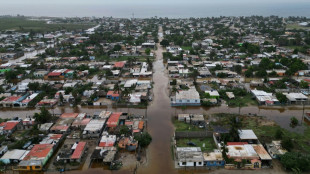
IMF warns cost-of-living shocks cause 'lasting deterioration' in affordability / Photo: Daniel MIHAILESCU - AFP

 FIFA chief Infantino hit by Norwegian double complaint

 Exiled Catalan separatist leader Puigdemont cleared to return to Spain

 Stock markets climb as oil prices retreat

 'No future': Thousands mass in France for high school protests

 Nobel physics prize honours work on 'ghostly messengers' from outer space

 Bulgaria searches for missing crew after drones hit two more ships in Black Sea

 Le Pen vows drastic cost savings to prevent French 'default'

 'Eats through a straw': French teens wounded in high school protests
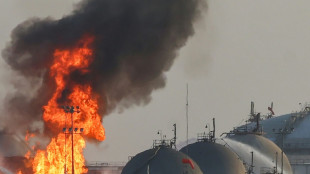
 Thousands mass in France for high school protests

 Moscow denies sanitary measures over plague reports

 Samoa look to recreate 2022 final run at Rugby League World Cup

 Asian stocks mostly up after tech-led Wall St record

 German factory orders plunge as recovery still fragile
 Coco Gauff calls out online racism following China open video review

 KVB Accelerates Middle East Footprint with Strategic MENA Regional Expansion
 Purple reign: Philippines seeks to keep grip on ube throne

 Seoul weighs steps to force North Korea landmine apology

 Yemen's Houthis say struck Riyadh airport, other Saudi sites

 Changer+ Launches Stablecoin-First Self-Custodial Wallet to Make Stablecoins Easier to Use

 White Sox down Guardians, Yankees on brink after Rays loss

 COP31 eyes modest steps as climate disasters multiply

 American Nobel laureate in medicine hopes to illuminate the brain

 Trump approves firing squad for convicted US military base shooter

 Grappling with 'homework scams,' US universities shun AI detectors
 Separatists win Quebec election in test for Canada PM

The International Monetary Fund warned Tuesday that price increases for necessities like food and energy, fuelled by the wars in Iran and Ukraine, were more persistent than previously expected.
Global prices for many commodities have remained elevated for several years, fuelled first by pandemic supply chain shortages and then by the wars in Ukraine and Iran.
The war in Ukraine snarled supply chains for many food-related goods as well as energy, and the US-Israel war on Iran has seen energy and fertilizer prices skyrocket due to the closure of a key Gulf supply route.
"We find that the prices of necessities relative to other goods continue rising for more than a year after the start of a typical episode, and remain persistently elevated," the IMF said in a blog post accompanying its new report.
"As a result, people face not only a temporary spike in food and energy costs, but a lasting deterioration in the affordability of essentials relative to other items."
Households worldwide have struggled with cost of living increases due to the wars and the pandemic, with wages struggling to keep up with persistent price pressures.
The Iran war, launched in February this year, has pushed global inflation and saw the IMF upgrade its forecast for the metric to 4.7 percent worldwide in 2026, compared to 4.1 percent the year before.
The IMF is due to release the main portion of its World Economic Outlook update next week, with new figures for global growth and inflation forecasts.
Tuesday's report is part of that release, focusing on lessons learned from the cost-of-living crises of the last five years.
The IMF warned that the consequences of so-called supply shocks extended far beyond "a few months of higher inflation."
Central banks across the world have begun raising interest rates to combat the inflation.
Raising the key rate of an economy can help fight higher prices, but also tends to slow economic activity -- a difficult balancing act in developing countries that may not be able to afford the slowdown.
The report said that the persistent inflationary pressures were a threat to macroeconomic stability for many countries.
"Inflation remains elevated long after the initial surge in food and energy prices," it said.
"Inflation expectations also rise and stay above pre-crisis levels for years, suggesting that these episodes may complicate efforts by central banks to control inflation."
The burden of those price increases falls disproportionately on working-class families, for whom spending on necessities is both non-negotiable and forms a larger share of their monthly spending.
As a result, such inflation has a "substantial" impact on increasing poverty and income inequality.
The Fund called on countries to avoid broad-based subsidies to combat such crises, and to instead issue "targeted and temporary transfers" to those who need them most.
With global debt levels at elevated levels, however, many low-income and developing countries lack the fiscal space to do so, especially given the repeated shocks since the pandemic.
T.Resende--PC