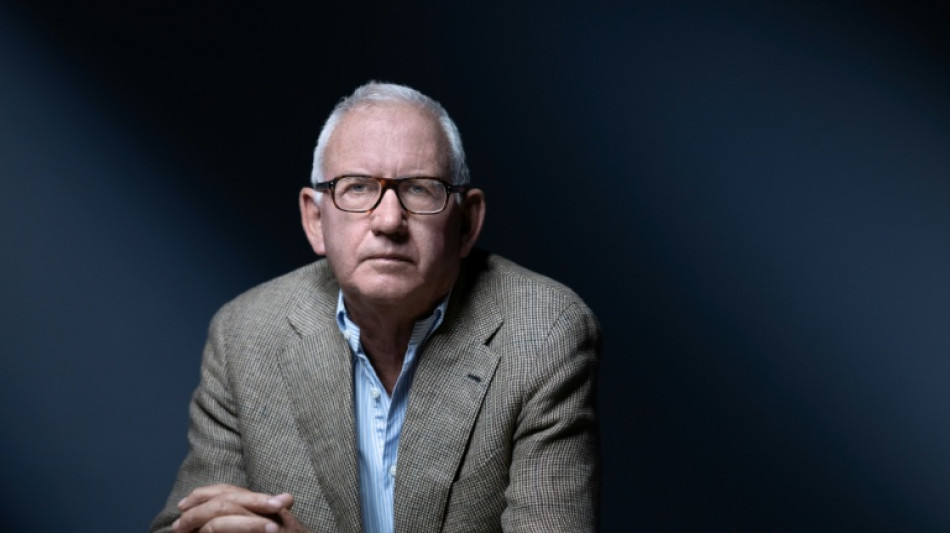
The British historian helping the French rediscover de Gaulle / Photo: Joel Saget - AFP

 Rookie Henry named in Wallabies midfield to face All Blacks
 Housing crisis set to dominate Spain's snap election
 Gas, health care, utilities: high costs squeeze US midterm voters

 New Zealand Rugby seeks injunction over PNG Chiefs name
 Samsung expects 780% quarterly operating profit jump on AI boom

 Guardians survive with 9-3 win over White Sox
 Saudi Arabia says 3 dead at airports after Houthis claim attacks

 Stocks slide as oil sees volatile trading day over Iran war fears
 Microsoft pushes AI vision with new, expensive Surface laptop

 Five children among 28 killed in Russian strikes on Ukraine
 Odell Beckham Jr signs with Minnesota Vikings
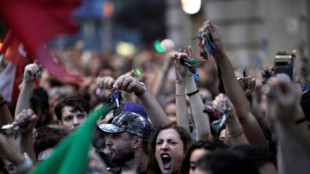
 Saudi Arabia says three dead at airports after Houthis claim attacks

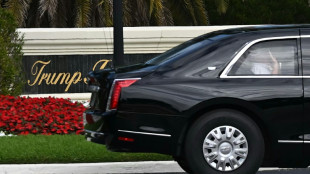 Trump plans to turn Florida golf course into presidential retreat
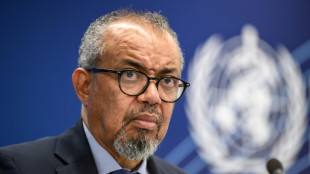 WHO says cannot conduct full risk assessment on Russia plague reports

 After botched execution, US woman is awake and shackled to bed
 New Zealand fly-half Mo'unga ruled out of Australia Tests
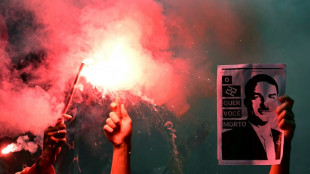
 Protests in major Turkish city after mayor defects to Erdogan party
 Climate change strips island's title of largest penguin colony: study
 Rubio says West must choose between national power or decline

 Russia's plague scare: What we know
 French luxury giant to fund redevelopment of two Paris streets: city hall
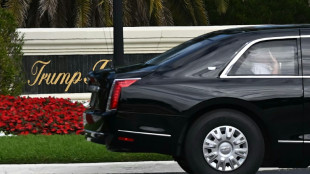 Trump wants to turn Florida golf course into presidential retreat
 Mayor of Turkish opposition stronghold defects to Erdogan party

 Children among heavy casualties in Ukraine after Russian strikes
 Court orders German ex-spy chief kept in jail after spying, treason arrest
British historian Julian Jackson has played a crucial role in creating the French cinema sensation of the year: a two-part biopic about 20th-century political colossus Charles de Gaulle.
The 72-year-old scholar is the author of the definitive modern biography of the French wartime leader "A Certain Idea of France", which became popular among French readers after its translation in 2019.
It served as the basis for the de Gaulle films, directed by diplomat-turned-director Antonin Baudry, with Jackson serving as an adviser on the adaptation and script.
He is clearly happy with the result -- nearly six million cinema tickets sold -- and finds the success fascinating: for what it reveals about the country's blindspots, as well as the state of its highly unstable politics.
"The first thing is that clearly there's a kind of disenchantment with politics in France right now," Jackson told AFP. "And I think people, almost psychologically, found it reassuring to latch onto someone who, in a way, made politics feel magical again."
De Gaulle remains influential in French public life 56 years after his death, with modern politicians from President Emmanuel Macron to others on the right and even the far-right positioning themselves as heirs of the conservative leader known as "the general".
- 'Surprised me' -
But the second revelation of the films, which premiered in May, has been the extent to which de Gaulle's full story was unknown to many, added Jackson.
The famously tall and stubborn leader became the head of the Free France movement in 1940 -- refusing the armistice signed with Nazi Germany -- and fled to London to spearhead opposition to the collaborationist French government.
He would go on to rally support in France's colonial territories and build links to the Resistance movement inside France, all while negotiating with sometimes sceptical and frequently exasperated Allied leaders Winston Churchill of Britain and US President Franklin D. Roosevelt.
"I thought everyone (in France) knew de Gaulle's story pretty well because he's so present in people's minds," Jackson explained. "But after the film came out... I realised just how little the French actually know about de Gaulle. That really surprised me."
Many people remember de Gaulle best as the visionary post-war political leader who returned to the public stage in 1958, helping end a political crisis over French-run Algeria and the threat of a military coup.
That led to the creation of the modern constitution -- the Fifth Republic -- which de Gaulle designed in his image.
"I think that what French people remember is the de Gaulle of the 1960s," said Jackson, who is a professor at Queen Mary University of London.
And despite the modern-day reverence for de Gaulle, he was "absolutely hated" when he left power in 1969, humiliated by student protests the year before and a failed referendum, Jackson said.
- 'Racist party' -
With France again gripped by student protests, nationalism on the rise and a president plumbing new depths of unpopularity, it is tempting to reach for historical parallels that would help illuminate the present.
But Jackson sees no periods in modern French history that compare with the current era.
"I think we're living through a universal crisis of liberal democracy, which is not just French," he explained. "So I'm a bit suspicious of these historical parallels because, except at the most absolutely banal level that there's some sort of crisis going on, the detail is so different."
The most obvious parallel is to the 1930s, with its economic crises that led to high unemployment, the search for scapegoats in the form of anti-Semitism, and ultimately the advent of fascism, Jackson said.
"I'm not sure it's fascism we're faced with today. There are no militarised movements like fascism that I can see, but we've got something very dangerous."
Far-right anti-immigration leader Marine Le Pen, who polls suggest would win a presidential election if it were held today, is the head of "a racist party".
"There's no doubt, it's a party of exclusion," Jackson said. "It's a party of a very narrow inward-looking kind of nationalism."
"(But) I don't think she's a threat to democracy. If she wins, I don't think there will never be another election. That is important. That is not Hitler," he said.
S.Caetano--PC