
Egypt Reaches Final IMF Agreement; Questions Remain on Economic Independence

 Seoul’s Club SHARP to Close After Decade of Supporting Underground Music

 Alavita Founder Anne Harles Outlines Organic Expansion Strategy

 Florida woman charged after deputies report finding cocaine and sales ledger

 Heat end Knicks’ NBA Cup defence with 108-105 victory

 Black Friday laptop promotions cover Apple, Lenovo, HP and gaming models

 Black Friday fashion sales bring discounts of up to 80 percent

 Shark reduces prices on top-rated stick and robot vacuums

 Anthony Lee’s Journey from Fashion to Art Education at HoMA

 Black Friday discounts arrive on tested Yeti coolers and drinkware

 UK survey records sharp rise in young adults reporting no sexual experience

 Audi RS 3 long-term test leads debate over the ideal everyday performance car

 Ontario family seeks return of Chevrolet Bolt after charging cable shock

 Canada launches $6.5 billion strategy to transform forestry sector

 Calgary Catholic schools report strong results and growing classroom complexity

 Bombay HC Orders Bank of Baroda to Pay Rs 1.5 Crore to Octogenarian After Unilateral FD Deduction

 Danny Trejo Claims Legal Threats Prevented Him From Quitting Ben Shapiro ICE Film
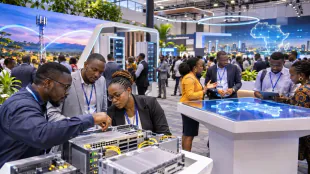
 Workday weighs South African public-sector demand while keeping data in EU

 iOCO acquires procurement software specialist Intellection

 RunCzech Advent Running Challenge Offers Prague Half Marathon Entries

 EasyEquities says small group of client accounts targeted in attack

 Regulator examines E9Pay after hacking losses reach 2.5 billion won

 North Korea and Russia agree to expand joint economic projects

 Seoul monitors reports of possible Kim Jong-un visit to China

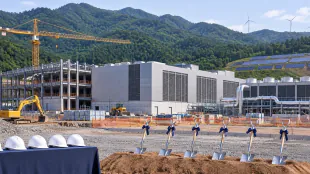 Lee joins launch of 2.4-gigawatt AI data centre project in Gangwon
Egypt has reached a staff-level agreement with the International Monetary Fund for $2.3 billion, concluding its current eight-year support program. While the deal strengthens external buffers, Cairo has signaled it will not seek further IMF financing, shifting focus to whether the economy can sustain itself without new international loans.
Egypt and the International Monetary Fund (IMF) have reached a staff-level agreement on the eighth and final review under its 48-month Extended Arrangement, as well as the third review under the climate-linked Resilience and Sustainability Facility. The deal entitles Egypt to receive $2.3 billion in funds.
This agreement marks the conclusion of the current support cycle, covering the eighth and final review of the Extended Fund Facility (EFF) and the third review of the Resilience and Sustainability Facility (RSF). While IMF Board approval is still pending, both arrangements are set to lapse on December 15. The Egyptian government has indicated that it will not seek new financing from the Fund, shifting the central economic question from whether Egypt will borrow again to whether its economy can stand without external support.
Despite the conclusion of the current program, recent data suggests that Egypt’s external buffers have strengthened. In an October report on the country’s economy, S&P Global Ratings noted that while high-frequency data showed higher energy import costs weighed on the external position, this was partly offset by strong export earnings, record-high remittances, and robust tourism receipts.
Suez Canal revenue also continued to recover, rising to $3.4 billion in the first nine months of fiscal 2026 from $2.8 billion during the same period in fiscal 2025, although it remains below pre-2023 Red Sea conflict levels. The banking sector has also provided an important external buffer, with net foreign assets attaining a six-year high of $31.2 billion during the same period. Net international reserves hit a record $57.5 billion at the end of October.
The report stated that further capital outflows will likely be absorbed through the banking system’s net foreign assets position before becoming visible in international reserves data. However, questions remain regarding the sustainability of these inflows. Egypt’s foreign currency earnings are driven largely by non-productive sources rather than industrial output. Remittances hit a record $33.9 billion in the first eight months of 2026, up 27 percent. Suez Canal revenue jumped by 23 percent to $4.67 billion last fiscal year, according to data from the Central Bank of Egypt (CBE).
Tourism has also contributed significantly. Much of the remittance jump followed the 2024 currency float, which pulled informal flows into the banking system. However, Egypt’s tourism sector remains vulnerable to regional instability. The overall balance of payments closed the 2025/26 fiscal year with a surplus of $2.8 billion. While inflows are currently covering growing outflows, this dynamic becomes precarious if remittances flatten.
The IMF warns that downside risks remain significant. According to the Fund, escalation of regional conflicts could disrupt trade and investment and, alongside tighter global financial conditions, trigger capital outflows and raise borrowing costs. Amine Mati, head of an IMF mission that visited Cairo earlier this month, stated: "While high debt and financing needs remain key vulnerabilities. Conversely, easing tensions, stronger Suez Canal activity, and faster reform implementation could further lift growth."
Direct investment plays a key role in maintaining sustainable economic growth by creating jobs and increasing national income. To increase direct investment, there must be an attractive business climate that prioritizes the private sector. An economy’s ability to lure foreign direct investment (FDI) is a global issue, rather than an Egyptian or regional one, given unabated efforts by mature and developing economies worldwide to take a bigger slice of the market.
FDI inflows are deemed essential for economic revamp, aimed at lifting growth rates and slashing unemployment. This requires reviewing, revising, and revamping the nation’s investment environment. In 2015, Egypt enacted an investment law that introduced a one-stop-shop system to facilitate licensing and other official procedures. In May 2017, parliament passed another government-initiated investment bill, replacing the previous legislation.
The 2017 investment law provides investors with a package of advantages and incentives. For the first time, investors can hire foreign labor in Egypt. However, despite global direct investment taking a blow due to the Covid-19 pandemic and the Russia-Ukraine war, Egypt faces specific challenges undermining private investment.
The real challenge is often described as a mindset issue and red tape. Despite the one-stop-shop system installed by the law, investors grumble about time wasted in setting up their own businesses. In contrast, in countries like the United Arab Emirates (UAE), an investor can establish a business via the Internet in about 15 minutes.
Empowering Egypt’s private sector is imperative as part of promoting market-oriented economic policies for all-inclusive growth. Boosting the private sector’s role requires revamping the business climate via more investment incentives, including registration and licensing facilitations as well as tax relief.
O.Gaspar--PC