Crabs and tea cups: UK show lifts the lid on Covid vaccine race / Photo: JUSTIN TALLIS - AFP

 US warns of rapid escalation in Mideast war

 Iran 'put hearts on the court' to win Asian Games basketball bronze
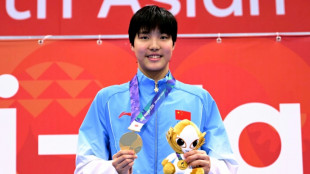
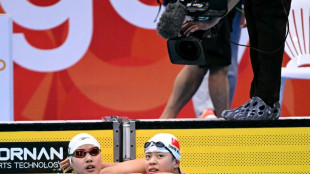 School girl Yu helps China dominate in Asian Games swimming openers

 Myanmar win first Asian Games teqball gold as Spain great Puyol watches

 China's 13-year-old Yu scorches to first major gold at Asian Games

 Russians vote on last day of parliamentary elections

 Hong Kong pays final respects to former city leader Tung

 Typhoon put people off Asian Games opening ceremony, official says

 China's 13-year-old Yu cruises as Asian Games swimming begins

 AI 'warning shots' focus Beijing on national security risks

 Philippine tribe in limbo over US-led tech hub

 Leo XIV, first US pope transcends his restrained style

 Singer Ed Sheeran says Gaza situation 'unjustifiable' following controversy

 In 'Tenzing', a Sherpa mountaineer gets his due

 Ed Sheeran set to return to stage after Palestinian controversy

 Toulouse edge Vannes, Lyon beat Pau to take Top 14 summit

 Germans arrested for Louvre stunt in Mona Lisa hall

 Saudi-led coalition says Houthis fired ballistic missile at Riyadh

 France's debt climbs to highest since 1978: ministry

 McIlroy two shots off the lead at Wentworth after eagle on 18

 Martinez brace saves Inter in Serie A top-two clash with Roma

 Rosenior abused but guides Paris FC past old club Strasbourg

 Seven-try Lyon beat Pau, climb to Top 14 summit

 Brighton defeat a 'big lesson' against complacency for Arsenal, says Arteta

 Thousands protest inaction over climate crisis in Switzerland

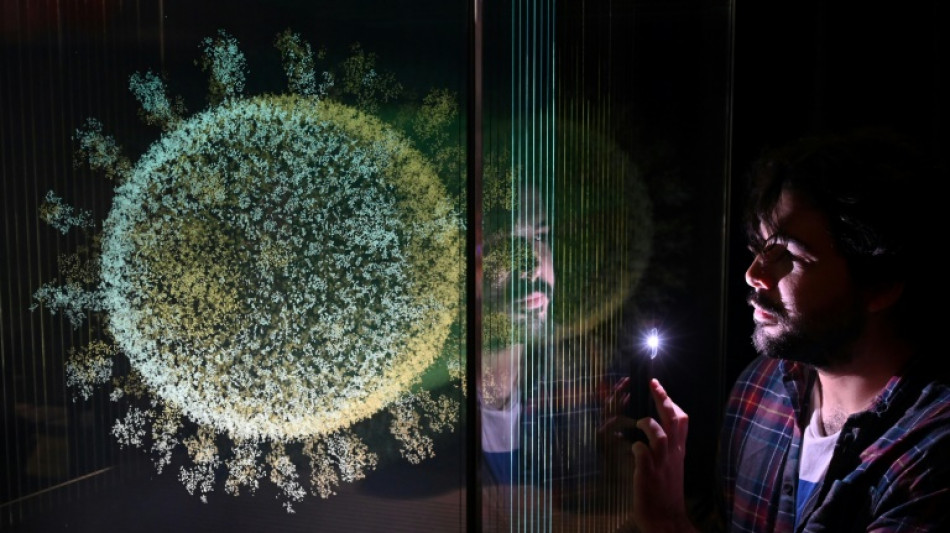
From a scientist's laptop to the syringe used to inject the UK's first Covid vaccine dose, an exhibition that opened Wednesday in London recounts the quest to produce a coronavirus jab through objects.
The "Injecting Hope" show at the Science Museum "explores the worldwide effort to develop vaccines at pandemic speed", looking at key moments in their design, trial, manufacture and rollout, says deputy director Julia Knights.
Items on display include artworks, notes taken by UK vaccine chief Kate Bingham during early meetings to decide the country's strategy, and the syringe used to administer its first dose.
Machines used to manufacture the vaccine are also on show along with personal artefacts of those at the heart of the battle to beat the virus.
They include the laptop and mug that Teresa Lambe, co-developer of the Oxford University/AstraZeneca vaccine, relied upon during a weekend of intense work to calculate what its chemical composition should be.
"Once they had an understanding of the genetic make-up of this new virus, she essentially sat at home, on her laptop, in her pyjamas, drinking lots of cups of tea, designing a vaccine," explained exhibition curator Stewart Emmens.
"We have a laptop, we have a mug and we have a T-shirt on display here. It's nice, in amongst all the science, to really drive it home that there are people behind this, just normal people doing their jobs."
The museum began collecting objects related to Covid in February 2020 as "objects associated with epidemics and pandemics are largely missing from historic collections", said Emmens.
- 'Crucial' crabs -
The first section features news footage of lockdowns and images of deserted capital cities, empty shelves, at-home schoolchildren and food delivery apps, taking visitors back to the pre-vaccine world.
After exploring the development and testing of the products, visitors then get a glimpse into the unprecedented plans to administer the vaccine to Britain's 67 million citizens.
Along with Bingham's scribbled notes are maps integral to the UK's successful rollout.
"When we collected these, they were just plastered on the walls of NHS headquarters," explained Emmens.
"Most people would think... vaccinating countries would be a very much a digital project, very much a big data, number-crunching exercise.
"But here we have these physical maps, which were used quite early to work out where best to place vaccine centres."
He also hopes that the show will reassure those nervous about taking the vaccine due to its speedy arrival on the market.
"Nothing focuses the mind like a global pandemic," said Emmens.
"The vaccines were following the same processes of approval, and trialing and testing as would normally be the case," he said.
"But very cleverly, things were streamlined, overlapped in a way that gave the same results as you would get normally, without cutting corners."
Sitting incongruously among the gleaming machines are also a collection of crabs.
"We do have some examples of horseshoe crabs within the exhibition, which many visitors will be very surprised by," said Emmens.
The blood from the horseshoe crabs is highly sensitive to bacterial contamination, and is used to make sure the vaccine and the vials that carry it are clean, he explained.
"So they've played a... crucial if unlikely role in the vaccine story."
A.S.Diogo--PC