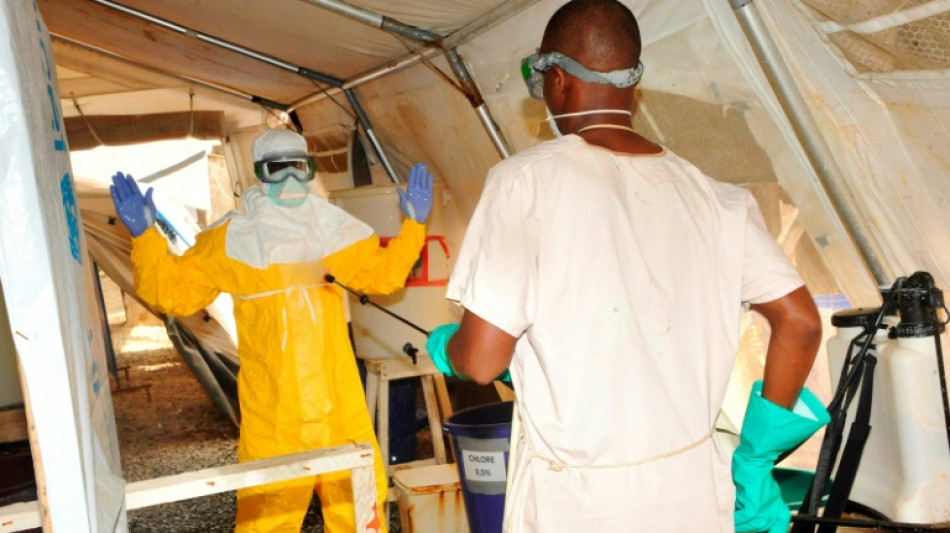
Death toll in E. Guinea Marburg outbreak rises to 11 / Photo: CELLOU BINANI - AFP/File

 Kospi Falls Below 5,000 as U.S. AI Regulation Fears Trigger Circuit Breaker

 Valsoft's TAG Software Group Enters the Content Operations Market with the Acquisition of Chalco

 South Korea Proposes Fourth Delay of Cryptocurrency Gains Tax to 2029

 ASIC Fines Mona Museum Owner's Company for Late Financial Report

 Business Leaders Criticize Productivity Commission Inquiry Scope

Two more people in Equatorial Guinea have died of Marburg haemorrhagic fever, a cousin of the Ebola virus, bringing the toll of fatalities to 11, the authorities say.
"Two days ago, the monitoring system recorded eight notifications, including the deaths of two people with symptoms of the disease," Health Minister Mitoha Ondo'o Ayekaba said in a statement issued late Tuesday.
Work is underway "to strengthen assessment of the spread of the epidemic," said the statement, read on national television.
"Forty-eight contact cases have been documented, four of whom have developed symptoms, and three who have been quarantined in hospital," it added.
The Marburg virus is a rare but highly dangerous pathogen that causes severe fever, often accompanied by bleeding and organ failure.
It is part of the so-called filovirus family that also includes the Ebola virus, which has wreaked havoc in several previous outbreaks in Africa.
The central African state announced on February 13 that nine people had died from Marburg between January 7 and February 7.
The UN's World Health Organization (WHO) held an emergency session the following day.
The national authorities have declared a health alert in the remote northeastern province of Kie-Ntem province and in the neighbouring district of Mongomo, which are located on the border with Cameroon and Gabon.
Measures include a lockdown plan implemented in collaboration with the WHO.
In their statement of February 13, the authorities had reported only three cases of infection in addition to the fatalities -- individuals who were being isolated with "mild symptoms" in hospital.
The natural host of the Marburg virus is the African fruit bat, which carries the virus but does not fall sick from it.
But the animals can pass the virus to primates in close proximity, including humans, and human-to-human transmission then occurs through contact with blood or other bodily fluids.
Fatality rates in confirmed cases have ranged from 24 percent to 88 percent in previous outbreaks, depending on the virus strain and case management, according to the WHO.
There are currently no approved vaccines or antiviral treatments.
Potential treatments, including blood products, immune therapies and drug therapies, as well as early candidate vaccines are being evaluated, the WHO says.
E.Paulino--PC