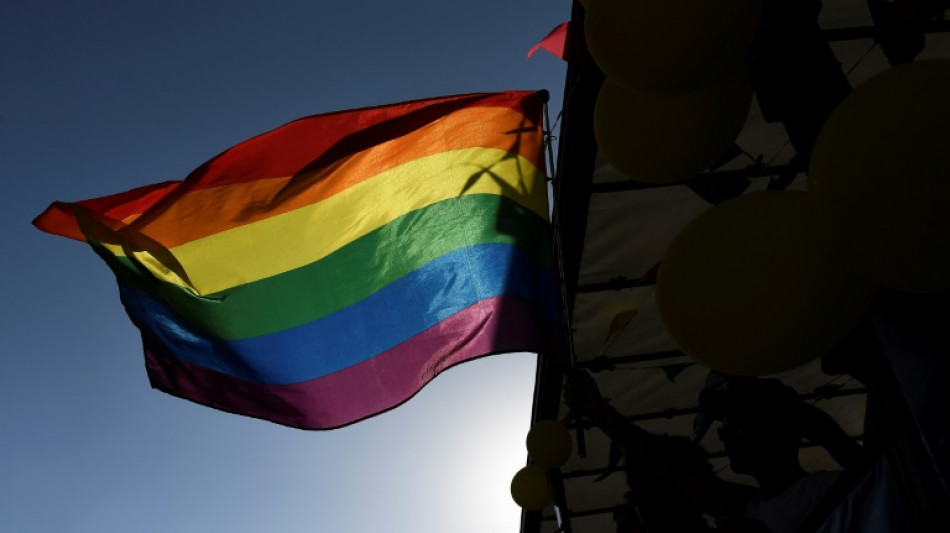
Scientists discover genetic underpinnings of bisexuality / Photo: Pau BARRENA - AFP/File

 2 killed, 13 wounded in bus blast near Syrian capital: state media

 All Blacks skipper Taylor cautiously recovering from calf strain

 UN chief denounces Russia, Ukraine for civilian deaths
 UEFA turn up the pressure on Infantino and repeat boycott threat

 Rodri approves Barcelona transfer talks with Man City: Barca source to AFP

 Venezuela unable to tally missing from cataclysmic quakes
 Le Court sprints to stage six Tour de France Femmes win

 Doping body says Parker's positive cocaine test caused by nutritionist

 UEFA says boycott of World Cups stands despite FIFA backdown on private investment
 Rheinmetall sales keep surging despite cancelled naval frigate project
 Pogacar teammate Del Toro gets new UAE deal after Tour podium

 Stocks tread water with earnings, tech in focus

 Inevitable AI Group Raises $6M From Aleph to Launch AI-Native SaaS Companies
 Forlan named new Uruguay head coach

 UEFA chief Ceferin: 'Underdog' leader taking fight to FIFA's Infantino

 Salah completes move to Turkey's Trabzonspor

 UK clears Paramount's takeover of Warner Bros

 North Korea fires ballistic missile: South Korea military
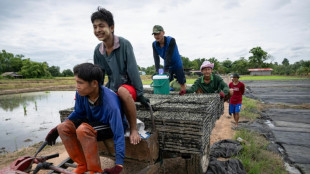 'Don't have to hide': Thai IDs, legal work give hope to Myanmar refugees

 Stocks mixed with tech firms back under pressure

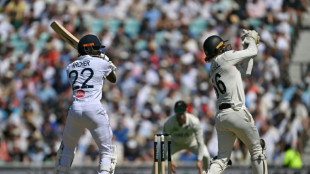 How Blundell's old school tactic ended England's 'Bazball' era
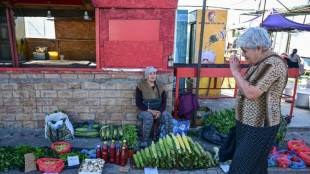
 Israel reports troop deaths as Lebanon talks underway in Rome
 Seeds Rybakina, Pegula, Gauff reach third round at WTA Toronto

 Police raid South Korea FA in probe into World Cup coach appointment

 Low water on Germany's Rhine river threatens new blow to economy

For the first time, scientists have identified genetic variations associated with human bisexual behavior -- and found these markers are linked to risk-taking and having more offspring when they are carried by heterosexual men.
Jianzhi "George" Zhang, a professor at the University of Michigan and senior author of the new research, told AFP it helped answer the long-standing evolutionary puzzle of why natural selection has not eliminated the genetics underpinning attraction within the same sex.
The study, published Wednesday in Science Advances, was based on data from more than 450,000 people of European descent who signed up for the UK Biobank, a long-term genomics project that has proven a major boon for health research.
It builds on growing research including a seminal 2019 paper in Science that found genetic variants influenced to some extent whether a person engaged in same-sex behavior, though environmental factors were more important.
"We realized that in the past, people lumped together all homosexual behavior...but actually there's a spectrum," Zhang said, explaining part of the motivation for the new work.
By studying participants' complete sets of DNA, or genomes, and combining that information with survey responses, Zhang and his co-author Siliang Song were able to confirm the signatures associated with same-sex behavior and bisexual behavior were in fact distinct.
- 'Nature is complicated' -
This meant they could be analyzed separately -- which in turn revealed that male heterosexuals carrying the markers, which they called bisexual behavior (BSB)-associated alleles, father more children than average and thus carry those genes forward.
What's more, men who describe themselves as risk-takers tended to have more children and were more likely to carry BSB-associated alleles.
"Our results suggest that male BSB–associated alleles are likely reproductively advantageous, which may explain their past persistence and predict their future maintenance," the authors wrote.
Although the UK Biobank's survey simply asked respondents whether they considered themselves risk-takers or not, it is likely risk-taking behavior involves more unprotected sex and more partners.
"Nature is complicated," said Zhang, reflecting on the fact that a single gene can influence multiple traits -- a phenomenon known as "pleiotropy."
"Here we're talking about three traits: number of children, risk taking, and bisexual behavior: they all share some genetic underpinnings."
On the other hand, exclusive same-sex behavior (eSSB) associated alleles were correlated with having fewer children when carried by heterosexual men -- suggesting that over time these traits will fade away.
However, the UK Biobank data also revealed the proportion of people reporting both bisexual and homosexual behavior has been rising for decades, which is probably due to growing societal openness.
The authors estimated, for instance, that whether a person is bisexual or not in their behavior is 40 percent influenced by genetics, and 60 percent by the environment.
"We want to make it clear that our results predominantly contribute to the diversity, richness, and better understanding of human sexuality," they stressed. "They are not, in any way, intended to suggest or endorse discrimination on the basis of sexual behavior."
C.Amaral--PC