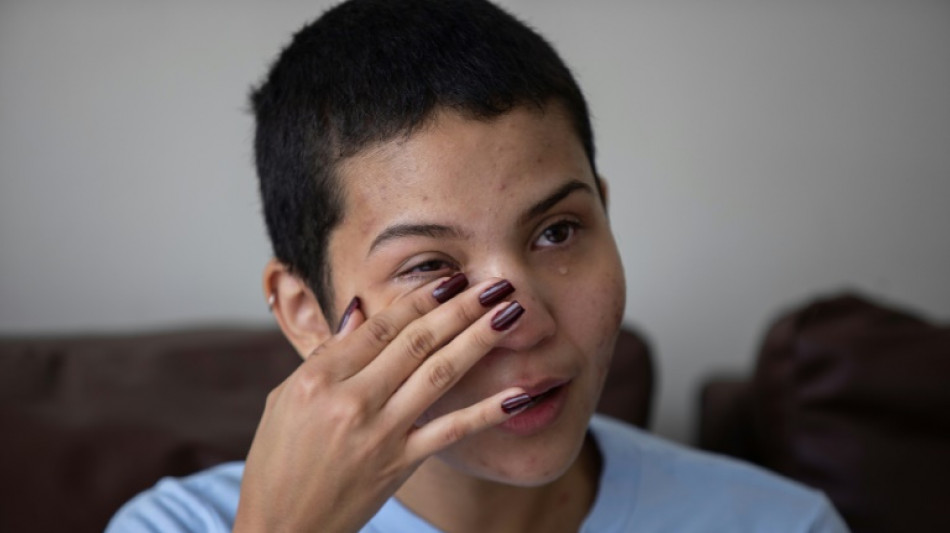
Emigrate or waste away: dilemma for Venezuela multiple sclerosis patients / Photo: Pedro Rances Mattey - AFP

 British Grand Prix stays on MotoGP calendar until 2028

 Britain's EasyJet flies into US hands as takeover confirmed

 Real Madrid sign Ivory Coast winger Yan Diomande

 How online disinformation fuelled Ceuta migrant surge
 Inevitable AI Group Raises $6M From Aleph to Launch AI-Native SaaS Companies

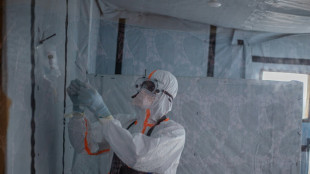 Suspected Ebola death on boat heading for DR Congo capital

 England selector North not 'hung up' on Stokes absence

 UK Anti-Doping confirm former world champ Parker's ban lifted

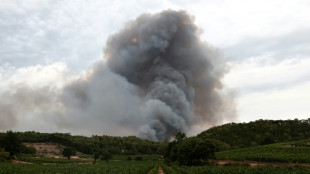 French winemakers dread 'smoky taste' after wildfires

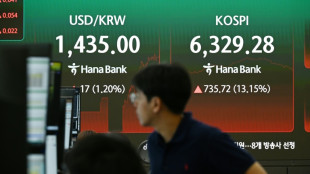 Stocks diverge with earnings, tech in focus

 England recall batsman Lawrence for Pakistan series
 Siemens shares plunge on disappointing guidance raise
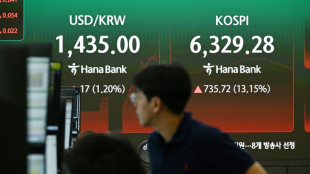
 New Australia coach Kiss gives Japan starts to Ross, Amatosero

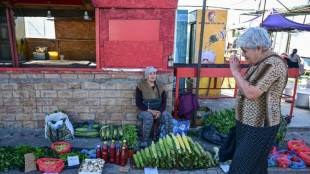 'Stretch our money': Romanians face highest EU inflation
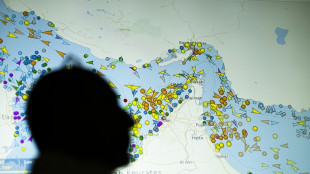 Iran says close to Hormuz plan with Oman, but reopening depends on US

 Messi scores twice to set Leagues Cup record in Miami victory
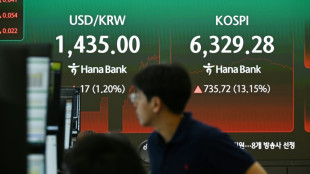 Asian stocks mostly down with tech firms back under pressure
 Back to the future as world champion Springboks host All Blacks

 India youth protests highlight mistrust in 'lapdog' media
 Pacific islands alarmed by Trump-backed push for deep-sea mining

 Erratic rains dictate menu at three-star Michelin restaurant in Brazil
 Zverev, Auger-Aliassime and Medvedev exit Montreal Masters
 Loar Holdings Inc. Reports Q2 2026 Record Results and Upward Revision to 2026 Outlook
 Embattled Infantino sees minnows Malawi reach WAFCON quarter-finals

 Seeds Rybakina, Pegula and Gauff advance at WTA Toronto event

For Venezuelan Jaimar Tuarez, 22, being diagnosed with multiple sclerosis felt like a death sentence in a country unable to provide the drugs she needs to keep her ever-worsening symptoms at bay.
With no means of paying for private treatment or tests, including a spinal tap that costs $800, the psychology student has launched a crowd-funding campaign on GoFundMe that she hopes will allow her to travel abroad in search of medical help.
"For many people the only option is to emigrate," Tuarez, who was diagnosed in 2022, told AFP at her apartment in Charallave, a city some 50 kilometers (31 miles) from Caracas.
"I have to get out of here..." she said through tears. "What will happen with my next relapse? Will I lose the ability to speak? I am 22 years old... what will happen to all my dreams, my plans?"
The plight of Tuarez and an estimated 2,000 other Venezuelans with MS -- a potentially disabling disease of the central nervous system -- underlines the difficulties facing people in need of chronic medication in cash-strapped Venezuela.
There is no cure, but drugs can alleviate MS symptoms.
According to the Inter-American Commission on Human Rights (IAHCR), Venezuela's IVSS social welfare institute stopped providing prescription MS medication years ago.
Venezuela is in the grips of an unprecedented economic crisis, with its once-thriving oil industry all but collapsed and GDP shrinking by 80 percent in eight years of recession until 2022.
Millions have fled in search of a better life elsewhere, many seeking a path to the United States.
- 'We are adrift -
Tuarez has weakened to the point where she can barely stand, forcing her to abandon her psychology studies and quit her job as an online editor that had helped augment the family income.
Now Tuarez and her mother, a stroke survivor, both depend on the meager income of her 72-year-old grandmother, who works at a beauty salon in the capital.
Andres Marcano, a 53-year-old translator diagnosed with MS two decades ago, told AFP his mobility has drastically deteriorated in the last five years after he stopped receiving state-funded medication.
"I find it difficult to speak. I don't walk. I am unable to stand and therefore I move around in a wheelchair," he told AFP via WhatsApp.
The situation "is serious, we are adrift," said another MS sufferer, Maria Eugenia Monagas, 57, who pays privately for treatment thanks to the income of her husband and two children, one of them abroad.
"Many are disabled, or dead, due to a lack of medicines," she said.
The government of President Nicolas Maduro blames the state's failure on US sanctions. But others point to graft allegations against officials from the health ministry and the IVSS in a country with a long history of corruption and mismanagement, according to international observers.
- No options -
Tuarez said her last relapse left her temporarily unable to speak, walk or eat independently.
She was prescribed steroids to ease the symptoms, but could not get any through the IVSS.
In the private sector, the medicines she needs cost as much as $30,000 per year.
Tuarez said she spent Christmas Eve sending out emails to aid organizations in different countries, seeking help to leave the country with her mother, who needs care and cannot be left behind.
So far, she has collected $600 out of her objective of $10,000.
Tuarez is overwhelmed at the thought of leaving behind her family, a beloved dog and two cats, but fears her life is in danger if she does not.
"I wish there were other options, to make a career and live my life (in Venezuela), but there are none," Tuarez said.
J.Pereira--PC