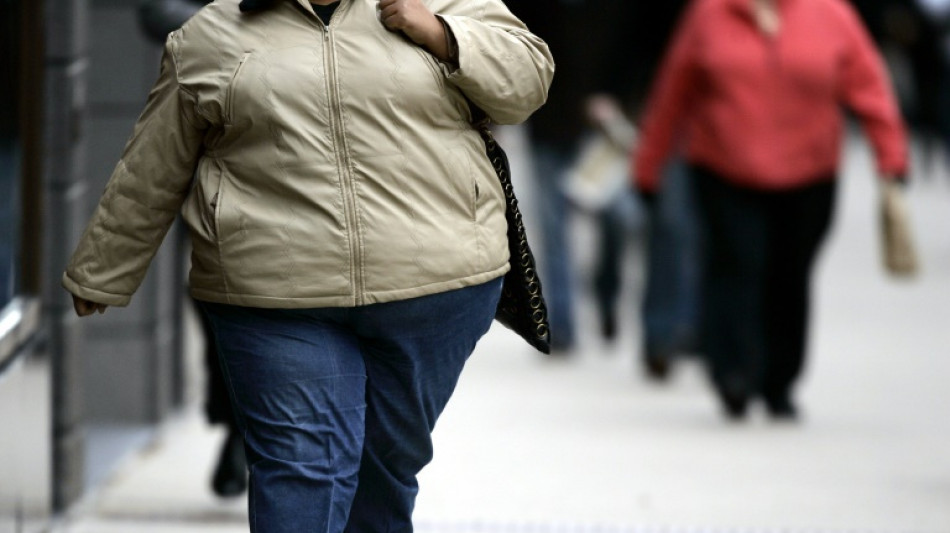
More than one billion now afflicted by obesity: Lancet / Photo: JEFF HAYNES - AFP/File

 British Grand Prix stays on MotoGP calendar until 2028

 Britain's EasyJet flies into US hands as takeover confirmed

 Real Madrid sign Ivory Coast winger Yan Diomande

 How online disinformation fuelled Ceuta migrant surge

 Inevitable AI Group Raises $6M From Aleph to Launch AI-Native SaaS Companies

 Suspected Ebola death on boat heading for DR Congo capital

 England selector North not 'hung up' on Stokes absence

 UK Anti-Doping confirm former world champ Parker's ban lifted

 French winemakers dread 'smoky taste' after wildfires

 Stocks diverge with earnings, tech in focus

 England recall batsman Lawrence for Pakistan series

 Siemens shares plunge on disappointing guidance raise

 New Australia coach Kiss gives Japan starts to Ross, Amatosero

 'Stretch our money': Romanians face highest EU inflation

 Iran says close to Hormuz plan with Oman, but reopening depends on US

 Messi scores twice to set Leagues Cup record in Miami victory

 Asian stocks mostly down with tech firms back under pressure

 Back to the future as world champion Springboks host All Blacks

 India youth protests highlight mistrust in 'lapdog' media

 Pacific islands alarmed by Trump-backed push for deep-sea mining

 Erratic rains dictate menu at three-star Michelin restaurant in Brazil

 Zverev, Auger-Aliassime and Medvedev exit Montreal Masters

 Loar Holdings Inc. Reports Q2 2026 Record Results and Upward Revision to 2026 Outlook

 Embattled Infantino sees minnows Malawi reach WAFCON quarter-finals

 Seeds Rybakina, Pegula and Gauff advance at WTA Toronto event

More than one billion people around the world are now suffering from obesity with the number having more than quadrupled since 1990, according to a study released by the Lancet medical journal.
The "epidemic" is particularly hitting poorer countries and the rate is growing among children and adolescents faster than adults, according to the study carried out with the World Health Organization.
The study, released ahead of World Obesity Day on March 4, estimated that there were about 226 million obese adults, adolescents and children in the world in 1990. The figure had risen to 1,038 million in 2022.
Francesco Branca, director of nutrition for health at the WHO, said the rise past one billion people has come "much earlier than we have anticipated".
While doctors knew obesity numbers were rising fast, the symbolic figure had previously been expected in 2030.
Researchers analysed the weight and height measurements of more than 220 million people in more than 190 countries to reach the estimates, Lancet said.
They estimated that 504 million adult women and 374 million men were obese in 2022. The study said the obesity rate had nearly tripled for men (14 percent) since 1990 and more than doubled for women (18.5 percent).
Some 159 million children and adolescents were living with obesity in 2022, according to the study, up from about 31 million in 1990.
The chronic and complex illness is accompanied by a greater risk of death from heart disease, diabetes and certain cancers. Being overweight increased the risk of death during the coronavirus pandemic.
Countries in Polynesia and Micronesia, the Caribbean, the Middle East and North Africa have suffered more from the rise.
"These countries now have higher obesity rates than many high-income industrialised countries, especially those in Europe," the study said.
"In the past we have tended to think of obesity as a problem of the rich, now a problem of the world," said Branca, who highlighted the fast lifestyle changes in low and middle-income countries.
- Eating badly helps obesity -
The "very rapid transformation of the food systems is not for the better".
Majid Ezzati of Imperial College London, the study's lead author, said there were signs that obesity was levelling out in some southern European countries such as France and Spain, "especially for women".
But he said that in most countries there are more people suffering from obesity than being under-weight, which the study said had fallen since 1990.
While not eating enough is the main cause of being under-weight, eating badly is a prime factor for obesity.
"This new study highlights the importance of preventing and managing obesity from early life to adulthood, through diet, physical activity, and adequate care, as needed," said WHO director general Tedros Adhanom Ghebreyesus.
He added that "getting back on track" to meet global targets for cutting obesity rates "requires the cooperation of the private sector, which must be accountable for the health impacts of their products".
The WHO has supported taxes on sugary drinks, limiting the marketing of unhealthy foods to children and increasing subsidies for healthy foods.
Experts say that new treatments against diabetes can also help combat obesity.
Branca said the new drugs "are an important tool but not a solution of the problem".
"Obesity is a long-term issue and it is important to look at the impact of these drugs on long-term effects or side effects," he added.
X.Brito--PC