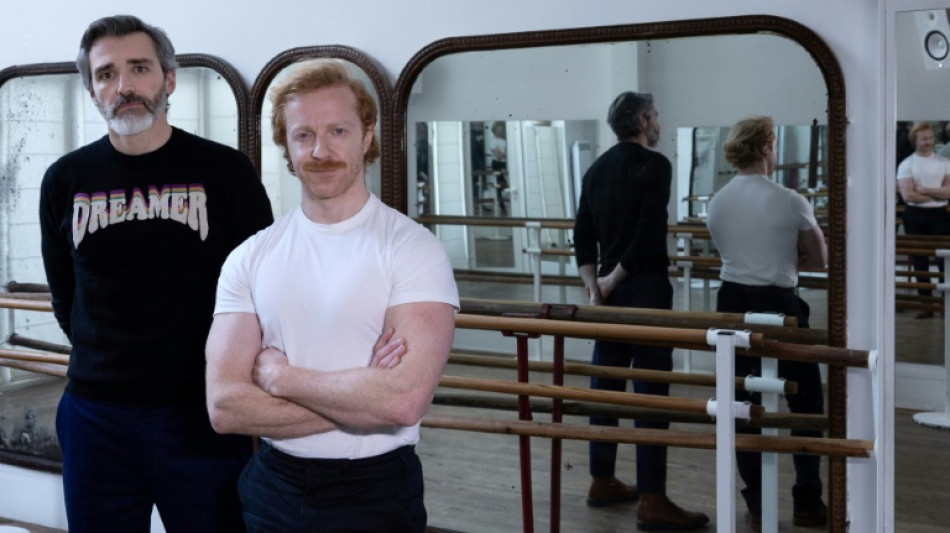
Ballet star and survivor Steven McRae says dance must change / Photo: ALAIN JOCARD - AFP

 UEFA chief Ceferin: 'Underdog' leader taking fight to FIFA's Infantino

 Salah completes move to Turkey's Trabzonspor
 UK clears Paramount's takeover of Warner Bros

 North Korea fires ballistic missile: South Korea military
 'Don't have to hide': Thai IDs, legal work give hope to Myanmar refugees

 Stocks mixed with tech firms back under pressure

 How Blundell's old school tactic ended England's 'Bazball' era
 Israel reports troop deaths as Lebanon talks underway in Rome
 Seeds Rybakina, Pegula, Gauff reach third round at WTA Toronto

 Police raid South Korea FA in probe into World Cup coach appointment

 Low water on Germany's Rhine river threatens new blow to economy

 Ex-Wallabies Foley, Phipps rejoin Waratahs ahead of home World Cup

 Rising Kenyan lakes push crocodiles closer to homes

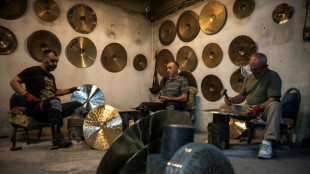 Istanbul cymbals: From Ottoman war tool to pulse of global music
 Myanmar ex-junta chief on first Thailand trip as civilian leader
 Environmental disaster looms as tanker leaks off Oman

 Google-parent Alphabet shakes up AI division

 FIFA back Infantino, apologise for World Cup privatisation plan

 Auger-Aliassime out of Montreal ATP event with injury
 Colombian baby hippo of Escobar stock dies after rescue

 Preakness shifts 2027 dates to entice more Derby horses

 Guatemalan volcano eruption ends, locals return home

 WHO chief urges stronger Ebola response in DR Congo visit

 Newcastle appoint Jaissle as new head coach after Howe exit
 Swiss ski star Lara Gut-Behrami calls time on 18-year career
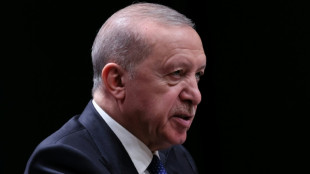
After an almost super-human recovery from an injury, star dancer Steven McRae says the ballet world must take much better care of its artists.
As charted in the upcoming documentary "A Resilient Man", McRae thought his high-flying career as a principal dancer in London's Royal Ballet was over when he heard the horrific sound of his Achilles tendon snapping midway through a performance of "Manon" in October 2019.
It took months for McRae to walk again, but he was lucky: the Royal Ballet is one of the only companies in the world with a dedicated medical team.
"In the world of dance, injuries have always been seen as a sign of weakness," he told AFP. "You're injured, you're useless. Out. Next!"
It took a Herculean two-year effort, supported by his physios, for McRae to return to the stage and get back in peak form.
But the experience has radically changed his view of the ballet world.
- 'Go go go' -
McRae had unlikely origins in Australia.
He is the son of a mechanic and drag-racer, with his family having limited funds for a classical dance education.
But talent and determination ultimately led him to first prize at the world's biggest dance competition, in Lausanne, and a scholarship to the Royal Ballet School.
"None of it was handed to me on a silver platter, and anyone who has to fight for something then protects it," he said.
"In that fear of losing it all, you say yes to everything. You don't complain about anything. Just go go go."
McRae became one of the company's biggest stars, but he did it by pushing his body to extremes with little care for his physical and mental well-being, relying on a steady intake of painkillers to survive performances and being so burned-out that he felt emotionally numb when he came off stage.
Something had to give, and, aged 35, it was his Achilles.
"Now I know I was dangerously underweight and not as powerful as I thought," he said.
"And the culture of ballet means I was surrounded by these alien bodies... it didn't matter how small or ill I looked, there were always many more people that looked worse than me."
- 'Stop torturing children' -
McRae is 10 kilos heavier than before his injury thanks to the muscle he has acquired in the gym. He sees that added strength as common sense and wants ballet to give up its obsession with slender figures.
"The reality is our profession is a visual art form so there's a certain look that complements what we're trying to create," he said.
"But over the years it's become so warped. There's this preconceived idea of that image... but who is this ballet god telling everybody what it should be?"
He said ballet academies often judge children more on appearance than skill.
"That's wrong... we need to be looking at them as young artists, as individuals. Not 'How long are their legs? How thin are they?'"
Even companies with physios and gyms are still not making time in weekly schedules for dancers to use them, he added.
"Now we have a medical team, we are receiving a lot of new information from sports scientists about our physical and mental well-being and how it's correlated," he said.
"Now it's time to respond. It doesn't have to be huge -- just small, incremental changes. We can still achieve excellence without sacrificing our entire world."
Stephane Carrel, the director of "A Resilient Man", which will be released in Britain and elsewhere later this year, said he hopes the film will encourage change.
"It would be good to stop torturing children and ensure that dancing remains, above all, a pleasure," said Carrel.
Nonetheless, he said watching the extreme efforts of dancers helped motivate his own work.
"Trying to get a documentary made is extremely difficult... so to see Steve's fight, it helped me a lot. I told myself: I'm not giving up."
X.M.Francisco--PC