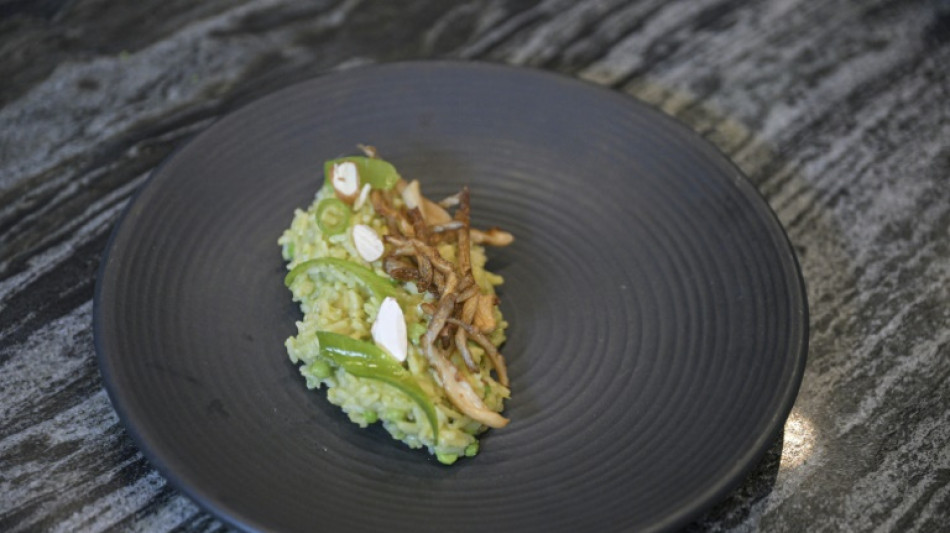
Waste not want not: Peruvian drive to feed more with less / Photo: Ernesto BENAVIDES - AFP

 UEFA chief Ceferin: 'Underdog' leader taking fight to FIFA's Infantino

 Salah completes move to Turkey's Trabzonspor
 UK clears Paramount's takeover of Warner Bros

 North Korea fires ballistic missile: South Korea military

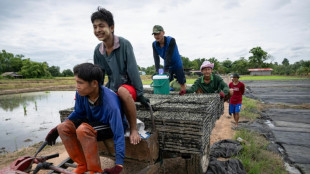 'Don't have to hide': Thai IDs, legal work give hope to Myanmar refugees

 Stocks mixed with tech firms back under pressure

 How Blundell's old school tactic ended England's 'Bazball' era
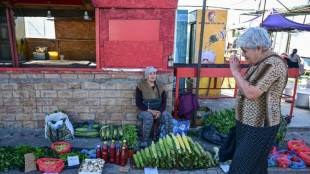
 Israel reports troop deaths as Lebanon talks underway in Rome
 Seeds Rybakina, Pegula, Gauff reach third round at WTA Toronto

 Police raid South Korea FA in probe into World Cup coach appointment

 Low water on Germany's Rhine river threatens new blow to economy

 Ex-Wallabies Foley, Phipps rejoin Waratahs ahead of home World Cup

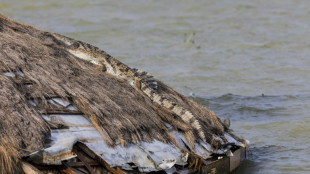 Rising Kenyan lakes push crocodiles closer to homes
 Istanbul cymbals: From Ottoman war tool to pulse of global music
 Myanmar ex-junta chief on first Thailand trip as civilian leader

 Environmental disaster looms as tanker leaks off Oman

 Google-parent Alphabet shakes up AI division

 FIFA back Infantino, apologise for World Cup privatisation plan

 Auger-Aliassime out of Montreal ATP event with injury

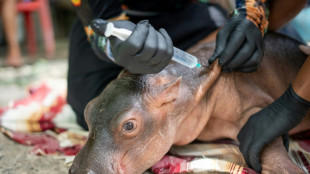 Colombian baby hippo of Escobar stock dies after rescue

 Preakness shifts 2027 dates to entice more Derby horses

 Guatemalan volcano eruption ends, locals return home

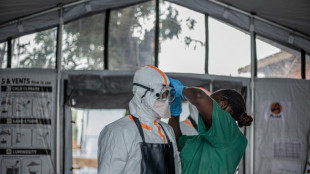 WHO chief urges stronger Ebola response in DR Congo visit

 Newcastle appoint Jaissle as new head coach after Howe exit

 Swiss ski star Lara Gut-Behrami calls time on 18-year career

Peruvian cook Isabel Santos prepares a salad with carrot peels and pea shells at a community kitchen in Lima; a disciple of a sustainable cuisine movement seeking to tackle hunger and food waste at the same time.
With five other women, she works at making 150 tasty, vitamin-packed servings that include "the peels of potatoes, peas, carrots, leeks and ginger that we used to throw away," the 76-year-old told AFP.
Santos is a follower of the "Optimum Kitchen" concept of renowned Peruvian chef Palmiro Ocampo, who promotes the concept of nose-to-tail cooking -- part of a more planet-friendly food drive increasingly finding a following world-wide.
"There is no such thing as waste," Ocampo, 40, told AFP on a recent visit to Santos's Maria Parado de Bellido kitchen in a poor district of southern Lima.
"An ingredient has to be used in its entirety," he said, in a world where a third of food is wasted while 800 million people go hungry.
Palmiro and his wife Anyell San Miguel train cooks from Peruvian soup and community kitchens and share recipes through their project Ccori, which means gold in the Indigenous Quechua language and was created 11 years ago to promote "culinary recycling."
As a result "more than a ton of ingredients that would normally end up in the garbage have been... turned into delicious food," said the chef.
Not only tasty but healthy too: "many of these (formerly discarded) food parts have more nutrients" -- vital to combat anemia, which affects more than two in five children in Peru.
Banana peels, for example, "contain a lot of magnesium and zinc" and pea shells are rich in iron, according to the chef.
At first, it was not easy to convince people, added Ocampo, who describes himself as a "professional recycler."
People told him that "it is one thing not to have any money, but we're not going to eat garbage," he recounted.
- 'Delicious' -
The concept seems to have taken root.
The salad "seems delicious and nutritious to me," 75-year-old motorcycle taxi driver Demostenes Parinan told AFP at Santos's kitchen, where a main course, soup and drink is sold for the equivalent of about $1.30.
Also on offer that day was a puree prepared with broccoli stems, a side of pea shells and rice, and drinks made with lemon and celery peels.
"Pigs used to eat better than us because they ate all the leftovers that we threw away," replete with nutrients, reflected Santos.
Anita Clemente of the "La Amistad" soup kitchen in another part of Lima said Ocampo's project "has taught us to... create healthy dishes" with ingredients once discarded.
Clients also end up saving money because they learn to consume the entirety of every product they buy, she told AFP.
According to the UN Environment Program, mankind wasted the equivalent of a billion meals every day in 2022.
Ocampo's concept relies on three main elements: food preservation through methods such as fermentation, "culinary recycling" to extract more from an ingredient already used, and cooking with parts previously considered inedible.
Another beneficiary is planet Earth: the more nutrition can be extracted from a single plant or animal, the fewer need to be grown, while also reducing the greenhouse gases released from the decomposition of organic waste.
T.Resende--PC