-
 US warns of rapid escalation in Mideast war
-
PSG president Nasser al-Khelaifi under investigation in France for conflict of interest
-
 Iran 'put hearts on the court' to win Asian Games basketball bronze
-
China swim sensation, 13, sets Games record after Japan win early
-
 School girl Yu helps China dominate in Asian Games swimming openers
-
Drones hit Moscow as Russians go to the polls
-
 Myanmar win first Asian Games teqball gold as Spain great Puyol watches
-
New England boss Fleming says 'wrong' to ask Stokes to end retirement

-
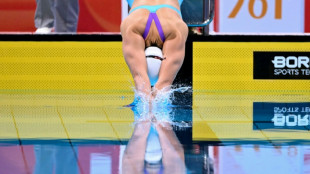 China's 13-year-old Yu scorches to first major gold at Asian Games
-
Germans vote in elections threatening fresh blow to Merz

-
 Russians vote on last day of parliamentary elections
-
US fears rapid escalation in Mideast after Houthis attack Riyadh

-
 Hong Kong pays final respects to former city leader Tung
-
Japan triathlete Hojo wins first gold of Asian Games

-
 Typhoon put people off Asian Games opening ceremony, official says
-
IOC president impressed by 'beautiful' Asian Games wooden huts

-
 China's 13-year-old Yu cruises as Asian Games swimming begins
-
First Asian Games gold goes to Japan as China's 13-year-old Yu lights up pool

-
 AI 'warning shots' focus Beijing on national security risks
-
Data centre command hub keeps AI up and running

-
 Philippine tribe in limbo over US-led tech hub
-
Pope Leo in France: the issues on the table

-
 Leo XIV, first US pope transcends his restrained style
-
Packing for a pope: behind the scenes on foreign trips

-
 Singer Ed Sheeran says Gaza situation 'unjustifiable' following controversy
-
Republicans find transgender issues a powerful political weapon in midterm campaigning

-
 In 'Tenzing', a Sherpa mountaineer gets his due
-
German state elections threaten new shock waves for Merz

-
 Ed Sheeran set to return to stage after Palestinian controversy
-
Chile's Bachelet quits race to be next UN chief

-
 Toulouse edge Vannes, Lyon beat Pau to take Top 14 summit
-
Raphinha treble fires perfect Barca to win at Sevilla

-
 Germans arrested for Louvre stunt in Mona Lisa hall
-
Thiam makes winning heptathlon return at Decastar meet

-
 Saudi-led coalition says Houthis fired ballistic missile at Riyadh
-
Czechs beat USA to qualify for Davis Cup finals

-
 France's debt climbs to highest since 1978: ministry
-
Dortmund sink Stuttgart to climb to Bundesliga summit

-
 McIlroy two shots off the lead at Wentworth after eagle on 18
-
Trump says will not tolerate attempts to slow AI growth

-
 Martinez brace saves Inter in Serie A top-two clash with Roma
-
'It has to stop': runners protest women's murders in S.Africa district

-
 Rosenior abused but guides Paris FC past old club Strasbourg
-
Fire erupts near Riyadh airport as Houthis claim strikes

-
 Seven-try Lyon beat Pau, climb to Top 14 summit
-
Cuba works to restore power after another blackout

-
 Brighton defeat a 'big lesson' against complacency for Arsenal, says Arteta
-
England thrash Sri Lanka again to return to top of T20 rankings

-
 Thousands protest inaction over climate crisis in Switzerland
-
Arsenal thrashed by Brighton, sorry Spurs lose again

WHO countries prolong talks on pandemic accord
World Health Organization members on Saturday extended negotiations on a landmark global agreement on handling future pandemics for up to a year, as the WHO chief warned that the next crisis was just a matter of time.
Two years of talks on a deal ended on May 24 without a finalised agreement, chiefly due to differences between well-off nations and those who felt cut adrift during the Covid-19 pandemic.
The final day of the week-long World Health Assembly (WHA) -- the decision-making annual gathering of the WHO's 194 member states -- allowed until next year's meeting to reach an accord.
"The historic decisions taken today demonstrate a common desire by member states to protect their own people, and the world's, from the shared risk of public health emergencies and future pandemics," said WHO chief Tedros Adhanom Ghebreyesus.
"The decision to conclude the pandemic agreement within the next year demonstrates how strongly and urgently countries want it, because the next pandemic is a matter of when, not if."
- Pragmatism, and realism -
In December 2021, spooked by the devastation of Covid-19 -- which killed millions of people, crippled health systems and crashed economies -- the WHA commissioned the drafting of an accord on pandemic prevention, preparedness and response.
Negotiators were meant to bring a final agreement to this year's meeting.
However, despite increasing momentum in recent months, only 17 of the draft agreement's articles had been fully approved by countries by the deadline.
The assembly "made concrete commitments to completing negotiations on a global pandemic agreement within a year, at the latest", a WHO statement said as the gathering in Geneva closed.
Precious Matsoso, who co-chaired the two years of talks, told a closing press conference: "There was a spirit of pragmatism and realism. Most of them have said that they want a pandemic agreement as soon as possible -- but it has to be a good one."
The main disputes revolve around access to pathogens detected within countries, and to pandemic-fighting products such as vaccines derived from that knowledge.
In developing nations, memories remain vivid of wealthy states hoarding vaccines. Switzerland was one country which destroyed more Covid vaccine doses than it ever administered.
Other tricky topics were sustainable financing, pathogen surveillance, supply chains, and the equitable distribution of tests, treatments and jabs but also the means to produce them.
- Revamped rules for emergencies -
The assembly also agreed amendments to the International Health Regulations, a legally-binding framework for responding to public health emergencies.
Covid-19 exposed flaws in the system, first adopted in 1969 and last updated in 2005, with countries failing to respond when the WHO sounded the IHR's highest available alarm in January 2020.
It was only when Tedros said the situation was a pandemic, in March 2020, that many nations -- too late -- sprang into action.
The amended rules introduce a new, higher "pandemic emergency" level of alarm.
It should kick in before a full-blown pandemic develops, and calls on member states to take "rapid" coordinated action.
WHO emergencies director Michael Ryan gave the example of a house completely surrounded by a forest fire.
"Though my house has not yet burnt down, it is an emergency," he said.
Tedros said the IHR changes "will bolster countries' ability to detect and respond to future outbreaks and pandemics by strengthening their own national capacities, and coordination between fellow states".
Ashley Bloomfield, who co-chaired the talks on amending the IHR, said the experience of epidemics and pandemics, from Ebola and Zika to Covid-19 and mpox, "showed us where we needed better public health surveillance, response and preparedness mechanisms.
"Countries knew what had to be done and we did it."
Tedros has repeatedly warned of unprecedented misinformation and disinformation surrounding the pandemic agreement negotiations.
Hundreds of demonstrators rallied in Geneva on Saturday to denounce the WHO and what they perceive as an attack on the sovereignty of states.
"We don't try to silence people, but what we want is a debate that's based on the facts and good information," Ryan said.
L.Carrico--PC