Short fuses in Egypt as blackouts stretch into sweltering summer / Photo: Khaled DESOUKI - AFP

 US warns of rapid escalation in Mideast war

 Iran 'put hearts on the court' to win Asian Games basketball bronze

 School girl Yu helps China dominate in Asian Games swimming openers
 Myanmar win first Asian Games teqball gold as Spain great Puyol watches

 China's 13-year-old Yu scorches to first major gold at Asian Games

 Russians vote on last day of parliamentary elections

 Hong Kong pays final respects to former city leader Tung

 Typhoon put people off Asian Games opening ceremony, official says

 China's 13-year-old Yu cruises as Asian Games swimming begins

 AI 'warning shots' focus Beijing on national security risks

 Philippine tribe in limbo over US-led tech hub

 Leo XIV, first US pope transcends his restrained style

 Singer Ed Sheeran says Gaza situation 'unjustifiable' following controversy

 In 'Tenzing', a Sherpa mountaineer gets his due

 Ed Sheeran set to return to stage after Palestinian controversy

 Toulouse edge Vannes, Lyon beat Pau to take Top 14 summit

 Germans arrested for Louvre stunt in Mona Lisa hall

 Saudi-led coalition says Houthis fired ballistic missile at Riyadh

 France's debt climbs to highest since 1978: ministry

 McIlroy two shots off the lead at Wentworth after eagle on 18

 Martinez brace saves Inter in Serie A top-two clash with Roma

 Rosenior abused but guides Paris FC past old club Strasbourg

 Seven-try Lyon beat Pau, climb to Top 14 summit

 Brighton defeat a 'big lesson' against complacency for Arsenal, says Arteta

 Thousands protest inaction over climate crisis in Switzerland

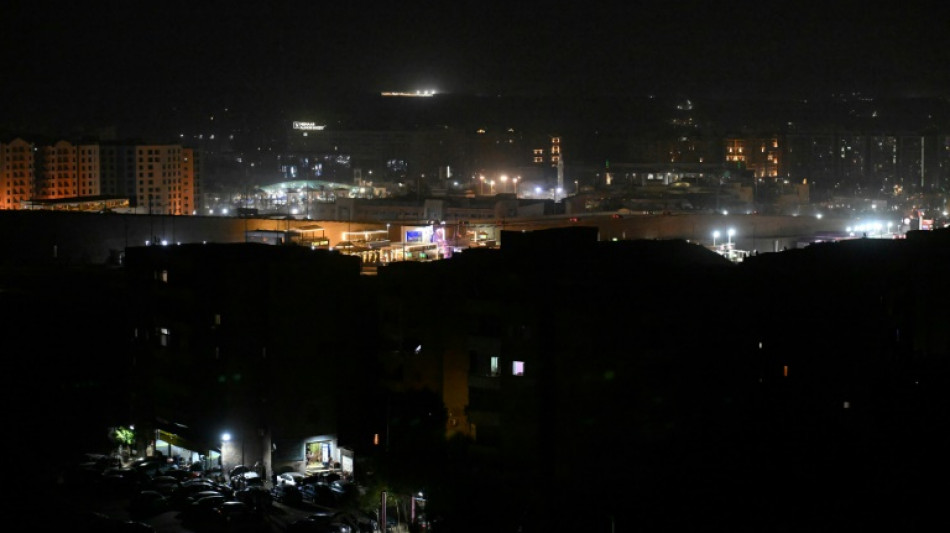
At least once a day, the hum of every fan, air conditioner and fridge across Egypt goes quiet. The lights go out and an expletive is muttered or hurled into the quickly-heating air.
Lifts stop, errands are cancelled and meetings delayed for as long as the power stays out -- hopefully an hour or two, but recently even longer.
It is now a year since energy and foreign currency crises led Egypt's government to institute planned blackouts known as "load shedding".
But the measures have not been felt equally across the country.
In the southern city of Aswan, where temperatures neared 50 degrees Celsius (122 degrees Fahrenheit) in the shade earlier this month, "the lights are out for up to four hours a day, and with them the water", Tarek, a resident of western Aswan, told AFP.
"Especially in the villages, there's no schedule of any kind. Food is spoiling in the fridge, people are getting heatstroke, and no one seems to care," he said, requesting a pseudonym for fear of reprisal.
In June, the Aswan parliamentarian Riham Abdelnaby said dozens had died of heat-related illness.
She called for the southern governorate to be exempted from the blackouts, which she said "threaten citizens' lives".
- High tempers and temperatures -
Amid three heatwaves in June, the blackouts grew longer and more frequent -- and with them nationwide frustration, including from talk show hosts who have been fervent supporters of the government.
"Electricity is not a luxury, this is the most basic right," prominent journalist Lamis al-Hadidy wrote on Monday on social media site X.
"The power going out takes out the water and telephones and the internet, and destroys electrical appliances, who is going to compensate the people for all of this?"
A decade ago, Egypt faced similar power cuts, which helped fuel popular discontent and protests against the short-lived presidency of the late Islamist leader Mohamed Morsi.
The present-day blackouts come as Egyptians face the worst economic crisis of their lives, with inflation and currency devaluations shredding savings and leaving families struggling to make ends meet.
Since 2022, the Egyptian pound has lost two-thirds of its value, and last year inflation reached a record 40 percent.
Amr Adib, host of the popular Al-Hekaya talk show, addressed officials directly on Sunday, saying they had "failed to set a proper schedule and failed to stick to the hours you promised. And all this, while we know electricity price hikes are coming".
Electricity prices last rose in January, and the government has signalled it is looking to raise them again this year.
This week, as temperatures in Cairo hovered around 40C, swathes of the capital have experienced additional midnight blackouts for up to two hours -- in addition to the existing midday outages.
On Tuesday, as public ire peaked, Egypt's prime minister Mostafa Madbouly held a press conference in which he "expressed the government's apologies to citizens" and said Egyptians should expect three-hour outages to continue this week.
The increased blackouts, he said, were due to a "gas field in a neighbouring country" which supplies natural gas to Egypt going "out of service for over 12 hours". He did not name the country.
The premier also said Egypt would spend $1.2 billion in July, 2.6 percent of the crisis-hit country's precious foreign currency reserves, to shore up its fuel supply.
"We will be able to end power outages entirely for the summer by the third week of July," Madbouly said, signalling that the outages would resume in the fall.
The government is still committed to its plan to end load shedding entirely by the end of the year, he said.
- Death toll -
In his apology, Madbouly said his government was "fully aware" of "how difficult the outages are on citizens", including "the elderly, those with health issues, or other humanitarian concerns."
But the measures have already claimed lives across the country.
Though there has been no official death toll from heat-related illness in Aswan, parliamentarian Abdelnaby told local media there were "around 40 heat-related deaths" within four days in June.
On the other side of the country, in the Mediterranean port city of Alexandria, a musician named Mohammed Ali Nasr died earlier in June after falling down the shaft of a lift he was trapped in during an outage, his brother told local channel Al-Nahar.
Across Egypt, people have taken to planning their lives around the official schedules to avoid getting stuck in lifts. But similar deaths have claimed at least four lives since last year, according to a tally of local media reports.
O.Salvador--PC