Midwife on the frontline of climate change on Pakistan's islands / Photo: Rizwan TABASSUM - AFP

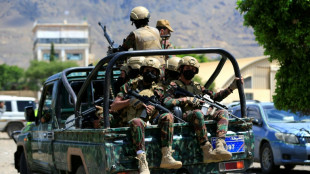 US warns of rapid escalation in Mideast war

 Iran 'put hearts on the court' to win Asian Games basketball bronze

 School girl Yu helps China dominate in Asian Games swimming openers

 Myanmar win first Asian Games teqball gold as Spain great Puyol watches

 China's 13-year-old Yu scorches to first major gold at Asian Games

 Russians vote on last day of parliamentary elections

 Hong Kong pays final respects to former city leader Tung

 Typhoon put people off Asian Games opening ceremony, official says

 China's 13-year-old Yu cruises as Asian Games swimming begins

 AI 'warning shots' focus Beijing on national security risks

 Philippine tribe in limbo over US-led tech hub

 Leo XIV, first US pope transcends his restrained style

 Singer Ed Sheeran says Gaza situation 'unjustifiable' following controversy

 In 'Tenzing', a Sherpa mountaineer gets his due

 Ed Sheeran set to return to stage after Palestinian controversy

 Toulouse edge Vannes, Lyon beat Pau to take Top 14 summit

 Germans arrested for Louvre stunt in Mona Lisa hall

 Saudi-led coalition says Houthis fired ballistic missile at Riyadh

 France's debt climbs to highest since 1978: ministry

 McIlroy two shots off the lead at Wentworth after eagle on 18

 Martinez brace saves Inter in Serie A top-two clash with Roma

 Rosenior abused but guides Paris FC past old club Strasbourg

 Seven-try Lyon beat Pau, climb to Top 14 summit

 Brighton defeat a 'big lesson' against complacency for Arsenal, says Arteta

 Thousands protest inaction over climate crisis in Switzerland

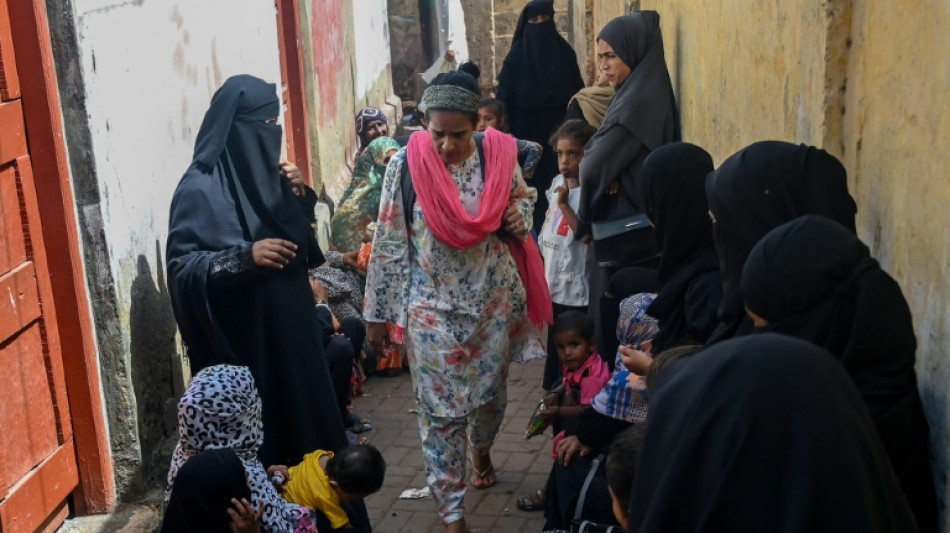
On a densely populated island off Pakistan's megacity of Karachi, a group of pregnant women wait in a punishing heatwave for the only midwife to arrive from the mainland.
Each week Neha Mankani comes by boat ambulance to Baba, an old fishing settlement and reportedly one of the world's most crowded islands with around 6,500 people crammed into 0.15 square kilometres (0.06 miles).
Climate change is swelling the surrounding seas and baking the land with rising temperatures. Until Mankani's ambulance launched last year, expectant mothers were marooned at the mercy of the elements.
At the gate of her island clinic waits 26-year-old Zainab Bibi, pregnant again after a second-trimester miscarriage last summer.
"It was a very hot day, I was not feeling well," she recalled. It took her husband hours of haggling with boat owners before one agreed to ferry them to the mainland -- but it was too late.
"By the time I delivered my baby in the hospital, she was already dead," she said.
- Summer heat hits pregnancies -
Heatwaves are becoming hotter, longer and more frequent in Pakistan, one of the countries most vulnerable to extreme weather conditions resulting from climate change.
In May and June, a string of heatwaves have seen temperatures top 52 degrees Celcius (126 degrees Fahrenheit) for days.
"Climate change doesn't affect everyone equally," 38-year-old Mankani told AFP during the 20-minute boat journey.
"Pregnant women and newborns, postpartum women are definitely more affected," she said.
"In the summer months, we see a real increase in low-birth weights, preterm births, and in pregnancy losses."
Women are at higher risk of stillbirth when exposed to temperatures above 90 percent of the normal range for their location, according to experts published in the British Journal of Obstetrics and Gynaecology last year.
"Before we didn't have the evidence, a lot of it was anecdotal," said Mankani. "But we've been seeing the impact of climate change for a while."
In Pakistan, 154 women die for every 100,000 live births -— a high maternal mortality rate shaped by socioeconomic status, barriers to healthcare access and limited decision-making powers, especially among young women, according to the United Nations.
Mankani began her 16-year career as a midwife in a Karachi hospital, where she worked at a high-risk ward, often treating women from the five islands dotted off the coast.
She founded the Mama Baby Fund in 2015 and set up the first clinics on the islands for expectant and new mothers. "Everyone opened their homes to us," she said.
The free 24/7 boat ambulance followed last year, crucially equipped to navigate rough seas in a region increasingly prone to flooding.
Sabira Rashid, 26, gave birth to a girl she named Eesha two months ago, following one stillbirth and a miscarriage at seven months -- painful losses she blames on not reaching the hospital in time.
"At the dock, they make us wait because they don't want to ferry only two or three people. They told us to wait for more passengers, no matter what the emergency," she said.
- Rising, dirty waters -
Girls on the impoverished islands are often wed as young as 16, with marriage considered the source of security for women in an area where polluted water is killing off the fishing trade.
"Most of these girls don't know how to take care of themselves, they get severe infections from the dirty water they are constantly exposed to," said Shahida Sumaar, an assistant at the clinic, wiping the sweat from her face.
The 45-year-old said basic advice is offered to young mothers during heatwaves, such as using dry, clean towels to wrap their newborns in, washing their breasts before feeding and staying hydrated.
But with no access to running water and little electricity, warding off heat stress is a challenge for all the islanders.
Women are at particular risk, typically responsible for cooking over open flames in small rooms with no fans or proper ventilation.
Ayesha Mansoor, 30, has four children and lives on the fringes of Baba, with just four to five hours of electricity a day.
The path to her home is covered by a carpet of discarded plastic bags which disappear underwater when the tide is high.
"Only those who have solar can deal better with the heat. We can't afford it," she said, swatting away flies that settled on her baby.
Mariam Abubakr, an 18-year-old assistant at the clinic who has grown up on the island, hopes to become its first full-time midwife.
"I used to wonder why we women didn't have any facilities here, a clinic that could just cater to us," she said.
"When Neha opened her clinic, I saw a way that I could help the women of my community."
P.Mira--PC