Australia launches landmark peanut allergy treatment for babies / Photo: Issouf SANOGO - AFP/File

 US warns of rapid escalation in Mideast war

 Iran 'put hearts on the court' to win Asian Games basketball bronze
 School girl Yu helps China dominate in Asian Games swimming openers

 Myanmar win first Asian Games teqball gold as Spain great Puyol watches

 China's 13-year-old Yu scorches to first major gold at Asian Games

 Russians vote on last day of parliamentary elections

 Hong Kong pays final respects to former city leader Tung

 Typhoon put people off Asian Games opening ceremony, official says

 China's 13-year-old Yu cruises as Asian Games swimming begins

 AI 'warning shots' focus Beijing on national security risks

 Philippine tribe in limbo over US-led tech hub

 Leo XIV, first US pope transcends his restrained style

 Singer Ed Sheeran says Gaza situation 'unjustifiable' following controversy

 In 'Tenzing', a Sherpa mountaineer gets his due

 Ed Sheeran set to return to stage after Palestinian controversy

 Toulouse edge Vannes, Lyon beat Pau to take Top 14 summit

 Germans arrested for Louvre stunt in Mona Lisa hall

 Saudi-led coalition says Houthis fired ballistic missile at Riyadh

 France's debt climbs to highest since 1978: ministry

 McIlroy two shots off the lead at Wentworth after eagle on 18

 Martinez brace saves Inter in Serie A top-two clash with Roma

 Rosenior abused but guides Paris FC past old club Strasbourg

 Seven-try Lyon beat Pau, climb to Top 14 summit

 Brighton defeat a 'big lesson' against complacency for Arsenal, says Arteta

 Thousands protest inaction over climate crisis in Switzerland

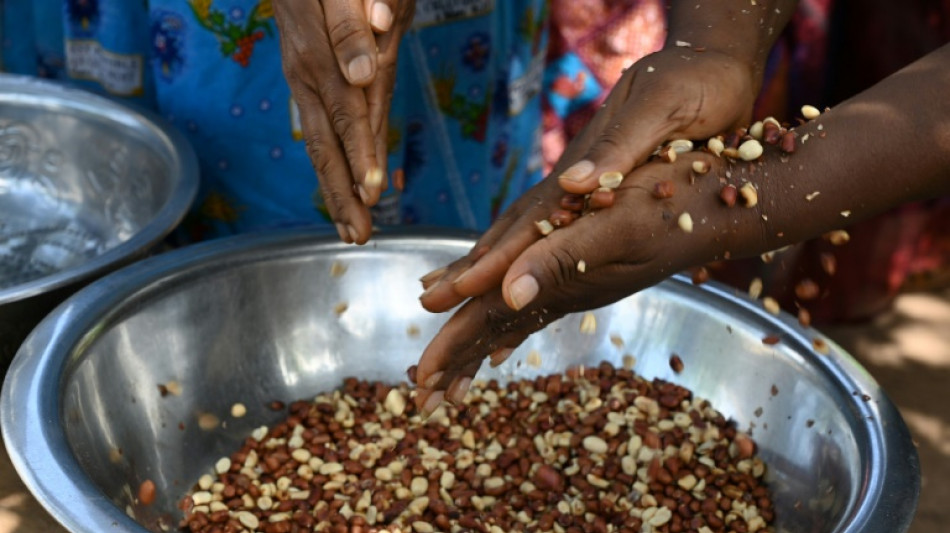
Australian children with potentially deadly peanut allergies will be offered life-saving treatment in a nationwide programme touted as a world first.
Eligible babies will receive daily doses of peanut powder for two years to build up their tolerance, said officials announcing the initiative on Wednesday.
Over time, the infants will be given increasing doses in the hope of reducing their sensitivity to peanuts, under the supervision of doctors at 10 paediatric hospitals around the country.
It is the first national peanut allergy treatment programme offered in hospitals outside of a clinical trial setting, said Kirsten Perrett, head of oral immunotherapy at the National Allergy Centre of Excellence.
At the end of the two years, a food allergy test will determine if the treatment has led to a remission.
"Ultimately we want to change the trajectory of allergic disease in Australia so that more children can go to school without the risk of a life-threatening peanut reaction," Perrett said.
Previously, families have been told to ensure their children strictly avoid foods with peanuts.
Australian children have some of the highest rates of food allergies in the world.
Peanut allergies affect three percent of Australian children by the time they are 12 months old, government data shows.
Of those, only 20 percent will outgrow their allergy by the time they are teenagers.
Nine-month-old Hunter Chatwin, who is among those in the free treatment programme, started developing hives after eating peanut butter.
"We are taking part in the programme to try and improve his chance of being able to safely eat peanut in the future," Hunter's mother Kirsten said.
"Many families are desperate to protect their children from allergic reactions and anaphylaxis," she said.
"To have this programme available and free at public hospitals is a game-changer."
If successful, the programme will be rolled out more broadly, including in regional and remote areas.
Deaths from peanut allergies are rare in Australia, but almost 20 percent of the population has an allergic disease, data from Australia's leading allergy institute found.
This figure is estimated to grow by 70 percent by 2050, impacting 7.7 million Australians.
M.A.Vaz--PC