Bacteria behind rare disease found in US soil and water samples / Photo: Kevin C. Cox - GETTY IMAGES NORTH AMERICA/AFP/File

 Kospi Falls Below 5,000 as U.S. AI Regulation Fears Trigger Circuit Breaker

 Valsoft's TAG Software Group Enters the Content Operations Market with the Acquisition of Chalco

 South Korea Proposes Fourth Delay of Cryptocurrency Gains Tax to 2029

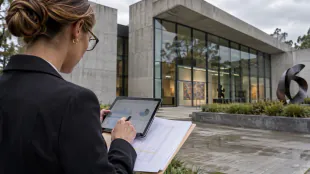 ASIC Fines Mona Museum Owner's Company for Late Financial Report

 Business Leaders Criticize Productivity Commission Inquiry Scope

 SCANDIC FINANCE ने एलेक्स बोडी को समूह का उपाध्यक्ष नियुक्त किया
The Centers for Disease Control and Prevention (CDC) on Wednesday issued a health advisory to clinicians after discovering the bacteria behind a rare but serious disease for the first time in the continental United States.
Burkholderia pseudomallei (B. pseudomallei) was detected in soil and puddle water samples in the Gulf Coast region of southern Mississippi during an investigation of two human melioidosis cases.
The two unrelated people lived in close geographic proximity and became sick with the disease two years apart -- in 2020 and in 2022 -- prompting health authorities to investigate household products and the environment around their homes.
Melioidosis causes nonspecific symptoms such as fever, joint pain, and headaches, but can also cause pneumonia, abscess formation, and blood infections.
There are about 12 cases in the US per year on average, mostly related to travel to tropical and subtropical regions, where the bacteria is endemic.
A 2021 cluster that included four people across four states was linked to imported contaminated aromatherapy spray.
Most healthy people who come into contact with the bacteria do not develop melioidosis, but the global death rate for those who do is 10-50 percent.
The CDC said people in southern Mississippi who have underlying conditions such as diabetes, chronic kidney disease, chronic lung disease, or excessive alcohol use, should take extra precautions.
These include avoiding contact with soil and muddy water, protecting open wounds with dressing, and wearing waterproof boots and gloves while gardening.
"Given the very small number of cases of melioidosis identified historically in the United States, CDC believes the risk of melioidosis for the general population continues to be very low," the agency said.
P.Mira--PC