Repeat hacks highlight Australia's cyber flaws / Photo: Muhammad FAROOQ - AFP

 US warns of rapid escalation in Mideast war

 Iran 'put hearts on the court' to win Asian Games basketball bronze

 School girl Yu helps China dominate in Asian Games swimming openers

 Myanmar win first Asian Games teqball gold as Spain great Puyol watches

 China's 13-year-old Yu scorches to first major gold at Asian Games

 Russians vote on last day of parliamentary elections

 Hong Kong pays final respects to former city leader Tung

 Typhoon put people off Asian Games opening ceremony, official says

 China's 13-year-old Yu cruises as Asian Games swimming begins

 AI 'warning shots' focus Beijing on national security risks

 Philippine tribe in limbo over US-led tech hub

 Leo XIV, first US pope transcends his restrained style

 Singer Ed Sheeran says Gaza situation 'unjustifiable' following controversy

 In 'Tenzing', a Sherpa mountaineer gets his due

 Ed Sheeran set to return to stage after Palestinian controversy

 Toulouse edge Vannes, Lyon beat Pau to take Top 14 summit

 Germans arrested for Louvre stunt in Mona Lisa hall

 Saudi-led coalition says Houthis fired ballistic missile at Riyadh

 France's debt climbs to highest since 1978: ministry

 McIlroy two shots off the lead at Wentworth after eagle on 18

 Martinez brace saves Inter in Serie A top-two clash with Roma

 Rosenior abused but guides Paris FC past old club Strasbourg

 Seven-try Lyon beat Pau, climb to Top 14 summit

 Brighton defeat a 'big lesson' against complacency for Arsenal, says Arteta

 Thousands protest inaction over climate crisis in Switzerland

Inadequate privacy safeguards and the stockpiling of sensitive customer information have made Australia a lucrative target in the eyes of foreign hackers, cybersecurity experts told AFP following a series of major data breaches.
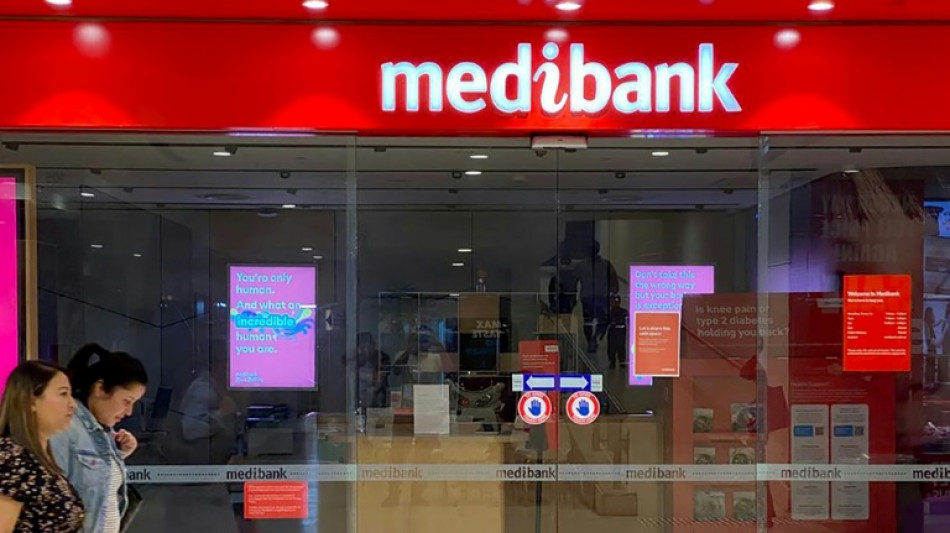
Medibank, Australia's largest private health insurer, recently confirmed that hackers had accessed the data of 9.7 million current and former customers, including medical records related to drug abuse and pregnancy terminations.
Telecom company Optus fell prey to a data breach of similar scale in late September, during which the personal details of up to 9.8 million people were accessed.
Both incidents sit comfortably among the largest data breaches in Australian history.
Australian National University cybersecurity expert Thomas Haines said many companies had been hoarding personal data that they should not have been hanging on to.
"There was a famous line for a while: Data is the new oil," he told AFP.
"If data is the new oil, then we're living the era of the weekly oil spill."
Haines contrasted Australia's approach with that of the European Union, which in 2018 adopted sweeping privacy reforms limiting how organisations collect, use and store personal data.
"There have got to be incentives in place to stop companies hoarding data they don't need, or to penalise those companies for big leaks. Europe has done this," he said.
"At the moment the business incentives are basically along the lines of: Let's just keep a whole bunch of data."
Haines said Medibank appeared to be an exception, in that most of the sensitive information within its databases had been stored for good reason.
- Hacking 'for profit' -
Australia's comparatively weak safeguards against identity theft meant it was also easier to exploit stolen personal information, Haines said.
"All they need to know is your passport, your driver's licence and some other things -- and then I can start taking out loans in your name."
Haines said European countries such as Norway had much more stringent requirements involving face-to-face contact.
Dennis Desmond, a former FBI agent and US Defense Intelligence Agency officer, said most hackers were searching for particular types of data.
"For-profit hackers are going after healthcare data, they're going after identity data and credentials to access systems," he told AFP.
"There is a profit motivation there, otherwise they wouldn't be risking jail and prosecution."
The Medibank hackers this week started leaking stolen data to a dark web forum, after the company refused to pay a US$9.7 million (Aus$15 million) ransom.
The Optus breach led to the theft of customers' names, birth dates, and passport numbers.
- Russia blamed -
Australian Federal Police Commissioner Reece Kershaw on Friday blamed the Medibank cyberattack on a team of hackers based in Russia.
"We believe those responsible for the breach are in Russia," he told reporters.
"Our intelligence points to a group of loosely affiliated cyber criminals who are likely responsible for past significant breaches in countries across the world."
Medibank data leaked to the dark web so far has included hundreds of potentially-compromising medical records related to drug addiction, alcohol abuse and sexually-transmitted infections.
Home Affairs Minister Clare O'Neil conceded on Friday the country's cyber defences had not always been up to scratch.
University of Sydney data researcher Jane Andrew said one major flaw was that Australian companies were not always obliged to report data breaches.
"There are heaps of data breaches happening all the time that we don't hear anything about," she told AFP.
"Companies have been gathering data because it's seen to be valuable, without fully understanding the potential risks."
X.M.Francisco--PC