
Syrians turn plastic waste into rugs to make a living / Photo: Aaref WATAD - AFP

 Trump Signals Willingness to Work With Democrats After Midterm Defeat

 Qatar media bodies discuss support for humanitarian initiatives

 No. 22 UCLA defeats No. 5 Arizona 84-75 despite Kharchenkov's 38 points

 Vessel operator seeks witnesses after Vancouver grounding

 US Air Force deploys F-16 fighters to remote Aleutian base for readiness drill

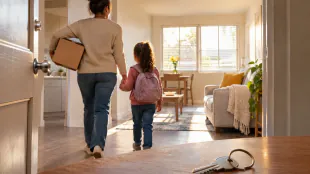 Bezos grant helps Seattle nonprofit move thousands of families toward housing

 Shrini Srivastava joins crew of Varanasi-Delhi Vande Bharat Sleeper service

 Nearly Half of Australian Workers Overqualified, Survey Finds

 RBI eases export-declaration compliance for individual service exporters
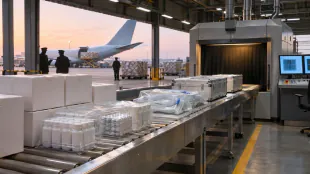 India proposes more import entry points for drugs and medical devices

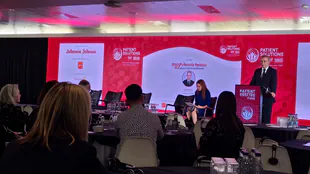 Derek Tierney Outlines Ten-Year Strategy for National Digital Health System

 NBC’s Steve Kornacki Reveals Tech Habits Ahead of Midterm Elections

 India and Israel oppose UN draft on regional conventional arms control

 BLS Polymers shares open 65.3% above IPO price

 Capital-markets shares rally as Motilal Oswal and Angel One lead gains

 Latino Voters Defy ICE Fears, Turn Out in Record Numbers for Midterms

 ITC shares rise as analysts anticipate gradual cigarette-business recovery

 Reliance rally puts historical one-year return pattern in focus

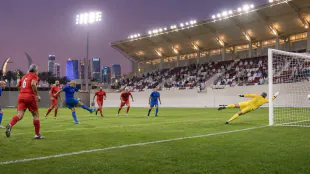 Kuwait edges Oman 1-0 in veterans Gulf Cup in Doha

 Saudi Aramco quarterly profit climbs 34.6% amid elevated oil prices
At a rubbish dump in northwest Syria, Mohammed Behlal rummages for plastic to be sold to recyclers and transformed into floor rugs and other items in the impoverished rebel enclave.
In rebel-held Syria, recycling is rarely an environmental impulse but rather a grim lifeline for needy residents looking for work or items they otherwise could not afford.
Braving the stench, insects and risk of disease, 39-year-old Behlal hacks through the rubbish pile with a scythe and his bare hands.
He and two of his six children earn a living sifting through the refuse in Idlib province's village of Hezreh, earning $7 to $10 a week each.
"It's tiring... but what can we do, we have to put up with this hard labour," said Behlal, who was displaced from neighbouring Aleppo province during Syria's civil war.
"Thank God, at least we have work with the trash," he added.
Behlal was shot in the leg during fighting and has had trouble finding employment.
Hunched over to collect pieces of plastic or metal, he throws everything into a bag to sell to a nearby scrap facility.
Syria's conflict has killed more than 500,000 people, and around half of the country's pre-war population has been forced from their homes since fighting broke out in 2011.
More than four million people, most of them dependent on aid, live in areas controlled by jihadists and Turkish-backed groups in Syria's north and northwest.
In a large scrapyard next to agricultural fields, workers sort plastic junk loosely into piles according to colour.
They then cut it up and crush it into small pieces that are washed and melted into plastic pellets.
- Plastic thread -
Farhan Sleiman, 29, is among those who handle the material brought in from the landfill.
"We buy plastic from roaming trash-picker trucks and children," said Sleiman, originally from Homs province.
He expressed fear of the risk of contracting "cholera or chronic illnesses" from working with the rubbish.
Elsewhere in northern Idlib province, workers at a factory making mats and rugs churn out brightly coloured plastic thread while large weaving machines click and clack.
Factory owner Khaled Rashu, 34, says rug-making is a family tradition.
"We have more than 30 employees" at the factory, he boasted as a significant feat in a region where many are jobless.
Large mats featuring geometric designs, some made with striking red or purple plastic thread, emerge from the weaving machines and are stacked into piles.
Shop owner Mohammed al-Qassem, 30, is among those selling the mats, which he says are a hit in an area where many people are displaced and live in basic tents or makeshift dwellings.
The mats made from recycled plastic cost between $5 and $15, while traditional Persian-style rugs are around $100.
"In summer, demand for plastic mats increases" because they retain less heat, Qassem said from his shop in Maaret Masrin, a town in Idlib province.
But "they can also be used in winter and are less costly", he added.
V.F.Barreira--PC


