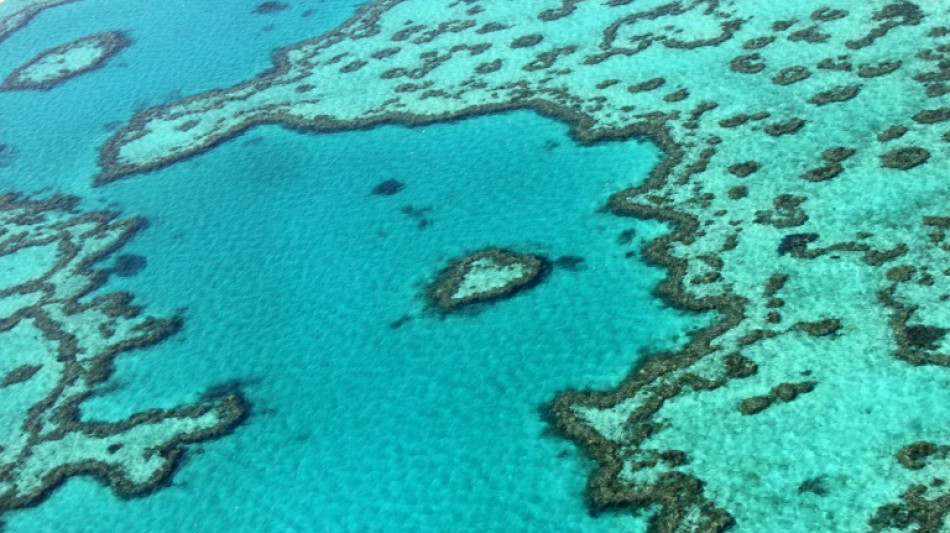
UN weighs Great Barrier Reef reprieve for Australia / Photo: SARAH LAI - AFP

 Manchester United rallies past Roma as PSG dominates in Champions League

 Qatar sees tentative opening for renewed regional diplomacy

 Qatar Tourism joins Pacific Asia Travel Association at London travel market

 Abdul El-Sayed Wins Michigan Senate Seat in Historic Election

 Qatar media bodies discuss support for humanitarian initiatives

 No. 22 UCLA defeats No. 5 Arizona 84-75 despite Kharchenkov's 38 points

 Vessel operator seeks witnesses after Vancouver grounding

 US Air Force deploys F-16 fighters to remote Aleutian base for readiness drill

 Bezos grant helps Seattle nonprofit move thousands of families toward housing

 Shrini Srivastava joins crew of Varanasi-Delhi Vande Bharat Sleeper service

 Nearly Half of Australian Workers Overqualified, Survey Finds

The UN's cultural agency UNESCO said Monday its experts recommended giving Australia more time to boost protection of the Great Barrier Reef which the organisation's World Heritage Committee has threatened to declare "in danger".
On the basis of progress made by Australia, the experts said the natural wonder's current state should not be discussed at this year's World Heritage Committee meeting in September in Riyadh, but instead be revisited in 2024.
However the experts, whose advice still needs to be approved by the Committee, said surveillance of the Reef would be strengthened and Australia needed to submit a progress report on the implementation of UNESCO's recommendations by February.
Climate change is threatening the Great Barrier Reef's ecosystem, causing severe bleaching and damaging its corals.
Since 2016, the Great Barrier Reef has been hit by three mass bleaching events, during which heat-stressed corals expel algae living in their tissues, draining them of their vibrant colours.
UNESCO said last month it welcomed Australia's commitments to protect the Reef, with the government pledging 4.4 billion Australian dollars ($2.9 billion).
The fate of the reef has been a recurrent source of tension between UNESCO and Australian authorities, with the World Heritage Committee threatening to put the world's largest coral system on a list of "in danger" global heritage sites.
Behind-the-scenes diplomacy and lobbying from Australia have avoided such a move and commitments from the Labour government of Anthony Albanese have drawn praise from the Paris-based organisation.
Albanese's centre-left government, which ended nearly a decade of conservative rule in May last year, has also blocked a planned coal mine because it would endanger the reef and has scrapped funding for two dams in Queensland.
The Great Barrier Reef is one of the country's premier tourist drawcards and any inclusion on the in-danger list was seen as risking putting off international visitors.
UNESCO began a monitoring mission on the reef in March 2022 to assess whether the site was being adequately protected.
On Monday, UNESCO again stressed the Great Barrier Reef's "urgent conservation needs" which it said required "broad mobilisation".
It still remained "possible" to inscribe the Reef on the list of world heritage sites in danger, it warned.
A.P.Maia--PC



