
Discarded plastic blights Honduran mangrove island / Photo: Orlando SIERRA - AFP

 Manchester United rallies past Roma as PSG dominates in Champions League

 Qatar sees tentative opening for renewed regional diplomacy

 Qatar Tourism joins Pacific Asia Travel Association at London travel market

 Abdul El-Sayed Wins Michigan Senate Seat in Historic Election

 Qatar media bodies discuss support for humanitarian initiatives

 No. 22 UCLA defeats No. 5 Arizona 84-75 despite Kharchenkov's 38 points

 Vessel operator seeks witnesses after Vancouver grounding

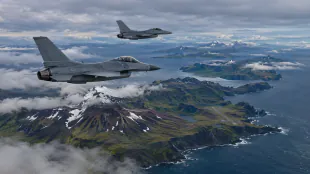 US Air Force deploys F-16 fighters to remote Aleutian base for readiness drill

 Bezos grant helps Seattle nonprofit move thousands of families toward housing

 Shrini Srivastava joins crew of Varanasi-Delhi Vande Bharat Sleeper service

 Nearly Half of Australian Workers Overqualified, Survey Finds

A heron chick flutters clumsily after hatching in a nest on a mangrove island littered with plastic waste in the Gulf of Fonseca, along the Pacific Coast of Central America.
The air fills with shrieks of other seabirds also nesting on Los Pajaros Island, in the San Lorenzo Wildlife Reserve, set amid turquoise waters shared by Honduras, El Salvador and Nicaragua.
Thousands of herons, gulls, pelicans, frigate birds, roseate spoonbills and other seabirds dwell in the tangle of branches on this 6.2 acre (2.5 hectare) island.
But they share it these days with unwanted mounds of plastic bottles, tangles of fish netting and other discarded trash washed up on its shores.
Residents in inland cities often throw their plastic waste into rivers that empty into the Gulf of Fonseca, despoiling the once-pristine habitat.
A dozen or so islands and keys dot the gulf, a 1,200 square mile (3,100 square kilometer) area that is fed by five major rivers from the three neighboring countries. Border disputes over rights to the gulf and its islands once roiled the countries but those disputes have quieted down.
- Cleanup time arrives -
Instead, efforts to clean up the gulf's islands and keys are now underway.
An activist group, the Committee for the Defense and Development of the Flora and Fauna of the Gulf of Fonseca, has joined forces with the Forest Conservation Institute of Honduras (ICF) and municipalities along the coast to conduct cleanups.
One recent day, a mission takes some 20 volunteers and government workers to Los Pajaros Island, where they plunge into the thickets of mangroves, filling sacks with endless plastic waste and discarded bottles.
"These solid wastes... take years to decompose," Helen Castillo of ICF tells AFP.
The gulf hosts "five of the seven species of mangrove that exist worldwide, so that is a target of our conservation," environmentalist Carlos Zorto of the activist group tells AFP.
The Gulf of Fonseca provides key nesting sites for migrating birds as well as habitat for crabs, mollusks, iguanas and fish, such as snook and snapper.
- 'The ones hit hardest' -
Much of the garbage comes from cities and towns in central and southern Honduras, carried down river to the gulf, Castillo explains.
"We have seen sea turtles with nostrils blocked by plastic forks and plastic spoons, which can cause their death," she says.
The head of the cleanup effort for the activist group, Adan Rivas, says participants try to get those living along the coastline to help.
"We are the ones hit hardest" by environmental degradation, Rivas told AFP. "In the case of Honduras, we are seeing droughts, flooding... and the disappearance of some species."
N.Esteves--PC



