
Full of life: Paris's Pere Lachaise cemetery goes greener / Photo: BERTRAND GUAY - AFP

 Abdul El-Sayed declares victory in Michigan Senate contest

 Democrats capture US Congress in sweeping midterm victory

 Manchester United rallies past Roma as PSG dominates in Champions League

 Qatar sees tentative opening for renewed regional diplomacy

 Qatar Tourism joins Pacific Asia Travel Association at London travel market

 Abdul El-Sayed Wins Michigan Senate Seat in Historic Election

 Qatar media bodies discuss support for humanitarian initiatives

 Galloway accuser could not foresee publishing-sector fallout, lawyer argues

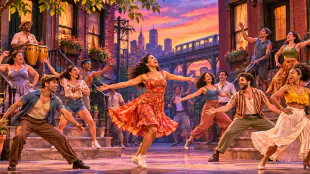 New York City Center revives In the Heights as a timely community story

 Godzilla Minus Zero shifts focus toward postwar human drama
The Pere Lachaise in Paris, the most visited cemetery in the world thanks to celebrities buried there, is welcoming crowds back after years of Covid restrictions with a back-to-nature setting that helps them keep cool in the summer heat.
Doors frontman Jim Morrison, Irish writer Oscar Wilde, French singer Edith Piaf and composer maestro Frederic Chopin are among the 70,000 more or less famous people resting at the necropolis, with some graves turned into shrines by worshipping fans.
As the Paris summer has turned sunny again, visitors are flocking the cemetery, happily wandering and often getting lost among the headstones and the grassy paths, AFP reporters observed, putting the Pere Lachaise back on track for its usual 7,000 daily visitor average.
Most starstruck tourists have eyes for little else but their maps as they seek out specific graves, but some will have noticed that the cemetery is much greener than it was before the global coronavirus pandemic forced visitors away.
The cemetery authorities have started a major drive to "re-naturalise" the site, said park curator Benoit Gallot, who has held the job since 2018.
Dandelions, wild orchids and clover are sprouting among headstones and on the cobbled paths, and there are new patches of lawn where there was only gravel.
- 'Much more nature' -
"There is much more nature than before, more foliage and wild plants on the paths," said Florence Masson, 44, on her first visit to the cemetery in two decades.
"That anarchical side of the cemetery is part of what this place is about," said Gallot, who had a moment of social media fame in 2020 when a family of foxes was discovered in the Pere Lachaise.
He said "every square metre" of green gained was "precious" because of the plants' cooling effects on a hot day.
But some regular visitors complain that the cemetery is not as tidy-looking as it used to be.
"I'm disappointed," said Luc Morel, a pensioner visiting from the southern city of Avignon. "Many of the graves have been neglected."
Gallot acknowledged that graves get damaged, often as a direct result of the abundant flora in the 43-hectare cemetery, the French capital's third biggest green space with 4,000 trees.
Falling trees damage around a dozen graves every time a storm hits, he said.
The cost of fixing them is usually covered by the families, city hall and insurance companies.
But the cemetery is still short of money, and will create opportunities to make some on the back of strong demand for plots here.
Only about a hundred applications for funerals are approved each year, Gallot said.
In future, he said, families of the recently deceased could be asked to pay for a full restoration of a site before being allowed to lay their loved ones to rest there.
The cemetery creates new space often by grouping the remains of families into a single grave.
Ferreira--PC



