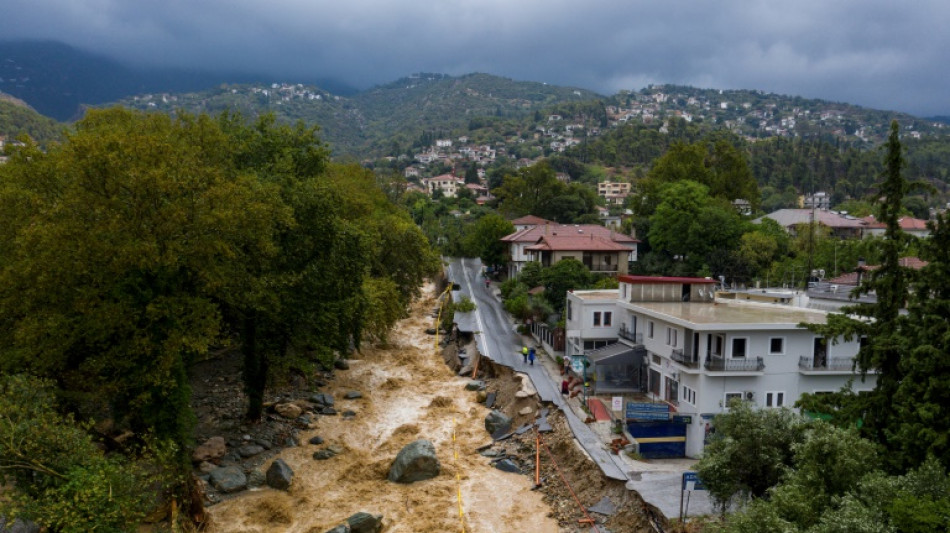
Rains kill 11 in Mediterranean, east Europe / Photo: STRINGER - Eurokinissi/AFP

 Abdul El-Sayed declares victory in Michigan Senate contest

 Democrats capture US Congress in sweeping midterm victory

 Manchester United rallies past Roma as PSG dominates in Champions League

 Qatar sees tentative opening for renewed regional diplomacy

 Qatar Tourism joins Pacific Asia Travel Association at London travel market

 Abdul El-Sayed Wins Michigan Senate Seat in Historic Election

 Qatar media bodies discuss support for humanitarian initiatives

 Galloway accuser could not foresee publishing-sector fallout, lawyer argues

 New York City Center revives In the Heights as a timely community story

 Godzilla Minus Zero shifts focus toward postwar human drama
Storms that unleashed torrential flooding in Greece, Turkey and Bulgaria have killed at least 11 people, authorities said Wednesday, as extreme heat gave way to heavy rain.
High waters in northwestern Turkey, including Istanbul, turned streets into rushing rivers, while floods struck Greece as it recovers from massive wildfires.
"I have never seen anything like this, thousands of shops and buildings have been flooded in Volos and no one is here to help us", Vassilis Tsalamouras, a 58-year-old resident of the central Greek city, told AFP.
As the world warms, the atmosphere contains more water vapour which increases the risk of heavy precipitation in some parts of the world, notably in Asia, Western Europe and Latin America.
Combined with other factors such as urbanisation and land-use planning, these more intense rainfall events contribute to flooding.
The storm, dubbed "Daniel" by Greek meteorologists, has been battering the country since Monday, mainly affecting the central Magnesia region and its capital city Volos, 300 kilometres (185 miles) north of Athens.
An 87-year-old woman missing since Tuesday was found dead on Wednesday in the village of Paltsi in Magnesia, fire department spokesman Yannis Artopios told public broadcaster Ert.
On Tuesday, a 51-year-old man was found dead near Volos after being swept away by a rising torrent.
Electricity has been out in Volos since Tuesday morning, while buildings and roads in nearby villages have been severely damaged by landslides and flooding, according to an AFP journalist at the scene.
- Fires followed by floods -
The torrential rains in Greece follow weeks of devastating wildfires.
"This is an extreme phenomenon", said Greek Prime Minister Kyriakos Mitsotakis.
In Istanbul, the downpours came after a particularly dry summer that saw the water reservoirs of the city of 16 million people fall to nine-year lows.
The Istanbul governor's office said two people died.
Turkish emergency services said four people have died and two were missing in floods that hit the northwestern city of Kirklareli.
Bulgaria's Black Sea coast has also been hit by the heaviest rains in years, killing at least three and leaving tourists stranded.
Heavy rain and thunderstorms since late Monday caused rivers to overflow, damaging bridges and cutting off access in the region south of the coastal city of Burgas.
"It's a disaster... the steep terrain (along the coast) creates an enormous danger," Prime Minister Nikolay Denkov said, adding "long-term solutions" would be needed to secure the area.
The rains were the heaviest since 1994 with as much rain falling in 24 hours as usually in several months, according to head of the fire department Alexandar Dzhartov.
Flooding -- rare in the Black Sea coast area -- is becoming increasingly common in Bulgaria with the impact of climate change and the poor maintenance of infrastructure.
P.Mira--PC



