Ukraine war drives German inflation, darkens growth outlook

 Trump's beef policies irk Texas ranchers, testing their loyalty

 Nvidia, OpenAI CEOs to attend Xi dinner at White House

 Anthropic picks Accenture for in-house AI safety evaluation

 Balogun returns as Monaco beat Lens to continue strong Ligue 1 start

 'Pause' on overt repression in Venezuela, but reforms still needed: HRW

 Global stocks mixed as yen falls despite Bank of Japan rate hike

 Cuba hit with seventh major blackout of the year

 Murray out with concussion so Wentz will start for Vikings

 UN chief 'deeply regrets' US visa refusal to Abbas for annual meeting

 England quick Carse to face no charges over alleged nightclub assault

 Mancini brings nine newcomers into the first squad of his Italy comeback

 Czechs level Davis Cup tie against USA as South Korea eye Finals

 New France boss Zidane confirms Mbappe as captain after naming first squad

 California governor signs order to explore AI 'kill switch'

 Head leads run spree as Australia win Zimbabwe ODI series

 In-form Raphinha wants to finish career at Barcelona

 Warren Buffett steps down as Berkshire Hathaway chairman

 Carrick confident Man Utd can 'work through' tough time

 Mbappe ends Nike partnership to join Swiss brand On

 Liverpool boss Iraola puts Bournemouth love affair on hold

 'A disaster' if Man City do not win says Maresca after flawless start

 Kerry James Marshall: American 'blackness' painter celebrated in Europe

 Spain coach De la Fuente offers 'full support' to people of Ceuta

 Russia seizes assets of Nestle, French firms over West's Ukraine support
 England can build on World Cup 'spirit', says Tuchel

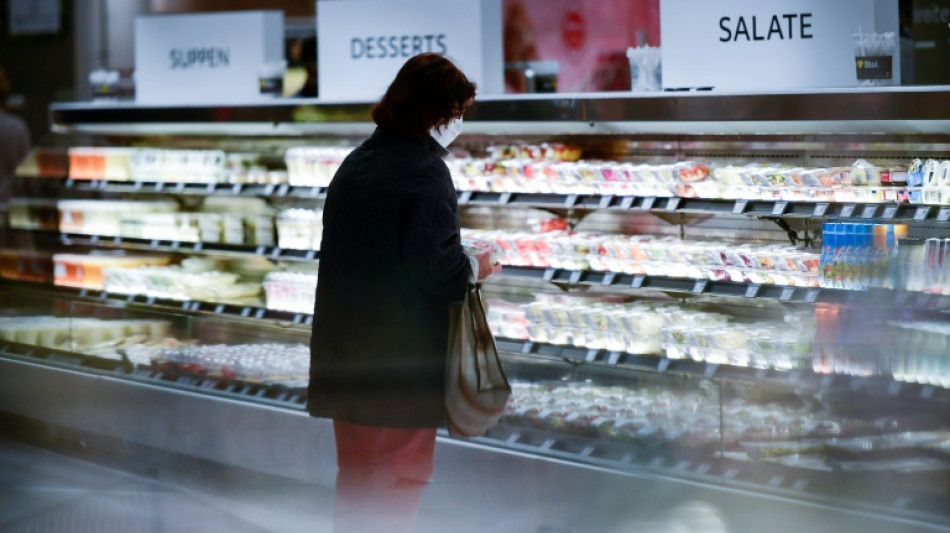
Inflation in Germany has surged to a post-reunification high, data showed Wednesday, as the war in Ukraine sent energy prices soaring and diminished the prospects for growth in Europe's largest economy.
Consumer prices rose in March by 7.3 percent year-on-year, according to the federal statistics agency Destatis, up from 5.1 percent in February and the highest level since the modern German state was created in 1990.
Russia's invasion of Ukraine had sent prices for oil and gas soaring and had a "considerable impact on the high rate of inflation", Destatis said in a statement.
Elevated prices for energy would take a toll on growth in Germany, a panel of the government's economic advisers said, slashing their output forecast for 2022.
The German Council of Economic Experts said it now expected gross domestic product (GDP) to expand by just 1.8 percent year-on-year, down from its previous estimate of 4.6 percent.
The conflict in Ukraine was "drastically worsening the economic outlook," they said in their latest report.
The experts, whose forecasts are closely watched by Chancellor Olaf Scholz's government, said they saw inflation reaching a decades-high peak of 6.1 percent in 2022, with supply chain disruptions adding to the pressure on prices from rising energy costs.
- Russian energy -
The Ukraine conflict has derailed Germany's hopes of finally shaking off the coronavirus pandemic and roaring back to growth.
With its export-oriented industries, Germany has been particularly vulnerable to the supply chain bottlenecks and raw material shortages caused by the pandemic, and its recovery has lagged that of other major European economies like France and Italy.
"The war is putting additional strain on supply chains already strained by the coronavirus pandemic," said expert panel member Achim Truger.
"At the same time, the prices for natural gas and oil, which have risen sharply once again, are weighing on companies and private consumption."
Like many of its neighbours in Europe, Germany is highly reliant on supplies of Russian oil and gas to power its industry and heat its homes.
Berlin has vowed to wean itself off Russian energy in the near future, by turning to suppliers in other countries and accelerating a shift towards renewables.
But Scholz's government has resisted calls at home and abroad to boycott Russian energy, fearing it would have a devastating impact on the economy.
- Government support -
The last time Germany recorded such a high rate of inflation was in the autumn of 1981, when oil prices increased sharply because of the Iran-Iraq war, Destatis said.
In Spain, too, inflation reached a level in March not seen in almost 37 years, jumping to 9.8 percent from 7.6 percent in February.
Inflation was already elevated across the eurozone before the outbreak of the Ukraine conflict, sitting at 5.8 percent in February -- significantly above the European Central Bank's two-percent target.
With the war continuing to put pressure on prices the only way for inflation in Germany was "up" with the possibility the rate could enter "double-digit territory", according to Carsten Brzeski, head of macro at the ING bank.
A survey by the German Ifo institute, also published Wednesday, showed "more and more companies are planning to raise their prices over the next three months".
Consumers have to prepare for "sharp price increases", the Munich-based think tank said, with food retailers in particular expecting rises, as the war drives up the cost of agricultural imports.
Germany's three largest unions, IG Metall, IG BCE and IG BAU, earlier in the week called on the government to provide support for particularly energy intensive industries.
In March, the cost of household energy and motor fuels rose by 39.5 percent year-on-year, according to Destatis, while food prices increased 6.2 percent.
F.Ferraz--PC



