
Birds, beetles, bugs could help replace pesticides: study / Photo: Lillian SUWANRUMPHA - AFP

 Inter Milan and Italy icon Mazzola dies aged 83

 Saudi capital issues first air raid alert since renewed fighting in Yemen

 Martin edges title rival Marquez for Austrian MotoGP pole

 Indonesia accepts Malaysia's help to tackle wildfires

 Indians living in Japan on stand-by to house Asian Games athletes

 Trump signs bill authorizing sweeping Russia sanctions

 Protesters form human chain at Kennedy Center after Trump threat

 Death toll from attack at police HQ in Pakistan rises to 31

 Trump says Denmark to give US 'permanent control' over Greenland security

 Kennedy Center: future unclear for iconic Washington arts hub

 Trump claims 'infinite' Greenland security deal with Denmark

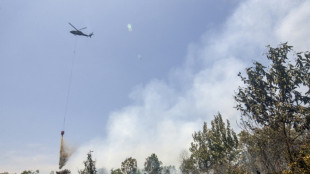
 Helicopters battle wildfire threatening Ecuador's capital

 Brentford batter Chelsea to undo Alonso's promising start

 Kane hits Bundesliga century as Bayern rout Union

 Trump says CNN, MS NOW, Politico banned from White House

 Hushing and hedging: US companies retreat on climate

 Springboks to face Fiji before 2027 Rugby World Cup

 Nigeria miners struggled to breathe in cell before 37 died: survivors

 McIlroy on the charge at PGA Championship as Reed withdraws

 McIlroy on the charge at PGA Championship

 Crisis-wracked Volkswagen warns of 10-bn-euro hit to profits

 Costa Rica's Grynspan tops third informal poll for UN chief: diplomat

 Stock markets retreat after central bank rate hikes

 Russia labels director of Cannes Grand Prix winner a 'foreign agent'

 Macron warns of Russian 'hybrid' threat after meeting presidential hopefuls

Natural predators like birds, beetles and bugs might be an effective alternative to pesticides, keeping crop-devouring pests populations down while boosting crop yields, researchers said Wednesday.
Pests are responsible for around 10 percent -- or 21 million tonnes -- of crop losses every year, but controlling them has led to the widespread use of chemical pesticides.
Could birds, spiders and beetles among other invertebrate predators do the job as well?
Researchers in Brazil, the United States and the Czech Republic analysed past research on predator pest control and found that they helped reduce pest populations by more than 70 percent, while increasing crop yields by 25 percent.
"Natural predators are good pest control agents, and their maintenance is fundamental to guaranteeing pest control in a future with imminent climate change," lead author Gabriel Boldorini, a PhD student at the Federal Rural University of Pernambuco in Brazil, told AFP.
Although the researchers did not directly compare the effectiveness of invertebrates versus pesticides, he said, the damage that pesticides cause to ecosystems and biological control was well documented, from biodiversity loss and water and soil pollution to human health risks.
The researchers found that predators were more effective at pest control in regions with greater rain variability -- which is expected to increase because of climate change.
The researchers were also surprised to find that having a single species of natural predator was as effective as having multiple species, Boldorini said.
"Generally speaking, the more species there are, the better ecosystems function. But there are exceptions," he said, adding that a single species could do the job just as well.
Climate change and rising carbon dioxide levels affect both crop yield and pest dynamics by expanding the distribution of pests and increasing their survival rates.
Meanwhile, other studies have shown that invertebrates vital for ecosystem health are suffering a rapid decline globally.
Boldorini said the conservation of invertebrates "guarantees pest control and increased productivity, without damaging ecosystems".
J.Pereira--PC



