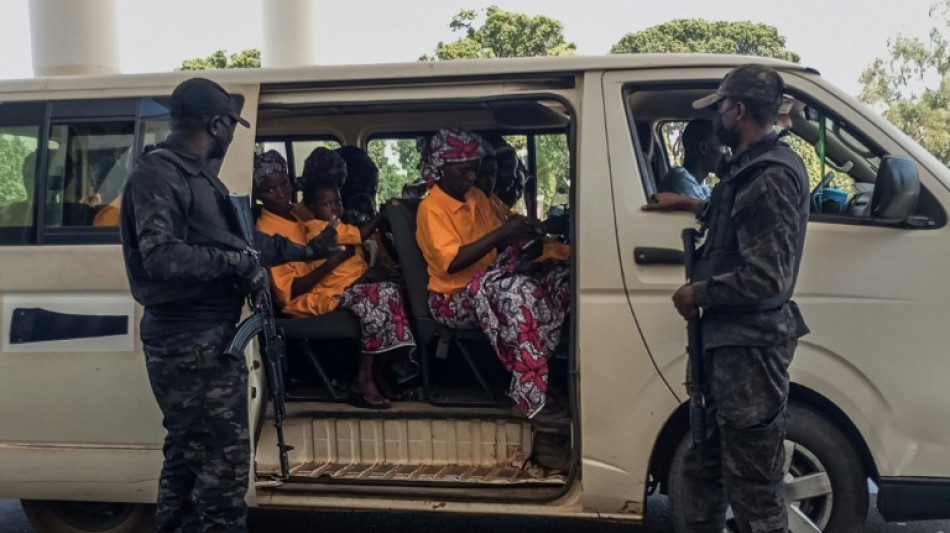
89 kidnapped Nigerian Christians released / Photo: - - AFP

 RBI Grants Paytm In-Principle Approval to Revive Wallet Business

 China's Factory Activity Contracts as Export Orders Weaken

 US Retail Sales and Fed Minutes Set Up a Critical Test for Consumers

 MotorTrend’s Top Hybrid Vehicle Picks for 2026

 Asian Markets Slide as AI Concerns Hit Chip Stocks

 Brazil Faces Debt and Inflation Test as Lula Prepares Fourth Term

 Canada Expands Asian Trade Push as US Negotiations Resume

 Jennie Earns Two Grammy Nominations as Major K-pop Agencies Boycott New Asian Pop Category

 Italy Raises 2026 Growth View but Warns Energy Will Keep Inflation High

 UK Economy Grows 0.7% in Third Quarter as Services Lead Expansion

 India's Retail Inflation Reaches 6.09% as Food Prices Accelerate

 China's October Activity Data Reveal a Weak Start to the Fourth Quarter

The last 89 Christians held captive since criminal gangs attacked three churches in northern Nigeria in mid-January were released on Thursday, following a spate of mass kidnappings in the country.
The worshippers, dressed in yellow and including children, arrived on a bus escorted by security forces, and were received by the governor of Kaduna state, Uba Sani, who said 183 people were initially abducted.
They were snatched from three churches during Sunday services on January 18, in the Kurmin Wali village of the predominantly Christian district of Kajuru, Kaduna state, the latest in a wave of mass abductions targeting both Christians and Muslims in Nigeria.
The attacks have piled international scrutiny on insecurity in the country, including from US President Donald Trump.
"Here we have 172, but the numbers that were abducted at the beginning were 183," said the governor, adding that 11 had escaped.
He said 89 people were "rescued only yesterday, or early morning of today", adding that 83 "returned about three days ago".
But Ishaku Dan'azumi, a traditional chief of Kurmin Wali in northern Kaduna state, told AFP at the weekend that 80 people had returned home, having fled during the attack to hide in other villages.
The circumstances of the captives' release were not revealed. Paying ransom is illegal in Nigeria, but the government is suspected of resorting to it regularly.
The governor said he had been in regular contact with President Bola Tinubu over the kidnappings.
The president "has been with us from day one, working closely with me. He has called me more than 45 times since this incident happened," he said.
- Ongoing violence -
After a diplomatic offensive over what Trump claimed was the mass killing of Christians in particular, the United States on Christmas Day launched strikes in Nigeria targeting militants who authorities said were linked to the Islamic State group.
The United States has deployed a small military team as Washington aids Abuja in its fights against jihadist violence.
US Africa Command told AFP last month the US military would increase equipment deliveries and intelligence sharing.
But the December one-time strikes have done virtually nothing to rein in the rampant violence in Africa's most populous nation.
On Tuesday, gunmen slaughtered dozens of people in the predominantly Muslim village of Woro in west-central Kwara State, after the military recently carried out operations in the area against what it called "terrorist elements".
The attack prompted Tinubu to order the deployment of a battalion in the remote village.
No group claimed responsibility, but Tinubu blamed the attack on Boko Haram jihadists.
Parts of Nigeria are plagued by armed gangs who loot villages and kidnap for ransom, as well as intercommunal violence in central states and jihadist groups that are active in the north.
There, authorities also have to contend with farmer-herder conflicts over land and resources.
The mass kidnappings in Kaduna followed the mass abduction -- and subsequent release -- of hundreds of Catholic schoolchildren in neighbouring Niger State late last year. They have since been all released.
Kidnappings for ransom are a common way for armed groups to make quick cash in the conflict-hit west African nation of some 230 million.
X.M.Francisco--PC