Indigenous lands block Brazil deforestation: study / Photo: Sergio Lima - AFP

 Hong Kong court set to sentence activist Joshua Wong in security case

 Australia raises benchmark rate to highest level in 18 years

 'The Remarried Empress' Cast Discusses Bringing Fantasy Royal Drama to Life

 Asian stocks retreat as AI worries outweigh steep oil-price drop

 Hamad International Airport stages emergency drills during WATAN 2026

 Global failure to punish attacks leaves journalists at continuing risk

 Researchers Warn 'Bookkeeping Trick' Masks Beef Industry's Methane Emissions

 Climate Change Intensified Atlantic Hurricanes, Study Finds

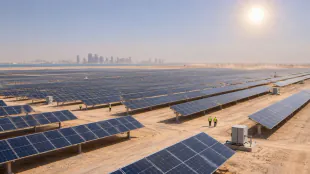 Qatar solar expansion opens scope for technical performance gains

 IXOPAY Announces IXO One, a Modular Payments Platform Built for an Era of Fluid Commerce
Brazil's indigenous reservations have acted as a barrier against deforestation over the past three decades, although destruction of the Amazon rainforest has accelerated recently under President Jair Bolsonaro, according to a study published Tuesday.
Of the 69 million hectares (266,000 square miles) of native vegetation Brazil has lost in the past 30 years, just 1.6 percent was on indigenous lands, said the report from MapBiomas, a joint project among various environmental groups, universities and startups.
Around 70 percent of the deforested area was on private land, it found.
"The satellite images leave no doubt that indigenous peoples are slowing the destruction of the Amazon," said Tasso Azevedo, the coordinator of the project.
"Without indigenous reservations, the forest would certainly be much closer to the 'tipping point' at which it stops providing the ecological services our agriculture, industries and cities depend upon."
It is the latest of numerous studies to show that protecting indigenous lands is one of the best ways to slow the destruction of native forests, which are vital resources in the race to curb climate change.
Indigenous reservations account for 13.9 percent of Brazil's territory, covering 109.7 million hectares of native vegetation -- nearly one-fourth of the country's total.
But they face increasing pressure under Bolsonaro, an agribusiness ally who won election vowing not to allow "a single centimeter more" of indigenous reservations to be created.
Since the far-right president took office in 2019, average annual deforestation in the Brazilian Amazon has increased by more than 75 percent from the previous decade, according to official figures.
A.P.Maia--PC