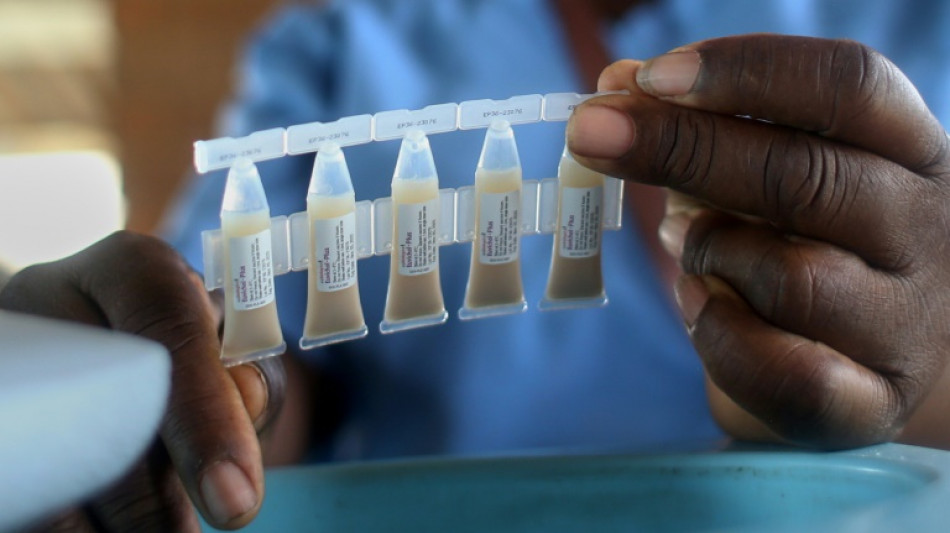
Pressure on cholera vaccine stocks 'decreasing': Gavi alliance / Photo: Jekesai NJIKIZANA - AFP/File

 Inter Milan and Italy icon Mazzola dies aged 83
 Saudi capital issues first air raid alert since renewed fighting in Yemen
 Martin edges title rival Marquez for Austrian MotoGP pole
 Indonesia accepts Malaysia's help to tackle wildfires
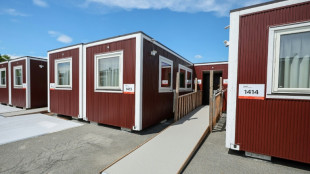
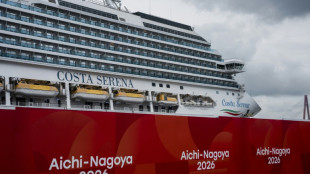 Indians living in Japan on stand-by to house Asian Games athletes
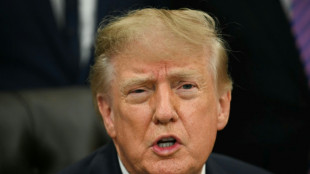
 Trump signs bill authorizing sweeping Russia sanctions

 Protesters form human chain at Kennedy Center after Trump threat

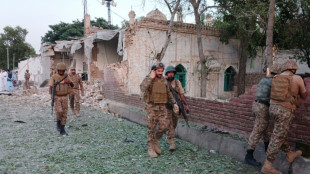 Death toll from attack at police HQ in Pakistan rises to 31

 Trump says Denmark to give US 'permanent control' over Greenland security

 Kennedy Center: future unclear for iconic Washington arts hub

 Trump claims 'infinite' Greenland security deal with Denmark

 Helicopters battle wildfire threatening Ecuador's capital

 Brentford batter Chelsea to undo Alonso's promising start

 Kane hits Bundesliga century as Bayern rout Union

 Trump says CNN, MS NOW, Politico banned from White House

 Hushing and hedging: US companies retreat on climate

 Springboks to face Fiji before 2027 Rugby World Cup

 Nigeria miners struggled to breathe in cell before 37 died: survivors

 McIlroy on the charge at PGA Championship as Reed withdraws

 McIlroy on the charge at PGA Championship

 Crisis-wracked Volkswagen warns of 10-bn-euro hit to profits

 Costa Rica's Grynspan tops third informal poll for UN chief: diplomat

 Stock markets retreat after central bank rate hikes

 Russia labels director of Cannes Grand Prix winner a 'foreign agent'

 Macron warns of Russian 'hybrid' threat after meeting presidential hopefuls

A resurgence of cholera across Africa has driven an urgent need for more vaccine doses, but stock shortages have hampered the fight against the increasing outbreaks of the deadly disease.
But pressure on the supply of doses is now decreasing, said Aurelia Nguyen, chief programme officer of the Gavi vaccine alliance that raises funds to supply vaccines to developing countries.
Ahead of a summit in Paris on Thursday aimed at ramping up vaccine production in Africa, Nguyen told AFP about the current state of play.
- How many doses are there? -
Nguyen: "Cholera outbreaks are becoming more and more frequent, more and more widespread, and are occurring more often in countries that had previously been spared.
"For years, demand for cholera vaccines had been relatively low. From two million in 2013, the supply of doses exploded to 38 million in 2023. Given the current context, the response to these outbreaks follows the World Health Organization's recommendation to administer a single dose, instead of the usual two.
"Due to the number of currently ongoing cholera outbreaks, our supply of vaccines was under pressure at the start of the year. But the pressure is now decreasing and we are once again in a position to immediately respond to new requests.
"The South Korean biopharmaceutical company EuBiologics, the only supplier of oral cholera vaccines, will increase its production by 30 percent this year and next. This increase was made possible in particular by Gavi's purchases over several years.
"Gavi therefore expects to receive 50 million doses in 2024 and around 65 million in 2025.
"Because it is important to diversify suppliers and increase volumes, we are working with a second producer, the Indian company Bharat. The firm will be able to supply more doses in 2025, as will producers in Africa in the future.
"Cholera is part of the 10-year, $1 billion initiative aimed at supporting vaccine production in Africa."
- What is driving new outbreaks? -
"Climate change is a factor that is embedded in our new strategy. This is the first time that global warming has been a criteria for investment in future vaccinations -- for example, against dengue fever.
"As well as diseases transmitted by mosquitoes, Gavi also monitors those related to populations that have been displaced by drought.
"Wherever there is conflict or a displaced population, there is a significant risk of outbreaks which rises the longer the fighting goes on. Whether it is for cholera, yellow fever, meningitis, measles -- we have vaccine reserves ready.
"Gavi works closely with the WHO to keep an eye on new pathogens that may emerge, and we take climate shocks into account in our projections for future vaccine needs.
"We have the money available ($500 million set aside) to finance a rapid response on the day an epidemic or pandemic is declared."
- What about manufacturers? -
"Thanks to our funding, Gavi vaccinates around 60 percent of the children born on Earth every year. We do not ask manufacturers to give us charity, but to sell to us at a reasonable price. The model has to be viable from the view of pharmaceutical firms so they invest in the requested volume.
"That said, given the poor countries we represent and the resources provided by our donors, we do ask for the price to be the lowest available.
"We are not a discount store -- we give the same products to children in Burkina Faso that are available to children in Switzerland. This is essential to retain confidence in the model. We will never give out an expired dose."
F.Moura--PC



