Judge sides with Elon Musk in lawsuit over SolarCity / Photo: Britta Pedersen - POOL/AFP/File

 Hong Kong court set to sentence activist Joshua Wong in security case
 Australia raises benchmark rate to highest level in 18 years

 'The Remarried Empress' Cast Discusses Bringing Fantasy Royal Drama to Life

 Asian stocks retreat as AI worries outweigh steep oil-price drop

 Hamad International Airport stages emergency drills during WATAN 2026
 Global failure to punish attacks leaves journalists at continuing risk
 Researchers Warn 'Bookkeeping Trick' Masks Beef Industry's Methane Emissions

 Climate Change Intensified Atlantic Hurricanes, Study Finds

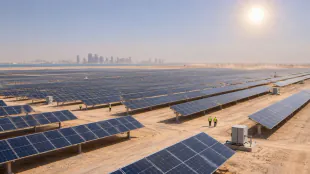 Qatar solar expansion opens scope for technical performance gains

 IXOPAY Announces IXO One, a Modular Payments Platform Built for an Era of Fluid Commerce
A judge in the state of Delaware on Wednesday handed Tesla chief Elon Musk a victory in a shareholder lawsuit filed over the controversial buy of solar panel maker SolarCity.
The judge ruled against a group of Tesla shareholders who contended that Musk, who was chairman of both Tesla and SolarCity at the time of the transaction, "poisoned" Tesla's ability to fairly evaluate the purchase, wasting corporate assets in the $2.6 billion deal and harming people who owned Tesla stock, according to a complaint.
The judge wrote in his decision that evidence indicated Tesla paid a "fair price" for SolarCity and has benefited from the acquisition.
The group of investors, which includes union pension funds and other institutional investors, argued that SolarCity was a failing enterprise that faced "likely bankruptcy" were it not for the actions of Musk and other Tesla board members, who also had large equity stakes in SolarCity.
The shareholders who filed the suit had previously reached a $60 million settlement with other Tesla directors originally named in the complaint, with the payment coming from insurance. This group, which included Kimbal Musk, Elon Musk's brother, did not admit fault.
A key question in the trial was whether Musk, who held 22 percent of Tesla's equity at the time, controlled the transaction, which won approval from Tesla shareholders.
Musk told the court that buying SolarCity was part of his "master plan," according to CNBC.
Dan Ives, analyst at Wedbush Securities, said during the course of the trial that Wall Street was watching "very closely to see the outcome for Musk and the corporate governance."
The SolarCity deal has been a "black eye" for Musk and Tesla and a "clear low light" in the company's whirlwind rise, Ives said in a note late last year.
E.Paulino--PC