California probes 'Big Oil' over plastic pollution / Photo: SAUL LOEB - AFP/File

 Hong Kong court set to sentence activist Joshua Wong in security case

 Australia raises benchmark rate to highest level in 18 years

 'The Remarried Empress' Cast Discusses Bringing Fantasy Royal Drama to Life
 Asian stocks retreat as AI worries outweigh steep oil-price drop

 Hamad International Airport stages emergency drills during WATAN 2026

 Global failure to punish attacks leaves journalists at continuing risk

 Researchers Warn 'Bookkeeping Trick' Masks Beef Industry's Methane Emissions

 Climate Change Intensified Atlantic Hurricanes, Study Finds

 Qatar solar expansion opens scope for technical performance gains

 IXOPAY Announces IXO One, a Modular Payments Platform Built for an Era of Fluid Commerce
California launched a sweeping investigation Thursday into plastic pollution by major oil companies, in a probe it says will look at whether fossil fuel giants have been lying about the problem for decades.
As part of the wide-ranging probe, the state's attorney general hit ExxonMobil with a subpoena with the aim of uncovering its role in an alleged cover-up.
"Enough is enough. For more than half a century, the plastics industry has engaged in an aggressive campaign to deceive the public, perpetuating a myth that recycling can solve the plastics crisis," said Rob Bonta, the US state's top lawyer.
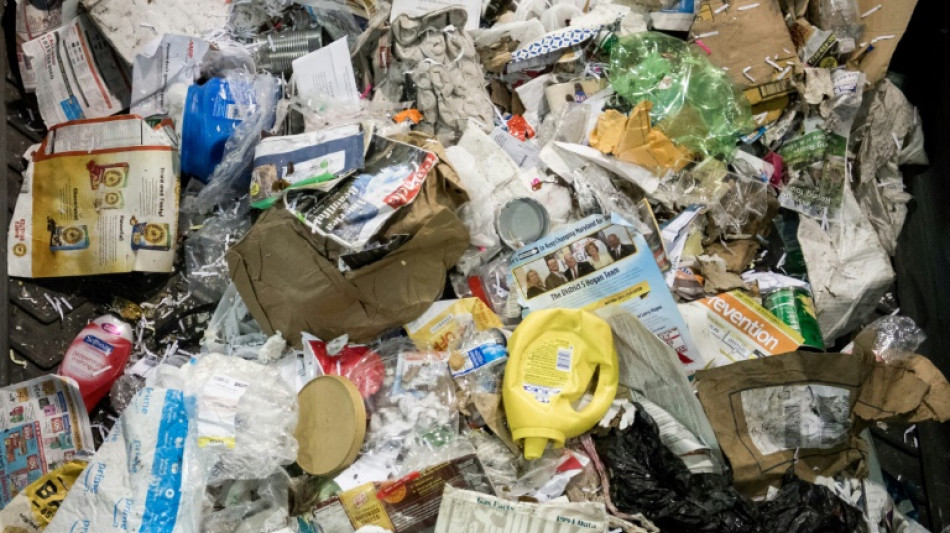
"The truth is: The vast majority of plastic cannot be recycled, and the recycling rate has never surpassed nine per cent."
The remainder is buried in landfill, burned, or littered in the environment.
From there it breaks down into micro-plastics that are too small to be seen by the naked eye.
"Every week, we consume the equivalent of a credit card's worth of plastic through the water we drink, the food we eat, and the air we breathe.
"This first-of-its-kind investigation will examine the fossil fuel industry's role in creating and exacerbating the plastics pollution crisis –- and what laws, if any, have been broken in the process."
The attorney general's office said recent reporting showed fossil fuel and petrochemical companies, which produce plastics, knew in the 1970s that recycling was not feasible and could never be economic, but that the industry pressed on with the manufacture of the materials.
Companies and their lobbyists sought to assuage public concerns about plastic by adopting the circular arrows symbol to denote supposedly recyclable materials, a statement said, despite knowing that their products could not be re-purposed.
Some 460 million tons of plastics were produced worldwide in 2019, generating 353 million tons of waste, according to the OECD.
This waste degrades into plastic micro-particles that end up in all of the world's oceans, in ice floes, in the stomachs of animals and has even been found in air sampled at the top of mountains.
The OECD says plastic products also account for nearly 3.5 per cent of greenhouse gas emissions that contribute to global warming.
"In California and across the globe, we are seeing the catastrophic results of the fossil fuel industry's decades-long campaign of deception," said Bonta.
"Plastic pollution is seeping into our waterways, poisoning our environment, and blighting our landscapes."
It was not immediately clear what the ramifications of the investigation would be, or what penalties any firm might face.
But an investigation by California -- the most populous and wealthiest state in the US -- could at least highlight an issue that scientists say we should be concerned about.
ExxonMobil did not immediately respond to a request for comment.
P.Queiroz--PC