Sandstorm forces closure of Iraqi airports, public buildings / Photo: Sabah ARAR - AFP

 Hong Kong court set to sentence activist Joshua Wong in security case

 Australia raises benchmark rate to highest level in 18 years

 'The Remarried Empress' Cast Discusses Bringing Fantasy Royal Drama to Life

 Asian stocks retreat as AI worries outweigh steep oil-price drop

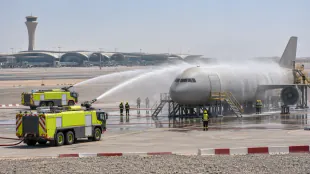 Hamad International Airport stages emergency drills during WATAN 2026

 Global failure to punish attacks leaves journalists at continuing risk

 Researchers Warn 'Bookkeeping Trick' Masks Beef Industry's Methane Emissions

 Climate Change Intensified Atlantic Hurricanes, Study Finds

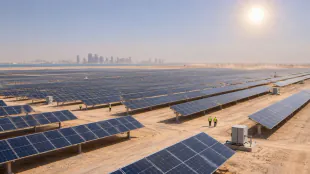 Qatar solar expansion opens scope for technical performance gains

 IXOPAY Announces IXO One, a Modular Payments Platform Built for an Era of Fluid Commerce
Iraq closed public buildings and temporarily shut airports Monday as another sandstorm -- the ninth since mid-April -- hit the country, authorities said.
The capital Baghdad was enveloped in a giant dust cloud that left usually traffic-choked streets largely deserted, an AFP correspondent said.
Prime Minister Mustafa al-Kadhemi ordered all work to cease in public institutions, with the exception of health facilities and security agencies.
He cited "poor climatic conditions and the arrival of violent sandstorms" in a statement issued by his office.
Iraq is ranked as one of the five most vulnerable nations to climate change and desertification.
The environment ministry has warned that over the next two decades, Iraq could endure an average of 272 days of sandstorms per year, rising to above 300 by 2050.
Air traffic was suspended Monday at international airports in Baghdad, Erbil and Najaf, according to statements issued by each airport, before authorities announced later in the morning that flights were resuming at Baghdad and Erbil.
The previous two sandstorms killed one person and sent nearly 10,000 people to hospital with respiratory problems.
The Middle East has always been battered by sandstorms, but they have become more frequent and intense in recent years.
The trend has been associated with rising heat and water scarcity, overuse of river water, more dams, overgrazing and deforestation.
Iraq's environment ministry has said the weather phenomenon could be addressed by increasing vegetation cover and planting trees that act as windbreaks.
A.Santos--PC