Climate change made heat behind deadly Iberian fires 40 times more likely: study / Photo: CESAR MANSO - AFP

 Drone owners rush to offload devices ahead of Beijing ban

 Trump's beef policies irk Texas ranchers, testing their loyalty

 Nvidia, OpenAI CEOs to attend Xi dinner at White House

 Anthropic picks Accenture for in-house AI safety evaluation

 Balogun returns as Monaco beat Lens to continue strong Ligue 1 start

 'Pause' on overt repression in Venezuela, but reforms still needed: HRW

 Global stocks mixed as yen falls despite Bank of Japan rate hike

 Cuba hit with seventh major blackout of the year

 Murray out with concussion so Wentz will start for Vikings

 UN chief 'deeply regrets' US visa refusal to Abbas for annual meeting

 England quick Carse to face no charges over alleged nightclub assault

 Mancini brings nine newcomers into the first squad of his Italy comeback

 Czechs level Davis Cup tie against USA as South Korea eye Finals

 New France boss Zidane confirms Mbappe as captain after naming first squad

 California governor signs order to explore AI 'kill switch'

 Head leads run spree as Australia win Zimbabwe ODI series

 In-form Raphinha wants to finish career at Barcelona

 Warren Buffett steps down as Berkshire Hathaway chairman

 Carrick confident Man Utd can 'work through' tough time

 Mbappe ends Nike partnership to join Swiss brand On

 Liverpool boss Iraola puts Bournemouth love affair on hold

 'A disaster' if Man City do not win says Maresca after flawless start

 Kerry James Marshall: American 'blackness' painter celebrated in Europe

 Spain coach De la Fuente offers 'full support' to people of Ceuta

 Russia seizes assets of Nestle, French firms over West's Ukraine support
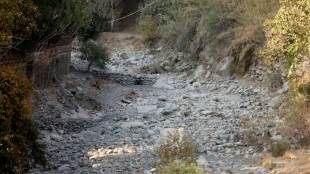
Human-caused climate change made the hot, dry and windy conditions that fuelled deadly wildfires in Spain and Portugal last month 40 times more likely, researchers said Thursday.
The Iberian Peninsula saw unusually high temperatures throughout August, with thermometers topping 40C in many areas.
The persistent heat fanned wildfires -- mainly in northern Portugal and western and northwestern Spain -- that killed four people in each country, forced the evacuation of thousands, and ravaged vast areas of land.
In Spain, more than 380,000 hectares have burned this year -- a record annual total and nearly five times the annual average, according to the European Forest Fire Information System.
Portugal has lost more than 280,000 hectares, almost three times the area usually burnt in a year.
Climate change, caused primarily by the burning of fossil fuels, made the fire-prone weather about 40 times more likely and 30 percent more intense, European researchers said in a report published by World Weather Attribution.
"Without human-caused warming, similarly severe fire weather conditions would have been expected less than once every 500 years, rather than once every 15 years as they are today," said Theo Keeping, a researcher at Imperial College London.
These hot periods rapidly dry vegetation and can trigger intense blazes that "can generate their own wind, leading to longer flame lengths, explosive outbreaks and the ignition of dozens of fires nearby from flying embers", he added.
Spain endured a 16-day heatwave in August that was "the most intense on record", with average temperatures 4.6C above previous events, according to national weather agency AEMET.
More than 1,100 deaths in Spain have been linked to the August heatwave, according to an estimate released by the Carlos III Health Institute.
Since it began keeping records in 1975, AEMET has registered 77 heatwaves in Spain, with six going 4C or more above the average. Five of those have been since 2019.
Rural depopulation has worsened the impact of climate change by leaving large areas of land less managed, said Maja Vahlberg, an adviser at the Red Cross Red Crescent Climate Centre.
"Traditional farming and grazing declines, reducing natural vegetation control. Land that was once lived in and worked has thus become more flammable," she added.
M.Gameiro--PC