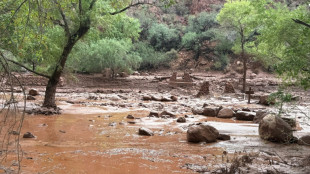
Yak hack: Kyrgyz want the world to love their blonde bovine beauties / Photo: Vyacheslav OSELEDKO - AFP

 Kaepernick says NFL 'blackballing me' decade after protest

 Atletico loan David from Juve, send Lemar to Elche

 Chelsea 'keeper Sanchez makes deadline-day move to Como

 Kroenke to buy baseball's Los Angeles Angels: statement

 US defends Trump's Venezuela oil deal

 OpenAI to launch new model with 'stronger safeguards' after hack

 Fans mourn 'bittersweet' final Ariana Grande gig in London

 Norway's King Haakon VIII swears allegiance to constitution

 Syria site infrastructure 'consistent with nuclear reactor': IAEA

 Juventus sign Woltemade, Sarr on loan from Premier League

 US strikes Iran in latest tit-for-tat attacks

 China's Xi arrives in Egypt as US sanctions threat looms over Iran links

 Car bomb at Colombian police station kills one, injures 11

 Rain delays start of play on US Open

 Man City agree blockbuster deal to sign Chelsea star Fernandez: reports

 Alkemya Metacore Secures $50M via Tokenised Equity to Scale Nickel Energy and Security Tech

 Man City chase Fernandez, Arsenal sell Jesus on deadline day

 EU says Russian 'hybrid attacks' won't halt aid to Ukraine

 Explosives used in sabotage attack on German power lines

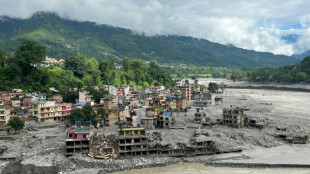 Nepali families hold symbolic funerals for missing after floods

 Newcastle sign Lille forward Fernandez-Pardo

 Even at Elysee, phones are handed in, Macron tells French pupils
 Chelsea agree to sign Atalanta's Ahanor, with Palace loan for this season

 Chelsea sign Atalanta's Ahanor and loan him to Palace

 UK chalks up hottest summer on record for second year running

Dozens of white yaks frolicked in the pristine snow of the vast Kyrgyz mountains, butting heads and locking horns as their herders watched on from their horses.
The Akmatov family have been breeding their variety of the cattle -- which normally have dark-brown hair -- for the past 15 years, and see their growing flock as a symbol of the white yak's revival in a country plagued by climate woes.
Peeking curiously from under their milky manes as they bellowed guttural sounds, the 300 or so yaks stood bemused at the sight of rare human visitors to their pasture, 3,000 metres up in the remote mountains of Central Asia.
"The cold drops to -40C at night... But the yaks can graze freely, they love the mountains and the cold," shepherd Amantur Akmatov, 30, told AFP.
Amantur is the youngest of the three-generation family of breeders -- alongside his grandfather Tashtanbek, 88, who developed the herd, and father Baatyrbek, 52.
The herd has been growing slowly, with each female giving birth to a calf roughly every other year.
Yaks hold deep cultural and symbolic importance in the traditionally nomadic country, but their numbers plummeted after the collapse of the Soviet Union.
Government support has helped double the population since the late 1990s to more than 60,000.
- Organic milk, strong wool -
As the sun set over the mountains, the yaks' distinctive black silhouettes dotted the horizon.
Despite the high altitudes, the yaks still face predators.
Around 20 have fallen prey to wolves in recent months.
Armed with a hunting rifle and clad in all-white overalls, a thick hat and balaclava to protect him from the cold, Amantur climbs onto his horse for a two-hour wolf patrol every morning at 6:00 am.
"The wolves torment them. We fight them, defend ourselves, and sometimes shoot them," he said.
The walls of his living room -- adorned with an array of wolf furs -- are testament to his marksmanship.
Bishkek is promoting yaks as a sustainable option in a rural, landlocked country that is heavily exposed to adverse effects of the changing climate.
"Yak farming is a promising sector, especially in the face of climate change and pasture degradation," the agriculture ministry told AFP.
Grazing on isolated high-altitude pastures, they reduce pressure on rural land, and the animals are "resistant to cold, drought, poor pastures and therefore perfectly adapted to regions affected by climate change... and soil degradation," the ministry added.
The Akmatovs value the yak's organic milk and meat, and say their white wool is strong and easy to dye.
"The costs of raising yaks are low. Good pastures are sufficient," Baatyrbek said.
"But to increase the number of yaks, the state must allocate pastures, that's the biggest problem," he added, calling for a rotation system to be introduced.
The UN's Food and Agriculture Organization (FAO) has warned that the state of Kyrgyzstan's pastures "is worse than at the beginning of the century due to unsustainable management practices, aggravated by climate change."
- 'Kyrgyz breed' -
The herd's milky colour is a product of 10 years of careful selection, the vision of 88-year-old family patriarch Tashtanbek.
A successful farmer in the Soviet-era, he climbed through the Communist system to become chairman of the Presidium of the Supreme Soviet in Kyrgyzstan in the late 1980s.
Pinned to his jacket were three medals -- two Soviet "Hero of Socialist Labour" awards alongside a "Hero of Kyrgyzstan".
There is even a statue of him in his mountain village of Kara-Saz in honour of his contribution to Kyrgyz agriculture, which employs around a quarter of the country's workforce.
Steadied by his son and grandson on either side, he trod carefully out into the crisp snow wearing a traditional fur Ushanka hat to inspect the herd.
Scientists are studying whether the fur of the white yaks "reflects ultraviolet rays and prevents heat from reaching the body," he told AFP.
The family have already patented a breed of mountain merino sheep and applied to have their yaks officially recognised by the agriculture ministry as part of Kyrgyzstan's national heritage.
The goal, said Baatyrbek, is to "register this Kyrgyz breed, then export it".
M.A.Vaz--PC