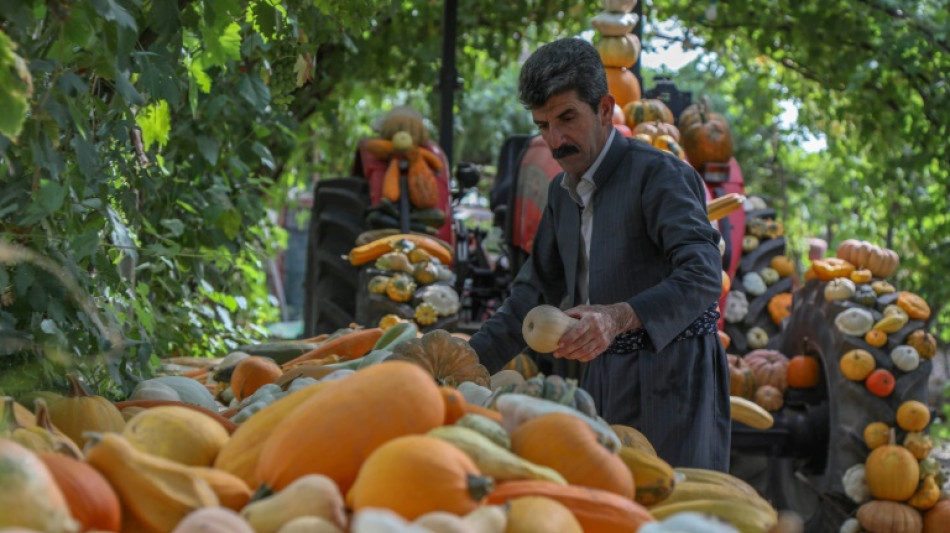
Kurdish Iraqi farmer sprouts online advice, green awareness / Photo: Safin HAMED - AFP

 Thousands bid farewell to Bosnian Serb war criminal in Belgrade

 EU chief announces 200-mn-euro investment package for Greenland

 Lebanon says Israel conducts wave of deadly strikes

 Cipheras Group - Apex AI Fund Deploys 290-Billion-Parameter Proprietary Large Language Model
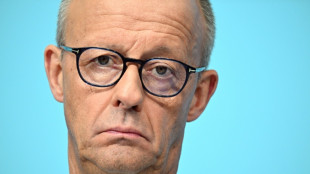 Germany's Merz 'shocked' by far-right state win but vows to stay course

 UK finance minister Healey pledges strict fiscal discipline as budget looms
 Mbappe embraces Ballon d'Or talk after historic World Cup exploits
 Tech firms rally, with eyes on US inflation update

 Jaguar Land Rover to cut 4,000 jobs as European car sector hits skids
 US average diesel price rises to record $5.90 a gallon: AAA

 Dukascopy Bank Unveils AI-Powered Trading, 25,000+ Stock CFDs and a New Flagship E-Banking App

 Tech firms rally but Asian markets mixed, with eyes on US inflation

 Nepal holds day of mourning as families pray missing still alive
 African players in Europe: Mbeumo fires solo goal as United draw
 Malaysia cancels haze emergency, but warns problems remain
 Philippine sensation Eala looks forward to Asian Games 'fun'
 Jakarta airport extends closure after volcano eruption

 Lonely woman director in Venice sees industry backsliding on gender

 Tech firms rally on mixed day for Asian markets, with eyes on US inflation

 World number one An sends Asian Games warning with China hat-trick
 PSG go for three in a row as Champions League returns

 "Super-human' Alcaraz books US Open quarter-final clash with Shelton

 ECB set to hike interest rates as Iran war flares anew

 AI data centers are less thirsty now, tech giants say

 North Korea vows nuclear-armed navy as US ally drills open

Kurdish Iraqi farmer Azad Muhamad has become a social media star by sharing tips on growing fresh fruit and vegetables in the sun-parched country that is highly vulnerable to climate change.
The moustachioed 50-year-old with almost half a million Facebook followers posts weekly videos on topics such as protecting fruit trees, dealing with insects and helping people get more from their farms and gardens.
"They should make you agriculture minister," one of his fans, Ahmed Hassan, commented on a recent video.
Muhamad also uses his popular online platform to raise awareness about protecting the environment and the need to support local farmers, in his native Kurdistan region and beyond.
"Developed-country farmers have government support and harvesting machines," said Muhamad.
"Our farmers do everything themselves with their own sweat -- and when they lose money at the end of the year, they start over with the same passion and energy."
He also has a message for authorities in Iraq, which the UN classifies as the world's fifth most vulnerable country to climate change and where many are mired in poverty despite Iraq's oil wealth.
"Our land is fertile, and our earth is like gold," Muhamad told AFP.
Therefore, he said, the government should "focus on agriculture rather than oil, for a sustainable economy".
- 'Preserve environment' -
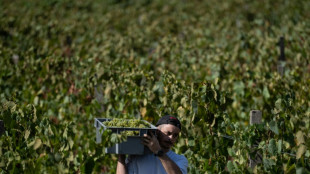
From his farm near Halabja, Muhamad squats among grape vines and other plants, wearing traditional Kurdish clothing as a friend uses a mobile phone to film him.
Many of his followers, he said, are not farmers but people who "have transformed their roof into gardens -- and that's a way to better preserve the environment".
He invites his Facebook followers to post their questions, and says some farmers have sent him videos of their crops, thanking him for his help.
"That makes me very happy," he said.
In one video, he advises farmers to space their trees out by just two metres (six feet) instead of four to keep the soil shady and damp, protecting it from the scorching summer heat.
"With desertification, and low rainfall, we must change how we plant trees," he said.
"Look at these tomatoes," he added, gesturing at a group of plants. "Because they are in the shade, they are juicy and perfect -- whereas these that are in the direct sun have been burned."
Iraq's northern Kurdistan region has been spared the worst effects of desertification, water scarcity and drought that have ravaged other parts of the country.
"The region has high rainfall precipitation compared to the rest of Iraq," said a 2019 study involving United Nations agencies and the autonomous Kurdistan regional government.
But the report warned that "local agricultural production is in severe competition with foreign goods with largely lower prices" ... "mainly from Turkey and Iran, whose products have flooded Iraqi markets".
It urged "more investments" to improve irrigation, along with water management to promote sustainability, to ensure the efficient use of resources and "mitigate the effects of climate change".
- 'Fresh and organic' -
Hamid Ismail Abdulrahman, a fellow farmer in Halabja, said low water levels in wells had impacted agricultural development.
Twice a week, the 47-year-old opens his farm to families who can buy "fresh and organic products", from tomatoes to corn and eggplant.
He said climate change had greatly affected agriculture all over Iraq, though "southern Iraq has the lion's share of this impact, while in the north the effect is less".
With Iraq already witnessing record low rainfall and high temperatures in recent years, Muhamad warned that "if the government doesn't act now and present a concrete plan... the damage will be done".
Muhamad has recently opened a small educational area on his farm, and now also receives visits from university students.
He says he hopes his initiatives will have a longer-term impact.
"Some people leave behind a mosque" when they die, he said, but "I want to leave behind my agricultural knowledge."
F.Ferraz--PC