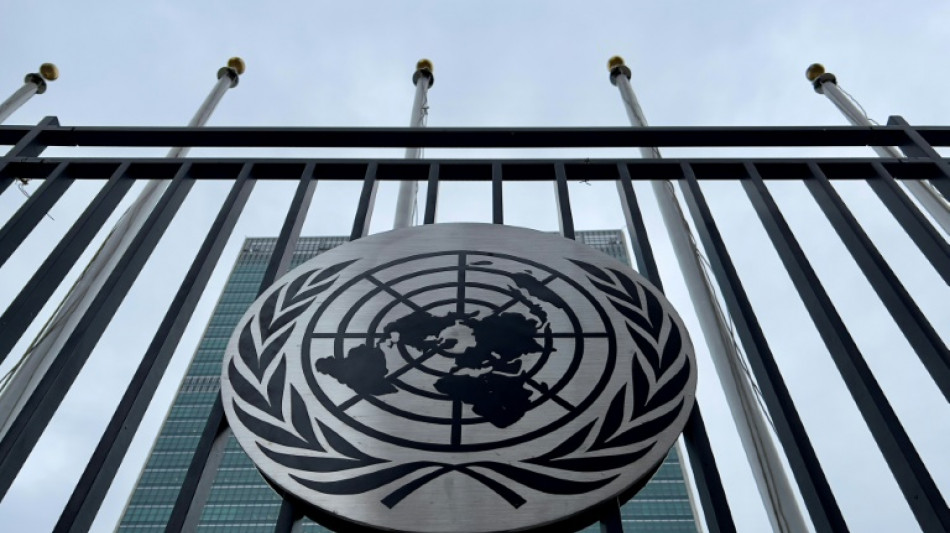
UN resuming talks on high-seas treaty amid growing concerns / Photo: Daniel SLIM - AFP/File

 Norway bids farewell to King Harald V, 'grandfather' of the nation

 NFL breaks new ground as 100,000 set to pack MCG in Australia
 EU faces revolt over social media ban for children
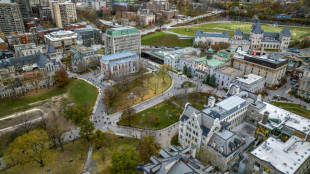 Canada eyes researchers looking to leave 'hostile' US

 Tiafoe escapes Michelsen to reach US Open semi-finals

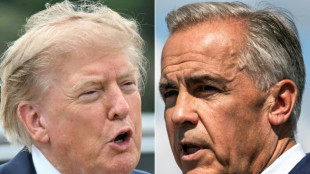 Carney touts Canada 'pivot' away from US as Trump levels new threat

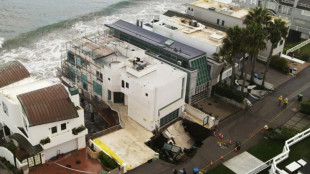 Pounding waves open up sinkhole in swanky Malibu
 LIV Golf files for bankruptcy protection

 Argentina launches legal action against oil firms for Falklands drilling

 Haaland double powers Man City to victory over Porto

 Sabalenka survives Noskova to return to US Open semi-finals

 'South Park' changes name in dig at Trump

 OpenAI says AI solved one of math's hardest problems in days
 Nearly 1,100 flights cancelled after UK air traffic control glitch
 Sabalenka holds off Noskova to keep US Open three-peat bid alive

 Rein in social media not children, say over 130 groups, experts
 Hong Kong's first post-colonial leader Tung Chee-hwa dies aged 89

 Rangers captain Shankland sidelined for up to four months

 NY failed to disclose what it knew on 'toxic air' after 9/11
 What we learned from 'lacerating' four-hour Musk documentary

 UK, France, Canada to ban imports from Israeli settlements
 Pakistan's drastic squad upheaval 'news' to skipper Babar Azam
 Hurricane Lowell lashes Hawaii's western islands

 Argentina files lawsuit against oil firms operating off Falklands
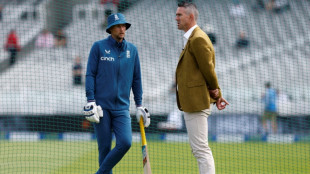 Root wants Pietersen to pull no punches on England return

After four inconclusive sessions, UN member states on Monday resume talks aimed at finally completing a treaty to protect the world's high seas, a vital yet fragile resource that covers nearly half the planet.
A host of NGOs and affected countries say the pact is urgently needed to improve environmental stewardship over the vast, yet largely unregulated, area as it faces growing challenges.
But the Covid-19 pandemic slowed negotiations for two years, and a session in March that was supposed to have been conclusive made progress but ran out of time.
The new round of talks opening Monday is set to run through August 26 at United Nations headquarters in New York.
Whether it will really be the last round remains uncertain, according to those close to the talks.
Negotiators are "cautiously optimistic," said a source with the High Ambition Coalition, which groups some 50 countries led by the European Union.
The source told AFP that participants need to find a compromise between two "grand ideas": protecting the environment and regulating human activities on the one hand, while also guarding freedoms on the high seas.
The high seas begin at the border of nations' exclusive economic zones (EEZs), which by international law reach no more than 200 nautical miles (370 kilometers) from each country's coast, and are under no state's jurisdiction.
Even if the high seas represent more than 60 percent of the oceans -- and nearly half the planet -- they have long been largely ignored in favor of coastal zones, with protections extended only to a few vulnerable species. Only one percent of the high seas enjoys legal protection.
Yet, scientists have proved the importance of protecting oceanic ecosystems in their entirety. They produce half the oxygen humans breathe and help limit global warming by absorbing much of the carbon dioxide emitted by human activity.
They are seriously at risk, however, from the continuing rise in levels of carbon dioxide (which intensifies warming and makes ocean waters more acid), pollution and overfishing.
- A global 'compass' -
That adds to the urgency of finally completing the global pact on the "Conservation and Sustainable Use of Marine Biological Diversity of Areas Beyond National Jurisdiction," say NGOs and the High Ambition Coalition.
"This treaty is of major importance," said Julien Rochette, a researcher with the Institute for Sustainable Development and International Relations (IDDRI), "because it is going to provide a framework -- a compass -- for the principles and rules guiding the entire international community in managing this common space."
But the latest treaty draft still fails to resolve several thorny issues or to choose among diverse and contending options, such as the conditions for creating so-called Marine Protected Areas.
To James Hanson of Greenpeace, the future Conference of Parties (or COP, a decision-making body which includes all signatory states) must have the power to "create these Marine Protected Areas without having to defer to the existing bodies."
Yet questions about cooperation with regional maritime organizations (such as over fishing rights) must yet be decided.
Also unresolved, Rochette told AFP, is whether the COP could ban certain activities on the high seas if a mandated environmental-impact study proves unfavorable, or whether a state could simply go ahead.
Another sensitive issue involves the allocation of potential profits from developing genetic resources in the high seas, where pharmaceutical, chemical and cosmetic companies hope to find miracle drugs, products or cures.
Such costly research at sea is largely the prerogative of the rich, but developing countries do not want to be left out of potential windfall profits drawn from marine resources that belong to no one. It remains unclear whether there has been substantial movement by key parties since the last round of talks, said Rochette.
He said those pressing hardest for agreement on this issue include the European Union, Australia, New Zealand and developing countries, while the strongest opposition comes from Russia and from countries concerned about fishing rights, including Iceland and Japan.
H.Silva--PC