Germany to start lifting Covid curbs as Omicron passes peak

 Drone owners rush to offload devices ahead of Beijing ban

 Trump's beef policies irk Texas ranchers, testing their loyalty

 Nvidia, OpenAI CEOs to attend Xi dinner at White House

 Anthropic picks Accenture for in-house AI safety evaluation

 Balogun returns as Monaco beat Lens to continue strong Ligue 1 start

 'Pause' on overt repression in Venezuela, but reforms still needed: HRW

 Global stocks mixed as yen falls despite Bank of Japan rate hike

 Cuba hit with seventh major blackout of the year

 Murray out with concussion so Wentz will start for Vikings

 UN chief 'deeply regrets' US visa refusal to Abbas for annual meeting

 England quick Carse to face no charges over alleged nightclub assault

 Mancini brings nine newcomers into the first squad of his Italy comeback

 Czechs level Davis Cup tie against USA as South Korea eye Finals

 New France boss Zidane confirms Mbappe as captain after naming first squad

 California governor signs order to explore AI 'kill switch'

 Head leads run spree as Australia win Zimbabwe ODI series

 In-form Raphinha wants to finish career at Barcelona

 Warren Buffett steps down as Berkshire Hathaway chairman

 Carrick confident Man Utd can 'work through' tough time

 Mbappe ends Nike partnership to join Swiss brand On

 Liverpool boss Iraola puts Bournemouth love affair on hold

 'A disaster' if Man City do not win says Maresca after flawless start

 Kerry James Marshall: American 'blackness' painter celebrated in Europe

 Spain coach De la Fuente offers 'full support' to people of Ceuta

 Russia seizes assets of Nestle, French firms over West's Ukraine support
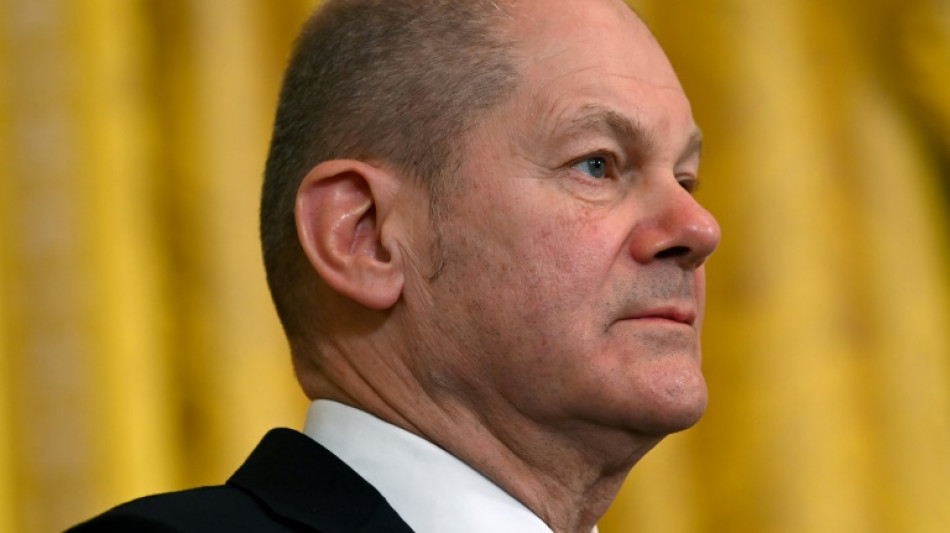
Germany will start rolling back most of its coronavirus restrictions as the country's falling infection rate suggests the Omicron-fuelled wave has peaked, Chancellor Olaf Scholz said Wednesday after talks with regional leaders.
The three-step plan -- which includes allowing unvaccinated people back into shops and restaurants -- will see Germany reach its "freedom day" on March 20, as media have dubbed it.
"After two years we deserve for things to be better again and it looks like that's happening now," Scholz told reporters.
But he urged Germans to remain cautious and said they would have to keep wearing face masks. "The pandemic is not over," he said.
Germany is the latest European nation to attempt a return to more normality, two years after the pandemic first emerged and upended people's daily lives and routines.
As a first step, Germany will immediately drop a 10-person cap on private gatherings of people who are vaccinated or have recovered from Covid-19.
For the unvaccinated however, the rule that they can only meet two people outside their household will remain in place for another month.
Access to non-essential shops will be open to all again, without checks on whether customers are vaccinated against the virus or not. Face masks will still be required, with high-protection FFP2 masks recommended.
From March 4, restaurants and hotels will be allowed to welcome the unvaccinated again, so long as they can provide a recent negative test -- a system known as 3G in Germany.
Nightclubs will reopen, but not for the unvaccinated. Everyone else will have to be boosted or provide a negative test -- the so-called 2G plus system.
The number of people allowed to attend large events including sports competitions, under 2G plus rules, will be increased.
In a final step, the remaining profound restrictions on social, cultural and economic life are to be gradually lifted by March 20.
That includes ditching the requirement for employees to work from home whenever possible.
After that date, Europe's top economy will rely on "basic protection measures", Scholz and regional leaders agreed, "in particular the wearing of medical masks" in indoor public venues and on public transport.
Social distancing is also set to be maintained.
- Europe unwinds curbs -
Germany recorded almost 220,000 new coronavirus cases over the past 24 hours, the Robert Koch Institute said Wednesday, and another 247 deaths.
While daily numbers remain high, Germany's weekly infection rate has fallen in recent days, with experts saying the coronavirus wave fuelled by the highly contagious Omicron variant has peaked.
Hospitals too have coped well, having been so far spared a surge in Omicron admissions.
Those elements, combined with a 75-percent vaccination rate among Germany's population, have led to calls for the authorities to lift curbs and give citizens back their freedoms.
The legislation that covers Germany's current infection protection measures runs out on March 19.
Britain, Ireland, Denmark and Norway have already dropped most of their Covid-19 restrictions.
The Netherlands, which imposed some of Europe's toughest measures in December, plans to follow suit. Dutch bars, restaurants and nightclubs will go back to pre-pandemic opening hours and health passes will be scrapped by February 25.
France aims to remove the last of its curbs in the coming weeks, including ending the requirement for face masks indoors by mid-March if the pandemic situation allows.
Germany too stressed that its path to a more normal daily life depended on the further evolution of the pandemic.
Scholz and regional leaders also reaffirmed their support for a general vaccine mandate, a controversial topic that has divided Germany's lawmakers who would have to approve the measure.
"Mandatory vaccination is necessary for the winter," said Scholz, adding that it has to be put in place so that "one new variant doesn't mess everything up".
F.Carias--PC