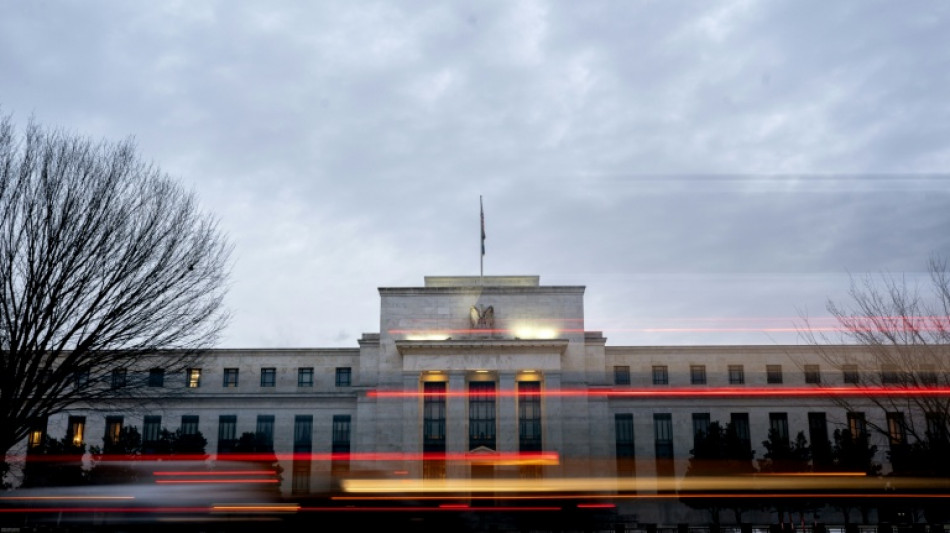
Fed formally adopts investment rules for officials after outcry

 Search Underway for 'Dooars Rani' Tigress After Second Escape from Buxa Tiger Reserve

 IIM Indore Announces IPMAT 2027 Exam Date for April 24

 The Dilemma of Recording Live Music: Preserving Memories vs. Being Present

 ANC’s Renewal Rhetoric Fades as Voters Reject Party in 2026 Local Elections

 Foreign Investors Return to Indian Markets After 10-Month Selloff

 Honda CR-V and Toyota RAV4 Lead Canada’s Most Stolen Vehicles List for 2025

 China Extends Tariff Suspension on US Imports to Stabilize Trade Ties
Top officials at the US Federal Reserve will be banned from holding individual stocks, bonds, cryptocurrencies and certain other investments under new rules adopted Friday, after controversial trading activity led to high-profile resignations last year.
Under the regulations adopted unanimously by the policy setting Federal Open Market Committee (FOMC), central bank leaders including the Fed chair and vice chair as well as the heads of the regional banks will also not be allowed to hold foreign currency or engage in short selling and margin trading.
In a statement, the FOMC said the rules "aim to support public confidence in the impartiality and integrity of the committee's work by guarding against even the appearance of any conflict of interest."
The new rules also specify top officials will be banned from trading "during periods of heightened financial market stress."
Two regional Fed bank presidents resigned last year following disclosures that they had traded individual stocks in 2020, when the Fed was working to shore up the pandemic-hit economy.
Last month, Richard Clarida resigned before the end of his term as Fed vice chair, after media reports questioned his trading activity in February 2020, just before markets plunged on news of Covid-19 spreading across the United States.
The Fed is in the midst of a leadership shift, with Chair Jerome Powell awaiting Senate confirmation for a second term, alongside Lael Brainard as his vice chair and three new additions to the Board of Governors.
The Republican opposition earlier this week boycotted a vote to advance the candidates' nominations from the Senate Banking Committee, criticizing the views of two of the governor candidates, who were nominated by Democratic President Joe Biden.
The FOMC makes major policy decisions for the central bank, which have ripple effects across global markets.
In their meeting next month, the FOMC is expected to increase interest rates from zero for the first time since Covid-19 sparked a crisis in the world's largest economy.
The new regulations come into effect May 1, and officials affected by them will have 12 months to get rid of holdings that do not comply.
M.Carneiro--PC
