The shadowy messengers delivering threats to Hong Kong civil society

 AI's hunger for power sparks US private gas plant boom
 Memphis AI data center fuels pollution fight in Black neighborhood

 Ceuta leader wants migrant detention centre after influx

 Colombia scrambles to find survivors as quake kills 111

 Rain postponements wreck Montreal Masters schedule

 Notts Forest owner Marinakis sues Palace over gun banner - reports

 Koech gets three-year ban, stripped of US 1,500m title

 Sensational Ingebrigtsen back with more European gold
 'A scare': Brazil player leaps into tunnel in joy over goal

 USA Swimming CFO Hilliard arrested for alleged theft

 Trump insists Netanyahu relationship 'very good' despite Gaza rift

 Ingebrigtsen delivers masterclass for seventh European athletics gold

 Colombia declares state of emergency after quake kills 111

 Golden relay double for Britain at Europeans as Marchand takes silver

 Barcelona's Araujo heads to Liverpool on loan

 Tupac Shakur murder trial begins 30 years after rapper's death

 Russia bars only anti-war party from elections

 Boeing to divest tech ventures for stake in air-taxi startup

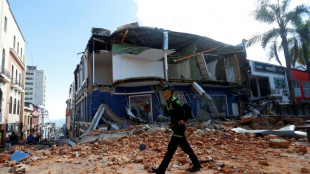 Major quake rocks Colombia and neighbors, 18 confirmed dead

 Brazil aircraft maker Embraer raises outlook after record revenue

 Drought forces water restrictions across nearly 70 percent of France

 Europe wary as gas stocks languish at lows while winter looms

 Freedom Holding Corp. Reports 40% Increase in Quarterly Revenue to $732.5 Million

 Stocks mostly flat with focus on US inflation
 UK radio broke rules in announcing king's death: watchdog

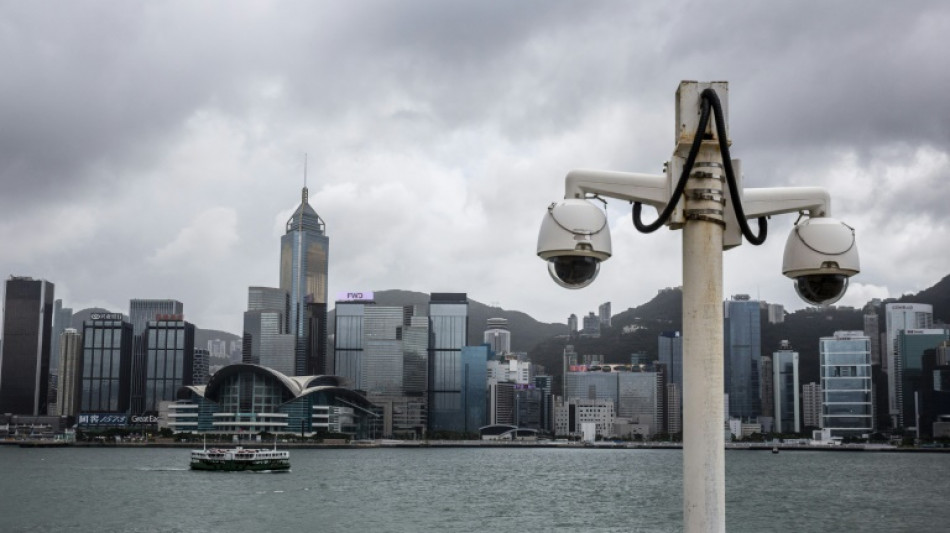
Covert meetings, whispered threats, and mysterious phone calls –- warnings of reprisals by authorities from shadowy messengers are hounding Hong Kong's civil society as China flattens a pro-democracy movement.
Unlike the Chinese mainland, Hong Kong long hosted a vibrant landscape of citizens' groups who cultivated rights advocacy, union mobilisation and civil disobedience as a key fabric of the once-outspoken city.
But a national security law imposed by Beijing in 2020 to snuff out dissent has knee-capped the sector, leaving people fearful that the law's vaguely defined crimes will be used to target their work.
More than 50 civil society groups specialising on issues ranging from labour to education have since announced their closure or been shuttered after national security arrests.
Often the pre-emptive shutdowns came after staff were subjected to a shadowy campaign of threats and intimidation, according to five people AFP spoke to with firsthand knowledge.
The warnings typically arrived via phone calls and messages from so-called "middlemen", who assumed a conversational tone while revealing knowledge of each recipient's personal life. Some came face to face.
Veteran NGO worker Mario -- using a pseudonym due to fears for his safety -- said his colleagues received disconcerting messages from several middlemen last summer.
"They would tell you different stories but at some point the conversation would reach the same conclusion: you must shut down," he told AFP.
A month after first contact, Mario's organisation made the decision to close.
- 'We respect civil society' -
Hong Kong's civil society groups have in recent years been labelled "anti-China elements" by officials and state media.
Beijing has made clear it believes they were a key part of democracy protests that exploded in 2019 with huge rallies and frequent clashes with police.
The national security law's vague language, combined with the middlemen's warnings, suddenly made the threat of lengthy jail terms very real for people like Mario.
"Every normal thing civil society did in the past three decades is now subject to political reprisal," he said.
Shuttered organisations range from the city's largest trade union to Amnesty International, as well as the Hong Kong Alliance -- which used to organise the annual vigil remembering victims of China's Tiananmen Square crackdown in 1989.
Hong Kong's leader Carrie Lam has repeatedly denied that a deliberate campaign targeting organisations is taking place, insisting "we respect civil society".
China's ruling Communist Party and its Liaison Office in Hong Kong have openly accused some groups of violating the law, calling the collapse of these organisations "a choice of their own making".
Both China's Public Security Ministry and its Hong Kong and Macau Affairs Office did not respond to requests for comment from AFP.
The city's Security Bureau and the Committee for Safeguarding National Security also declined to comment on what they called "allegations by individuals".
- New sheriff in town -
Under a "One Country, Two Systems" principle that Beijing agreed to before the 1997 handover by Britain, Hong Kong was allowed to retain key freedoms and autonomy for 50 years.
These included the city being left to police itself using its own laws.
The national security law changed all that, toppling the legal firewall that existed between the financial hub and Beijing.
Among the legislation's many precedent-setting provisions was a clause empowering the mainland's security apparatus to operate openly in Hong Kong.
Days after the law's enactment, mainland security officials requisitioned a hotel for their staff -- unbound by local laws -- as they conducted investigations on perceived threats to China.
The middlemen are regarded as an extension of this new sheriff in town, according to two sources who told AFP they had been contacted directly.
Both described similar face-to-face meetings but asked for key details to be omitted to maintain anonymity.
The meetings were held in a pre-booked private room at public businesses and featured a Cantonese-speaking man claiming to be a mainland security agent.
The conversations stayed largely polite but could flip -- with one source saying the agent he met sounded at times "as if he was interrogating me".
Another said the middleman asked what he thought about disbanding his group, citing various possible security law breaches.
"At first I thought it would be silly to disband when we didn't know what offences we have committed," he told AFP.
"But when he could name a very specific charge, we started to worry."
The messengers possessed personal information, both recalled, dropping details of their relatives and daily habits into conversation.
AFP was not able to independently verify the sources' accounts.
- 'Approach of intimidation' -
The use of middlemen to channel information and deliver political messages is not new.
Beijing's presence in Hong Kong is maintained through the Liaison Office, which has played an increasingly prominent advisory role in recent years -- at times calling in local establishment politicians to be briefed by Chinese officials.
For opposition figures, Beijing preferred using middlemen, according to Ted Hui, a former opposition lawmaker now in Australia.
Such meetings were commonplace -- mainly as intelligence-gathering for authorities' decisions -- until one year before the 2019 protests, he said.
"But after the security law came in, it became an approach of intimidation... So under the table, they can send those middlemen to say things the government cannot openly say."
More than 160 people have been arrested under the national security law so far -- most of them opposition politicians, journalists and rights workers.
Against the backdrop of these detentions, the slow-burn whisper campaign has been an effective tool to shut down organisations critical of the government.
"We are so inexperienced that many of us decided to disband under these threats," said Connie, a rights worker who said she received a call from a stranger giving her a deadline to quit.
Oliver, another rights worker, said he got a text message from someone posing as a "friend" warning he could be arrested.
With so many other groups shuttering and new arrests each month, Oliver felt compelled to take the threat seriously and decided to fold.
"If all those big groups... were not spared, how could you be?"
F.Moura--PC