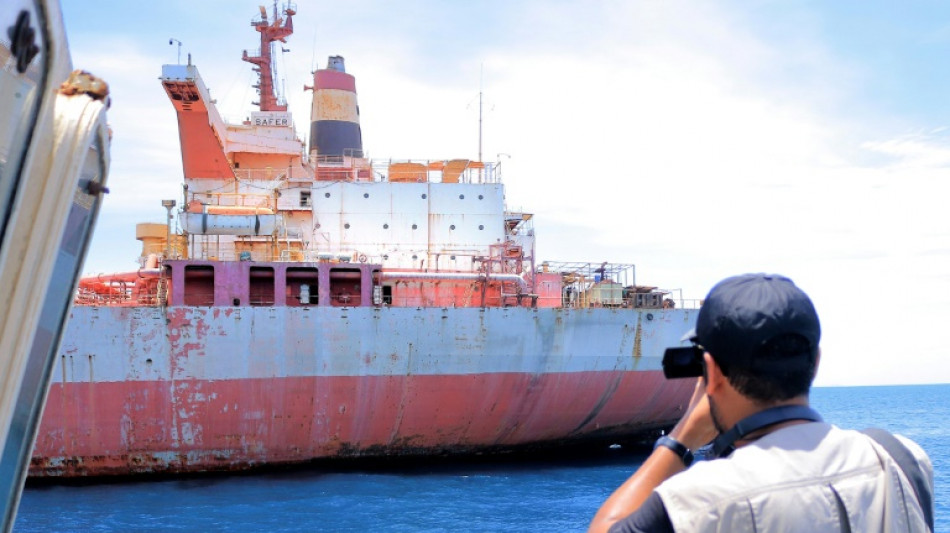
No alternative to risky oil tanker salvage in Yemen, UN says / Photo: - - AFP

 Oil companies close in on Venezuela despite hurdles

 Turkey freezes ex-minister's assets as fund scandal grows

 Guardiola backs Man City after bombshell guilty verdicts

 G20 trade ministers open talks under strain of Trump tariffs
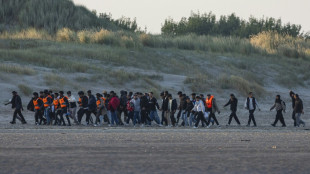 France in talks with UK to end 2025 migrant accord: ministry

 Europe's surging inflation spreads gloom in stock markets

 Truth commission demands compensation for Sweden's Sami people

 Japan win marathon penalty shootout to set up South Korea gold-medal clash
 Djokovic grinds out opening-round win at China Open
 Northern Ireland police probe blockade of disputed parade

 UK PM Burnham reopens divisive debate on rejoining EU
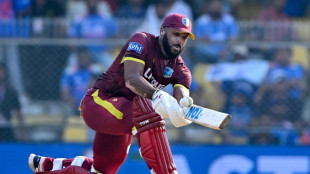
 Man City future in doubt after guilty verdict

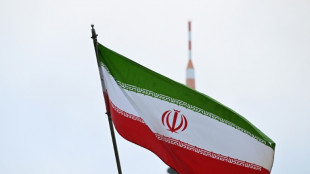 'Do something,' begs Iranian woman after death sentence over protests

 China extends 52-year unbeaten record as Games organisers say sorry
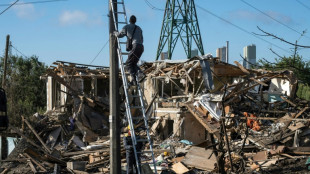
 In Manchester, people say City scandal is 'shame for football'
 Stocks lacklustre as inflation data weighs on sentiment
 Israel-bound plane rerouted, pilots wounded in reported fight

 Truth commission on Sweden's Sami people seeks redress

 Energy costs spark inflation surges in France, Italy

 South Korea break China hearts to reach Asian Games football final
 Eala storms into Asian Games semi-finals to thrill adoring fans

 Turkey freezes ex-minister's assets as fund crisis grows
 What we know about the North Korean POW dispute

 Most equities rise after oil price plunge, US data in focus

 Polar oceans transformed as warming melts ice habitats: research

Transferring more than a million barrels of oil from an abandoned tanker anchored off the shore of Yemen comes with "palpable risks" -- but doing nothing could lead to a devastating oil spill, a senior UN official said Wednesday.
"If something were to go wrong, indeed, many questions will be asked," said Achim Steiner, head of the United Nations Development Program, which is in charge of salvage of the FSO Safer, underway since Tuesday.
But "walking away is not an option," he told AFP in an interview.
The 47-year-old ship is carrying four times as much oil as that which spilled in the 1989 Exxon Valdez disaster off Alaska, one of the world's worst ecological catastrophes.
And the Safer hasn't been serviced since Yemen's civil war broke out in 2015 -- left abandoned off the rebel-held port of Hodeida, a critical gateway for shipments into the war-torn country, which is heavily dependent on foreign aid.
To unload the Safer's oil -- a process set to begin in less than two weeks -- the United Nations had to purchase its own super-tanker. Private company SMIT Salvage will pump the oil from the Safer to the UN-owned ship, called Nautica, and then tow away the empty tanker.
The first images sent from the site this week revealed "an old, rusty tanker," Steiner said.
Experts who mounted the ship Wednesday didn't immediately find "anything that we did not expect," though those in charge are still waiting for a full evaluation.
In the meantime, the Safer remains a ticking time bomb.
"The most catastrophic scenario could be that the vessel explodes or that indeed it falls apart, it develops some major oil spill," Steiner said.
A spill -- "increasingly viewed as an inevitable risk" -- could cost up to $20 billion to clean up, to say nothing of the environmental and human toll, and the UN is negotiating with an insurance consortium to insure the operation.
- A potential payday -
One of the first steps will be securing the ship, whose onboard systems are no longer operational. Then, SMIT Salvage will need "to pump inert gas into the tanks, which significantly reduces the risk of an explosion or fire."
But the UN is preparing for the worst, with "a contingency plan that extends well beyond the site of the Safer" and has to take into account the risks potentially posed by landmines onshore.
In addition to the insurance consortium, the UN team had to navigate a coterie of lawyers and experts -- and the warring parties in Yemen -- to secure an accord to safely unload the Safer's deadly cargo.
But the world body is still $29 million short in what it estimates will be a more than $140 million project.
Even when the oil is pumped out -- a process that could be finished by early or mid-July -- Steiner won't be able to rest easy.
Pumping is only good for getting the actual liquid oil out. But "over the years, a kind of sludge builds up at the bottom of the tanks," which will take a specialized SMIT Salvage team to clear.
"That sludge is not insignificant in terms of its potential impact that it could have on marine biodiversity" or the health of the Yemeni people, Steiner said.
The job will only finish when the Safer is finally towed to a scrap yard.
But while the ship's contents currently represent a massive risk, it is possible the oil could bring about a sizable windfall.
"There could be significant revenues in the tens of millions of dollars" if it's not contaminated by sea water or other substances, Steiner said.
"The oil... could actually be sold so that that revenue could be used to help people in Yemen who are desperate, fighting for their survival."
It's still a long way to payday, however, as the parties to the conflict in Yemen need to agree on how to use the potential revenues.
The UN "will continue to engage" with the sides "and hopefully arrive at that conclusion that everybody will buy into," Steiner said.
F.Moura--PC