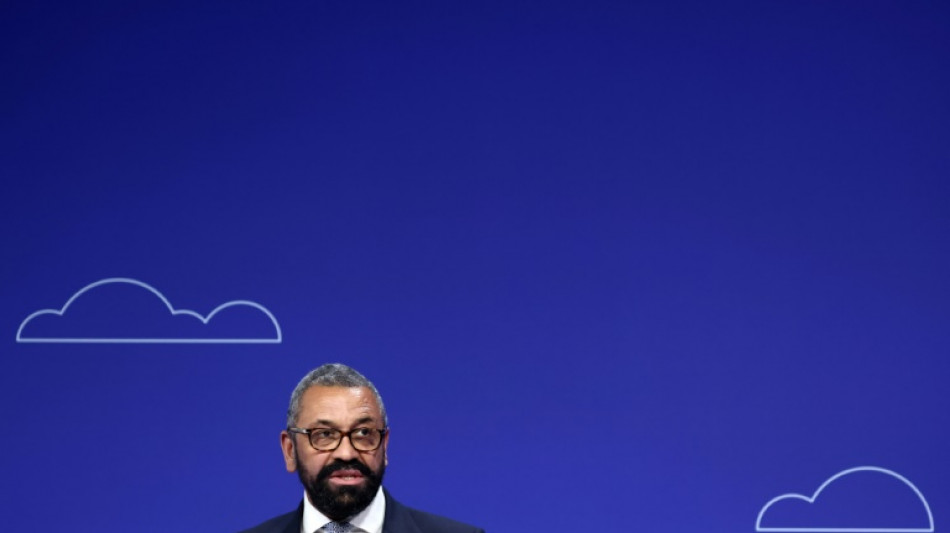
UK backs permanent seat for Africa at UN Security Council / Photo: HENRY NICHOLLS - POOL/AFP

 Jennifer Lopez Faces Backlash Over Claims of Hollywood Ethnicity Bias

 Akkodis Launches Global AI Factory as a Service to Scale AI Across Engineering and Delivery

 Couple's Stadium Argument Goes Viral During Wake Forest Game
The UK on Thursday announced its backing for an expanded UN Security Council, including a permanent spot for Africa, to reflect the current and future state of the world.
"We want to see permanent African representation and membership extended to India, Brazil, Germany and Japan," said Foreign Secretary James Cleverly.
"I know this is a bold reform. But it will usher the Security Council into the 2020s," he told the Chatham House foreign affairs think-tank in London.
The UK is a permanent member of the Security Council with China, France, Russia and the United States, and sits with 10 non-permanent members elected by the UN general assembly for two-year terms.
US President Joe Biden has previously signalled his support for an expanded UN Security Council with African representation, and giving the African Union a permanent spot in the G20.
He has also outlined his backing for a permanent seat for Latin America, and supported bids from Japan and India.
Developing nations have long complained about not having a say on the council, where the five permanent members wield veto power, and argued the imbalance risked making the body obsolete.
But so far, repeated calls for reform have come to nothing, and experts doubt that the permanent five will give up their powers, despite the persuasive argument for change.
Cleverly's backing for an expanded body came in a speech calling for a "reinvigorated multilateral system", to make it fit for purpose for the 21st century.
Multilateral agreements such as the UN charter of 1945 had served the world well since then, on issues from nuclear non-proliferation to climate change, he said.
But there was no guarantee of their survival for the same period of time into the future, particularly with challenges such as Russia's invasion of Ukraine and the worldwide coronavirus pandemic.
Cleverly called the Kremlin's military action "a calculated assault on the UN Charter" and on the principles of the rules-based international order.
The geo-political and global economic centre of gravity was shifting from Europe and North America towards the Indo-Pacific region.
Demographic changes also put Africa in the ascendancy, making it more important than ever to give countries there a voice on the issues that affect them, such as tackling debt, poverty and climate change, he added.
The overhaul also needed to be extended to the World Trade Organization to reflect the digital economy, and international financial institutions to address climate finance and debt reduction, he added.
L.Torres--PC