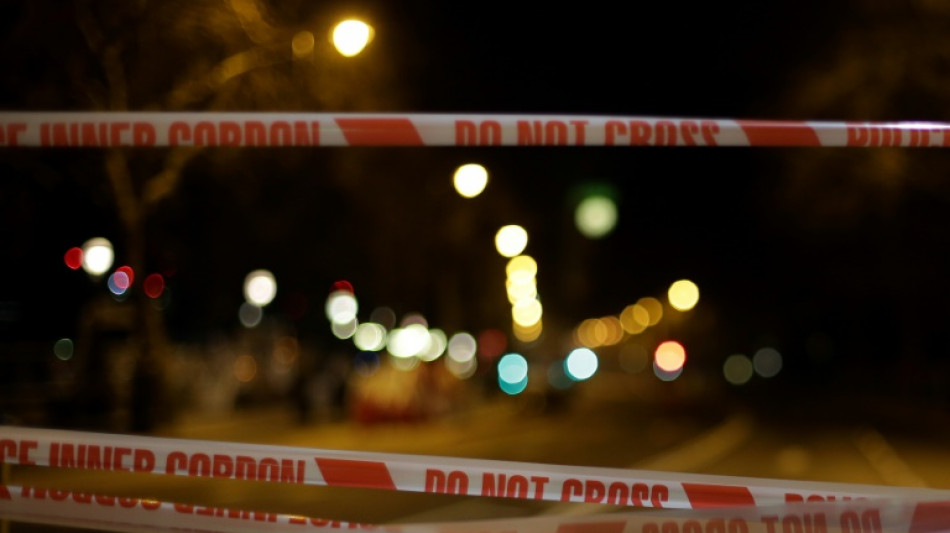
UK 'spy cops' tactics unjustified: public inquiry report / Photo: Daniel LEAL-OLIVAS - AFP

 Kremlin critic Kasparov says US intelligence warned life 'in danger'

 Qatar 'ready' if 2030 Asian Games moved back: official

 Indian pilot hailed as 'hero' after cockpit struggle

 Asian tech firms stand out on mixed day for stocks

 Flags and pho on show as jeweller opens huge Vietnam plant

 Indian football fans relish rare friendly against Brazil

 Yankees, White Sox, Padres advance, Phillies survive in MLB playoffs

 Tennessee woman in hospital after execution 'failed': lawyers
 Cable car offers small hope for Mongolia's gridlocked capital

 Man City scandal risks damage to Premier League's booming brand

 First-time Sepang F1 racers will master track 'from opening lap'

 Japan tightens rules for foreigners wanting permanent residency
 'Happiest moment': China's Mu first woman to win eSports Games gold

 EU talks deportations as five nations seek migrant centre in Africa

 Kenneth Branagh examines the scars of Iraq war in 'Atonement'

 Hundreds held, dozens wounded as French school protests escalate

 US government's new AI chatbot pulls back from debunking Trump
 US tennis star Navarro reveals health battle, ends season

 Panic, anger, tears: Evan Gershkovich's uneasy journey after Russian jail

 UK PM says 'strong indications' Iran involved in airbase incident

 Google restricts access to new AI model over safety concerns

 Watchdog clears former US Fed chief Powell in renovation probe
 Israel PM hails Indian pilot of rerouted flight for averting disaster
 Fury, Joshua kick off 'battle of Britain' in good spirits

 Ronaldo leaves Portugal training camp after coach says he is dropped

An undercover UK policing unit that spied on hundreds of campaign groups over decades should have been shut down as its tactics were unjustified, a report concluded on Thursday.
Officers working for the Metropolitan Police's Special Demonstration Squad (SDS) used subterfuge to infiltrate political and campaign groups and spy on its members.
Some women were tricked into sexual relations with undercover officers, some of whom had used the names of dead children to create false identifies.
Former senior judge John Mitting concluded in a report that most left-wing and activist organisations spied upon posed no threat.
The public inquiry he is chairing is looking into 50 years of undercover policing in England and Wales, after revelations in recent years about the underhand tactics prompted public outrage.
The first report covers the years 1968 to 1982 and is based on more than 3,400 documents, files, statements and evidence from former officers, as well as members of the public directly affected.
The inquiry was set up by former prime minister Theresa May in 2015 but was delayed by the sensitive nature of the evidence, and the coronavirus pandemic.
Hearings only began in November 2020.
Further hearings will look at the impact of officers' relationships with women, and the at wider impact the double lives they led, with a final report due in 2026.
Targets included justice campaigns, including that for Stephen Lawrence, the black victim of a racist murder by a group of white youths in south London in 1993.
The SDS was set up to gather intelligence to help uniformed officers handle events where there was a risk of public disorder.
- Unjustified -
Mitting concluded that while the unit did help policing preparations, its role should not be overstated.
Had its operations been made public in the 1970s, the unit would have been "brought to a rapid end", he said, adding that little or no thought had been given to the effect of its tactics and long spells that officers spent working undercover.
"If these issues had been addressed, it is hard to see how any conclusion could legitimately have been reached which would not have resulted in the closure of the SDS," he wrote.
Only three of the groups targeted at the time was justified in the public interest -- Sinn Fein, which was the political wing of the paramilitary Irish Republican Army (IRA), and two others.
The two others have not been named publicly.
Mitting said "long-term deployments into left-wing and anarchist groups did make a real contribution" to policing but other, "less intrusive means" could have achieved the same results.
"The question is whether or not the end justified the means," he added.
"I have come to the firm conclusion that, for a unit of a police force, it did not; and that had the use of these means been publicly known at the time, the SDS would have been brought to a rapid end."
Jon Savell, from the Metropolitan Police, said regulation and oversight of undercover work had been transformed.
"The way in which undercover policing was conducted in the 1970s bears no relation to how it is conducted today," he said.
L.Mesquita--PC