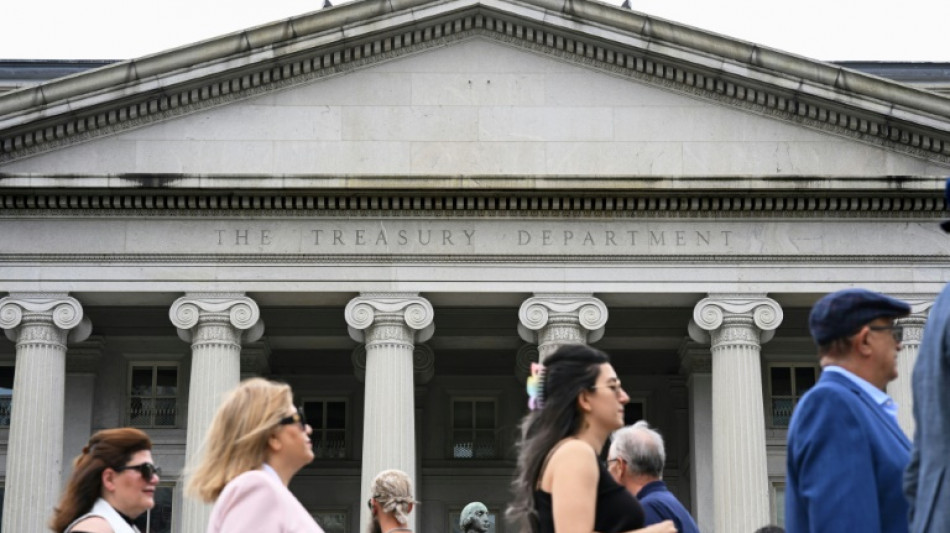
Why a surprisingly strong US economy is pushing up bond yields / Photo: Mandel NGAN - AFP

 'He's here with me': Japan cycle queen dedicates gold to late brother

 Japan Olympic chief says 'lot more' athletes at Games than expected

 Asian carmakers besting US rivals at home, China poised to strike

 Widgets & Web Offers All-Inclusive Investor Relations Websites for Public Companies, IPOs and SPACs

 Adams named new US captain to 2030 World Cup

 China a better influence in Latin America than US: poll

 Judge pauses construction of border project in Texas national park

 Belgium's De Bruyne fires double to sink Turkey, France held by Italy

 US jobs data boosts stocks as oil prices dip

 US Supreme Court to hear high-stakes climate case

 Trump expected to name intel chief Clayton as AI czar: reports

 Argentina unveils passports-for-investment scheme

 Brazil election debate chaos sparks censorship row
 England's Carse charged by cricket body over nightclub incident

 Amazon vows $1 bn for data center towns, decries 'myths'

 Oil prices drop on G7 fuel release, US jobs data boosts stocks

 G7 agrees deal to ease global energy supply concerns

 Spain's government dealt blow as lawmakers reject housing bills

 Food, medicine shortages deepen in Russian-occupied Oleshky

 Man City whistleblower Rui Pinto facing 'dire consequences' - lawyers

 Russia 'tearing Kyiv apart', mayor says, as strikes paralyse traffic
 Taiwan boxer Lin wins Games gold as Japan edge North Korea on penalties

 Japan tame North Korea to win Games gold after shootout drama

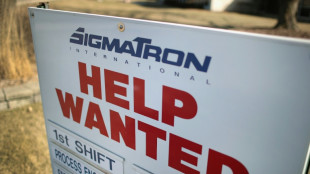
 US posts weak job growth data in September

 Ethiopia's conflict: the regional dimension

Yields on the 10-year US government bond are flirting with a 15-year high this week, amid growing fears that strong growth and low unemployment could keep interest rates higher for longer.
The US Federal Reserve has raised interest rates 11 times since March 2022, and has hinted it may have to do so again in the coming months if inflation remains above its long-term target of two percent.
The 10-year US government bond, or Treasury note, is considered to be an especially safe investment, and is closely scrutinized due to its use as a benchmark for pricing everything from home mortgages to commercial loans.
US Treasury note yields are seen as a proxy for interest rates, and often increase when the Federal Reserve raises rates to tackle inflation.
Yields have risen sharply since the Fed began an aggressive campaign of interest rate hikes in March last year to tackle a sharp rise in consumer prices.
The impact of these higher yields is already being felt: on Thursday, the interest rate on the popular 30-year fixed-rate mortgage in the United States hit its highest level in more than two decades.
Against this backdrop, a stronger economy could cause headaches for the Fed, and the financial markets.
- Stronger economy -
A recent spell of surprisingly positive economic data has diminished fears that the US could enter a recession later this year.
Economic growth in the second quarter beat expectations due in large part to resilient consumer spending, while the unemployment rate has remained close to historic lows.
Although this is good news for millions of Americans, it also raises the likelihood that interest rates will need to remain higher for longer to tackle inflation.
"The economy has proven to be quite resilient, and durable," Citigroup Global Chief Economist Nathan Sheets told AFP.
- Fed rate hikes -
Although inflation has fallen sharply in recent months, it remains stuck above the Fed's long-term target of two percent.
The Fed has already raised interest rates 11 times since March, most recently in July, when it lifted its benchmark lending rate by a quarter percentage-point to a range between 5.25-5.5 percent.
This decision brought the interest rate to its highest point in more than two decades.
On Wednesday, the Fed said "most participants" at its recent rate decision continued to see significant risks that price increases will persist, and that this could require further tightening of monetary policy.
Yields on US government bonds rose following the announcement, as markets digested the likelihood of additional rate hikes.
"The bottom line is that the Fed has continued to kind of lean in to rhetoric that says 'look, we'll do what we need to do, and we very well may need to do more in order to achieve our inflation objectives,'" Sheets said.
"It doesn't seem like there's any imminent cutting of rates that's anywhere in sight," he added.
- Poor fiscal management -
While the strong economy and the Fed's interest rate policy have played a significant role in pushing up bond yields, other factors are also at play.
Yields on longer-dated bonds have risen sharply since the beginning of August, when the US Treasury Department announced it was increasing its issuance of longer-dated bonds to help pay for increased government spending.
And a day earlier, the ratings agency Fitch surprised the financial markets by downgrading US debt, blaming rising government debt levels and the recent tussle over raising the debt ceiling.
"The repeated debt-limit political standoffs and last-minute resolutions have eroded confidence in fiscal management," Fitch said in a statement.
While both factors played a role in pushing up bond yields, their impact is likely to be short-lived.
"Issuance can create, you know, short-term headwinds and challenges, but rarely is a driver over longer term horizons," Sheets from Citi said.
- 'Attractive' yield, negative equities -
Despite the recent downgrade from Fitch, US Treasuries are still seen as one of the safest places to invest money, due to the US government's long history of paying its debts.
In recent months, demand for Treasuries has been boosted by the combination of high interest rates and falling inflation.
This put real, inflation-adjusted interest rates on US bonds firmly in positive territory.
"It makes us attractive around the world," Cumberland Advisors' cofounder David Kotok told AFP.
But while bond yields have soared, the US stock markets have stumbled, as the prospect of a higher interest rate environment has come into focus.
"I think it's kind of a flashing yellow light, reflecting some uncertainties about where we're headed," Sheets from Citi said.
"But it's not a broad kind of pulling back, because it is against the backdrop of a surprisingly resilient US economy," he added.
S.Pimentel--PC