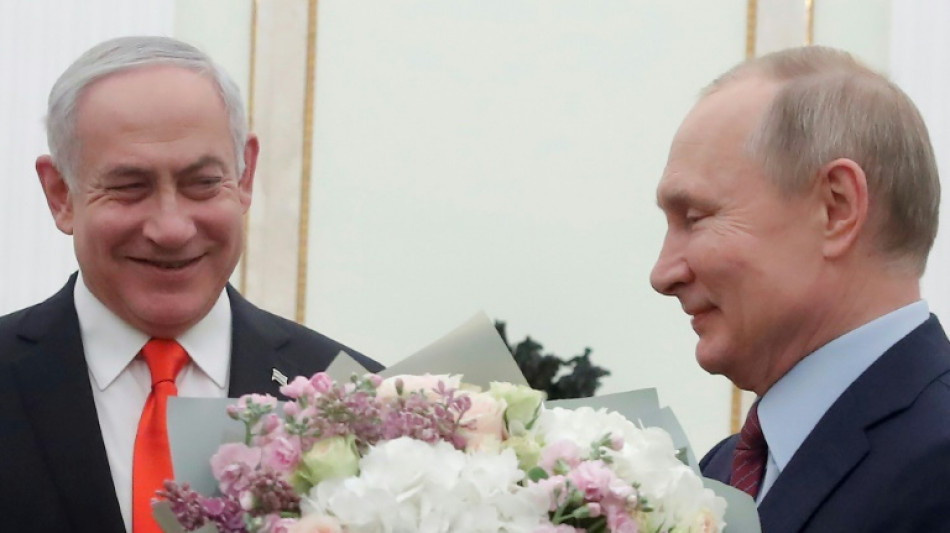
Russian-Israeli relations crumble over Gaza war: analysts / Photo: MAXIM SHEMETOV - POOL/AFP

 Stocks climb as oil prices retreat

 Vstock Transfer Names Securities Industry Veteran Erica Goodstein General Counsel and Chief Compliance Officer

 Four Indonesian seamen return home after Somali pirate ordeal
 Crisis-striken Haiti postpones elections
 Germany arrests ex-spy chief on suspicion of giving secrets to foreign powers

 Djokovic wins China Open after de Minaur retires
 IMF warns cost-of-living shocks cause 'lasting deterioration' in affordability

 Alcaraz wins Japan Open for first title since injury return

 'We're working to keep football clean', Turkish minister says

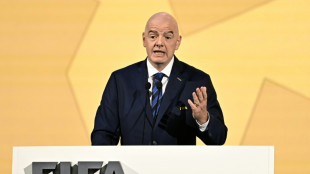 FIFA chief Infantino hit by Norwegian double complaint

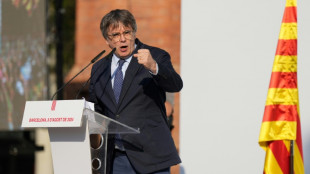 Exiled Catalan separatist leader Puigdemont cleared to return to Spain
 Stock markets climb as oil prices retreat
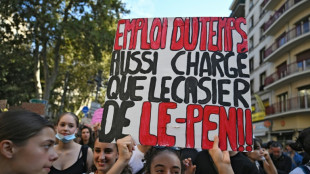 'No future': Thousands mass in France for high school protests
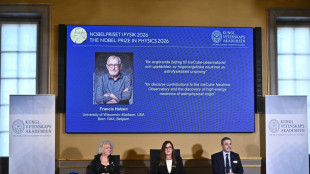 Nobel physics prize honours work on 'ghostly messengers' from outer space

 Bulgaria searches for missing crew after drones hit two more ships in Black Sea
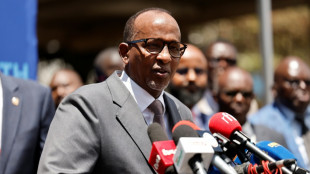
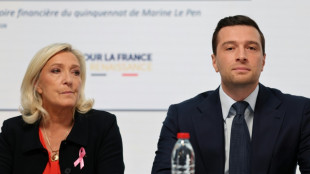 Le Pen vows drastic cost savings to prevent French 'default'

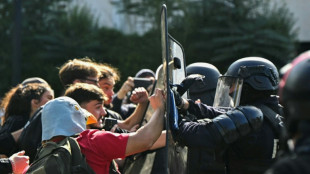 'Eats through a straw': French teens wounded in high school protests
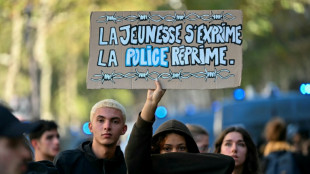 Thousands mass in France for high school protests

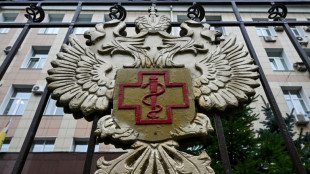 Moscow denies sanitary measures over plague reports
 Samoa look to recreate 2022 final run at Rugby League World Cup

 Asian stocks mostly up after tech-led Wall St record

 German factory orders plunge as recovery still fragile
 Coco Gauff calls out online racism following China open video review

 KVB Accelerates Middle East Footprint with Strategic MENA Regional Expansion
 Purple reign: Philippines seeks to keep grip on ube throne
Among the nations condemning Israel's war in Gaza, one has stood out -- Russia had built a growing friendship with Israel, but that dalliance is over, analysts said, erased by the shifting sands of Middle East geopolitics.
Just under two years ago, the picture had been very different.
When Russia invaded Ukraine in February 2022, Israel didn't join the West in sanctioning Moscow, a demonstration of the alliance of convenience between the two governments.
Now, Russia's President Vladimir Putin is among Israel's loudest critics and has refused to denounce Hamas's bloody October 7 attack.
Instead, his war against Ukraine has driven Russia into a different coupling, this time with Israel's sworn enemy Iran.
Russia has officially backed calls for an immediate ceasefire in Gaza at the UN, while early in the war Putin accused Israel of contemplating tactics comparable to Nazi Germany's brutal siege of what is now Saint Petersburg during World War II.
The health ministry in Hamas-run Gaza says Israel's offensive, aimed at destroying Hamas, has killed more than 19,600 people, mostly women and children.
In late October, Moscow went as far as to host envoys from the Palestinian militant group and Iran, which the Russian government said included talks on releasing foreign hostages. Israel called the meeting "a reprehensible step that gives support to terrorism".
This month, Iranian President Ebrahim Raisi visited Moscow for talks with Putin, while on Wednesday Russia made a joint demand alongside the Arab League for a UN Security Council ceasefire resolution.
In Israel, the mood is one of shock and anger. Putin's decision not to criticise Hamas, even with Russian citizens among the roughly 1,140 people killed by the militants on October 7, was "a foul betrayal", said Israeli historian Semion Goldin.
Russia has come down squarely "on the side of the aggressor, not at all on our side", said Golding, a researcher in Russian studies at the Hebrew University of Jerusalem.
- 'Israel deluded itself' -
It's all a far cry from where Israeli-Russian relations were as recently as last year.
During much of the Cold War, Soviet-Israeli relations were frosty. The Kremlin prevented many Jews from emigrating to Israel, while the Soviet Union propagated anti-Zionist propaganda and provided military aid to Arab states, in particular during the 1973 Yom Kippur War.
However, following the Soviet Union's collapse in 1991, the newly re-emerged Russia established much closer ties with Israel, that saw increased tourism and a massive wave of Russian Jewish migration to Israel.
Today, there are more than a million Russian-speakers from the former Soviet Union in Israel, forming a substantial political bloc.
Under Prime Minister Benjamin Netanyahu, the relationship appeared to grow even closer.
Following Moscow's intervention in the Syrian civil war, Israel worked closely with the Kremlin as it mounted its own air campaign in Syria targeting Iranian-backed forces, said former Israeli ambassador to Russia, Arkady Milman, now a researcher at the Institute for National Security Studies in Tel Aviv.
Russia controlled Syria's airspace and was, in effect, authorising Israel's raids, he said.
With eyes on the military situation in Syria, the large Jewish populations in Ukraine and Russia, and its own sizeable Russian and Ukrainian communities, Israel opted against slapping sanctions on Russia for its invasion of Ukraine.
That position held through three Israeli prime ministers.
- Raised hackles -
As Putin's war in Ukraine has dragged on and his international isolation deepened, he has turned against Israel's quiet friendship.
Instead, the Russian president has forged a new alliance with Iran, with Tehran delivering drones to Moscow and the pair cooperating in evading Western sanctions.
That inevitably raised hackles in Israel, which fears Iran joining it as a nuclear-armed state.
Moreover, Iran would like Russia "to neutralise Israel in Syria", said Edward Waysband, an associate researcher at New Europe College, a prospect "that is unacceptable for Israel".
Israeli linguistics professor Cyril Aslanov said Moscow's reaction to the Israel-Hamas war had revealed that the "so-called rapprochement" between Israel and Russia since the fall of the Soviet Union "was profoundly illusory".
Aslanov once travelled back and forth to Russia, visiting universities to spread Jewish culture, but he said that appeared a bygone era, with anti-Semitic incidents in Russia and warnings against travel to some regions.
Now, Israel finds itself denouncing its erstwhile partner. Netanyahu criticised "the dangerous cooperation between Russia and Iran" in a phone call with Putin in early December and expressed his dissatisfaction with the Kremlin's stance at the United Nations.
Iran aside, the Kremlin has chosen to use the Israel-Hamas war as a chance to denounce the United States and its allies while positioning itself as a champion of the Global South and "Orthodox Christians in the Holy Land", said Waysband.
With Moscow prioritising anti-Western rhetoric and Israel a close ally of Washington, it "finds itself de facto facing this alliance against the West", said Milman.
E.Borba--PC