-
 Stocks climb as oil prices retreat
-
'Gen Z has risen up': Tens of thousands demand better education in France

-
 Vstock Transfer Names Securities Industry Veteran Erica Goodstein General Counsel and Chief Compliance Officer
-
$10 Million and Counting: Hola Prime Hits Major Trader Payout Milestone

-
 Four Indonesian seamen return home after Somali pirate ordeal
-
UEFA investigate Ireland-Israel tunnel bustup after spitting claim

-
 Crisis-striken Haiti postpones elections
-
Djokovic wins China Open and keeps unbeaten record after de Minaur retires

-
 Germany arrests ex-spy chief on suspicion of giving secrets to foreign powers
-
Amsterdam's Rijksmuseum hosts 'homecoming' show for Willem de Kooning

-
 Djokovic wins China Open after de Minaur retires
-
World Bank forecasts modest growth for Latin America, highlights climate risks
-
 IMF warns cost-of-living shocks cause 'lasting deterioration' in affordability
-
'Afraid for my future': Tens of thousands demand better education in France

-
 Alcaraz wins Japan Open for first title since injury return
-
Pakistan PM urges Imran Khan supporters to end protest march

-
 'We're working to keep football clean', Turkish minister says
-
Alex Bodi își continuă expansiunea: planuri pentru deschiderea unui showroom ALIX LASERS la București

-
 FIFA chief Infantino hit by Norwegian double complaint
-
STARTRADER Adds 20 Stock and ETF CFDs to Its 24/7 Trading Range

-
 Exiled Catalan separatist leader Puigdemont cleared to return to Spain
-
Bulgaria searches for missing crew after drones hit more Black Sea ships
-
 Stock markets climb as oil prices retreat
-
Alcaraz wins Japan Open for first title since return from injury
-
 'No future': Thousands mass in France for high school protests
-
India, Qatar, S.Africa among nations who want to host 2036 Olympics
-
 Nobel physics prize honours work on 'ghostly messengers' from outer space
-
Muchova squeaks out win over Osaka to reach China Open quarter-finals
-
 Bulgaria searches for missing crew after drones hit two more ships in Black Sea
-
Kenya reports first-ever Ebola death
-
 Le Pen vows drastic cost savings to prevent French 'default'
-
Tennis world No.1 Sinner's season over due to knee injury
-
 'Eats through a straw': French teens wounded in high school protests
-
Yemen's Houthis claim attack on Riyadh airport, deny losing territory
-
 Thousands mass in France for high school protests
-
7-Eleven exits India amid mounting competition

-
 Moscow denies sanitary measures over plague reports
-
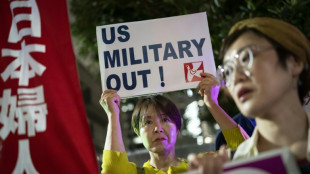
The alleged murder by US marine on Okinawa: five things to know
-
 Samoa look to recreate 2022 final run at Rugby League World Cup
-
End of an era as Messi prepares to hang up Argentina boots

-
 Asian stocks mostly up after tech-led Wall St record
-
Superstar duo headline strong New Zealand squad for Rugby League World Cup

-
 German factory orders plunge as recovery still fragile
-
South Korea warns of possible AI use in banking hacks
-
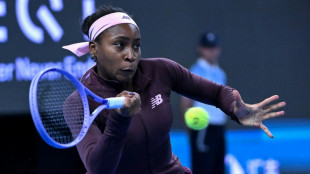 Coco Gauff calls out online racism following China open video review
-
EU vows AI rules will protect Europeans. Will they?

-
 KVB Accelerates Middle East Footprint with Strategic MENA Regional Expansion
-
Myanmar leader to visit Malaysia after migrant returns begin
-
 Purple reign: Philippines seeks to keep grip on ube throne
-
Germany's AfD poised to preside over state assembly for first time
US to target banks that help Russian war in Ukraine
The United States said Friday it will impose sanctions on foreign banks that support Russia's war in Ukraine, in a new bid to exert economic pressure on Moscow as it diversifies from the West to China.
Under an executive order to be signed Friday by President Joe Biden, the United States will impose so-called secondary sanctions against financial institutions that back companies already targeted for supporting Russia's defense industry.
"We are sending an unmistakable message: anyone supporting Russia's unlawful war effort is at risk of losing access to the US financial system," Jake Sullivan, Biden's national security advisor, said in a statement.
Sullivan said the new sanctions will "continue tightening the screws on Russia's war machine and its enablers," adding that earlier measures have "significantly degraded" Russia's military, long seen as among the world's most formidable and which in recent months has relied on imports from sanctioned North Korea and Iran.
But Russia since the start of the war has been rapidly working to reduce exposure to the West, shifting away from trade in dollars, euros, sterling and yen.
China's largest banks meanwhile have extended billions of dollars worth of credit in renminbi to Russia since the war as Western institutions exit.
A US official, speaking on condition of anonymity, voiced hope that European and US banks, while not directly invested in Russia, would pressure partners operating in the country.
- Russia weathering blow -
Russia's economy has taken a hit from the pressure but is still on a growth trajectory, with the International Monetary Fund in October forecasting growth of 1.1 percent for 2024.
A key target has been Russia's oil exports, with Western powers agreeing to a cap of no more than $60 a barrel.
The US Treasury Department said Thursday that the cap brought down Russia's tax revenue from oil and petroleum goods exports by 32 percent between January and November, compared to a year ago.
But other assessments have been less rosy on the impact. A recent study by the Kyiv School of Economics found that compliance with the price cap has been virtually non-existent due to widespread fraud.
The new effort at secondary sanctions comes as the G7 group of industrialized democracies balks at seizing Russian government assets to support Ukraine, a potentially major means of pressure backed by the United States.
Direct US assistance to Ukraine could also soon dry up, with Congress yet to approve a request by the Biden administration due to an unrelated dispute on immigration policy.
The White House fears an end to aid would give new momentum to Russia against Ukraine, which has received $43 billion in military assistance from the United States since the invasion.
In parallel actions on Friday, the United States said it will step up sanctions against Russian diamonds and seafood -- banning their import if they originated in Russia, even if they were then processed elsewhere.
The action comes days after a European Union ban on Russian diamonds. The United States has already banned imports of Caspian Sea caviar since 2005 for conservation reasons.
Russians have managed to soften the impact of sanctions through trade via third countries, with Central Asian nations in particular seeing sharp increases in shipments of technology.
The United States has been stepping up the use of secondary sanctions, despite concerns among some policymakers and experts that it will encourage other countries to move away from the dollar.
The United States has used its clout most visibly on Iran by threatening countries that buy oil from the clerical state.
P.Cavaco--PC